1:32in productionCh. 1 · What the dish is and where it came from/ 1:32 · ceiling 15 min
Baking
Panettone
A tall, domed Italian sweet bread and fruitcake from Milan, traditionally made with raisins and candied citrus.
Panettone is an Italian sweet bread and fruitcake associated with Milan. Its name comes from the Milanese dialect word panattón, an augmentative of pan ('bread'). Food historian Francine Segan describes it as 'probably' created in the 15th century. The oldest certain attestation is a 1599 expense record from the Borromeo college in Pavia listing ingredients for 13 'loaves' for Christmas. The first printed recipe appeared in 1853.
Panettone is an Italian sweet bread and fruitcake associated with Milan.
0:27
How it works, in terms someone would actually use
It is made by letting dough rise three times over nearly 20 hours before baking.
0:47
What it gets right
Raisins and pieces of candied orange and citron are distributed throughout.
0:59
What it does not
Its inclusion of dried and candied fruits makes it less suitable if you prefer a plain sweet bread without preserved fruit.
1:07
What it changed
Motta standardized its tall domed shape and light texture through extended fermentation and specific shaping.
1:13
Who it is for, and who it is not
It is for people who enjoy sweet, fruit-studded baked goods with a soft, airy crumb.
1:24
Is it worth your time
It is worth your time if you seek a traditional Italian holiday bread with visible fruit and a distinctive dome shape.
Worth your time?
Selectively. Start with the brief, then cook the parts we point at.
What works
Raisins and pieces of candied orange and citron are distributed throughout. Almonds, chocolate, apricots, and apples sometimes substitute or supplement those elements. This composition delivers sweetness and varied chewy-soft textures.
What does not
Its inclusion of dried and candied fruits makes it less suitable if you prefer a plain sweet bread without preserved fruit.
Cook it if
Skip it if
The written brief1 min read
What the dish is and where it came from
Panettone is an Italian sweet bread and fruitcake associated with Milan. Its name comes from the Milanese dialect word panattón, an augmentative of pan (‘bread’). Food historian Francine Segan describes it as ‘probably’ created in the 15th century. The oldest certain attestation is a 1599 expense record from the Borromeo college in Pavia listing ingredients for 13 ‘loaves’ for Christmas. The first printed recipe appeared in 1853.
How it works, in terms someone would actually use
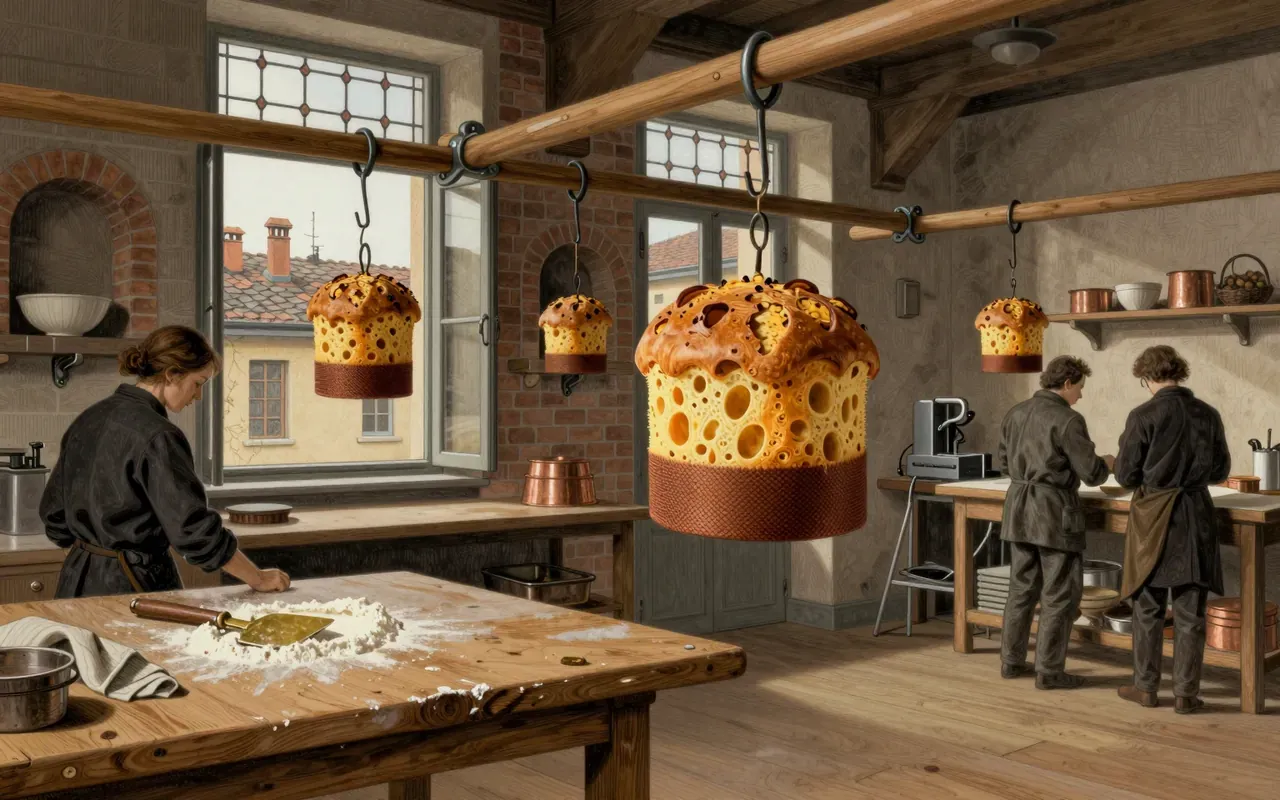
It is made by letting dough rise three times over nearly 20 hours before baking. After baking, it is hung upside down to cool, preventing collapse of its internal bubbles. It has a cupola shape extending from a cylindrical base, typically 12–15 cm high for a 1 kg loaf.
What it gets right
Raisins and pieces of candied orange and citron are distributed throughout. Almonds, chocolate, apricots, and apples sometimes substitute or supplement those elements. This composition delivers sweetness and varied chewy-soft textures.
What it does not
Its inclusion of dried and candied fruits makes it less suitable if you prefer a plain sweet bread without preserved fruit.
What it changed
Motta standardized its tall domed shape and light texture through extended fermentation and specific shaping.
Who it is for, and who it is not
It is for people who enjoy sweet, fruit-studded baked goods with a soft, airy crumb. It is not for people avoiding raisins, candied citrus, or enriched doughs.
Is it worth your time
It is worth your time if you seek a traditional Italian holiday bread with visible fruit and a distinctive dome shape.