1:14in productionCh. 1 · What the dish is and where it came from/ 1:14 · ceiling 15 min
Dishes · Street food
Yakisoba
A Japanese stir-fried noodle dish using wheat-based Chinese-style noodles, pork, cabbage, and Worcestershire-style sauce.
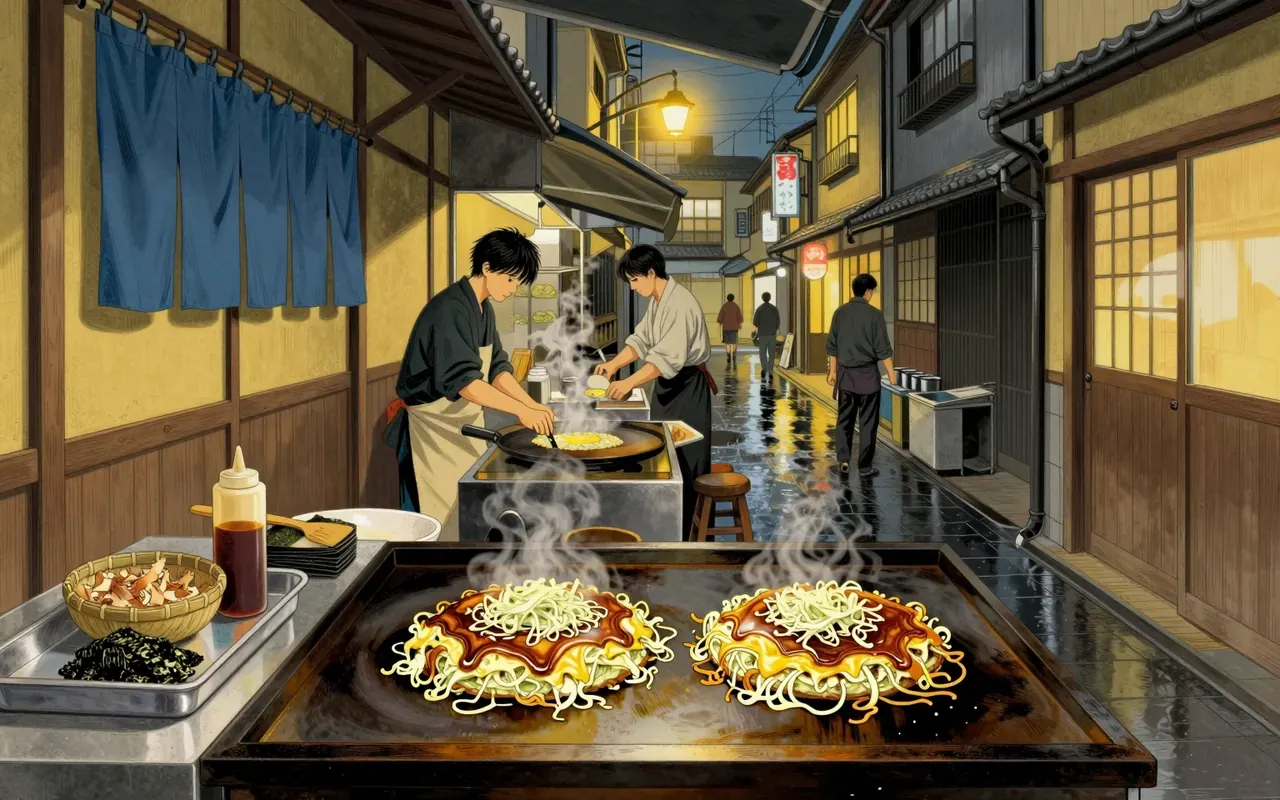
Yakisoba is a Japanese stir-fried noodle dish. It originated as a variant of dondonyaki—street food for children and a precursor to okonomiyaki—around 1918 in late Taishō–early Shōwa era Japan.
It is made by stir-frying steamed Chinese-style wheat noodles with bite-sized pork and small pieces of cabbage, onions, bean sprouts, and carrots, then seasoning with Japanese-style Worcestershire sauce, salt, and pepper.
0:24
What it gets right
It gets right a savory, umami-rich profile from the Worcestershire-style sauce and layered textures from crisp vegetables and tender noodles.
0:36
What it does not
It does not use traditional buckwheat soba noodles.
0:46
What it changed
It changed from a local Tokyo street food into a nationwide dish after WWII, carried by repatriates from black markets to their hometowns.
0:55
Who it is for, and who it is not
It is for people who enjoy savory, wheat-noodle-based stir-fries with pork and common East Asian vegetables.
1:06
Is it worth your time
It is worth your time if you want a straightforward, widely available Japanese street-food dish with clear ingredients and preparation.
Worth your time?
Selectively. Start with the brief, then cook the parts we point at.
What works
It gets right a savory, umami-rich profile from the Worcestershire-style sauce and layered textures from crisp vegetables and tender noodles. The use of affordable wheat noodles helped anchor its early popularity.
What does not
It does not use traditional buckwheat soba noodles. The name is misleading in that regard, though the dish is firmly established under this label.
Cook it if
Skip it if
The written brief1 min read
What the dish is and where it came from
Yakisoba is a Japanese stir-fried noodle dish. It originated as a variant of dondonyaki—street food for children and a precursor to okonomiyaki—around 1918 in late Taishō–early Shōwa era Japan.
How it works, in terms someone would actually use
It is made by stir-frying steamed Chinese-style wheat noodles with bite-sized pork and small pieces of cabbage, onions, bean sprouts, and carrots, then seasoning with Japanese-style Worcestershire sauce, salt, and pepper.
What it gets right
It gets right a savory, umami-rich profile from the Worcestershire-style sauce and layered textures from crisp vegetables and tender noodles. The use of affordable wheat noodles helped anchor its early popularity.
What it does not
It does not use traditional buckwheat soba noodles. The name is misleading in that regard, though the dish is firmly established under this label.
What it changed
It changed from a local Tokyo street food into a nationwide dish after WWII, carried by repatriates from black markets to their hometowns.
Who it is for, and who it is not
It is for people who enjoy savory, wheat-noodle-based stir-fries with pork and common East Asian vegetables. It is not for those seeking buckwheat noodles or meat-free meals.
Is it worth your time
It is worth your time if you want a straightforward, widely available Japanese street-food dish with clear ingredients and preparation.