1:23in productionCh. 1 · What the dish is and where it came from/ 1:23 · ceiling 15 min
Dishes · Culture
Harissa
A fiery Tunisian chili paste made from roasted red and Baklouti peppers, spices, garlic, and olive oil.
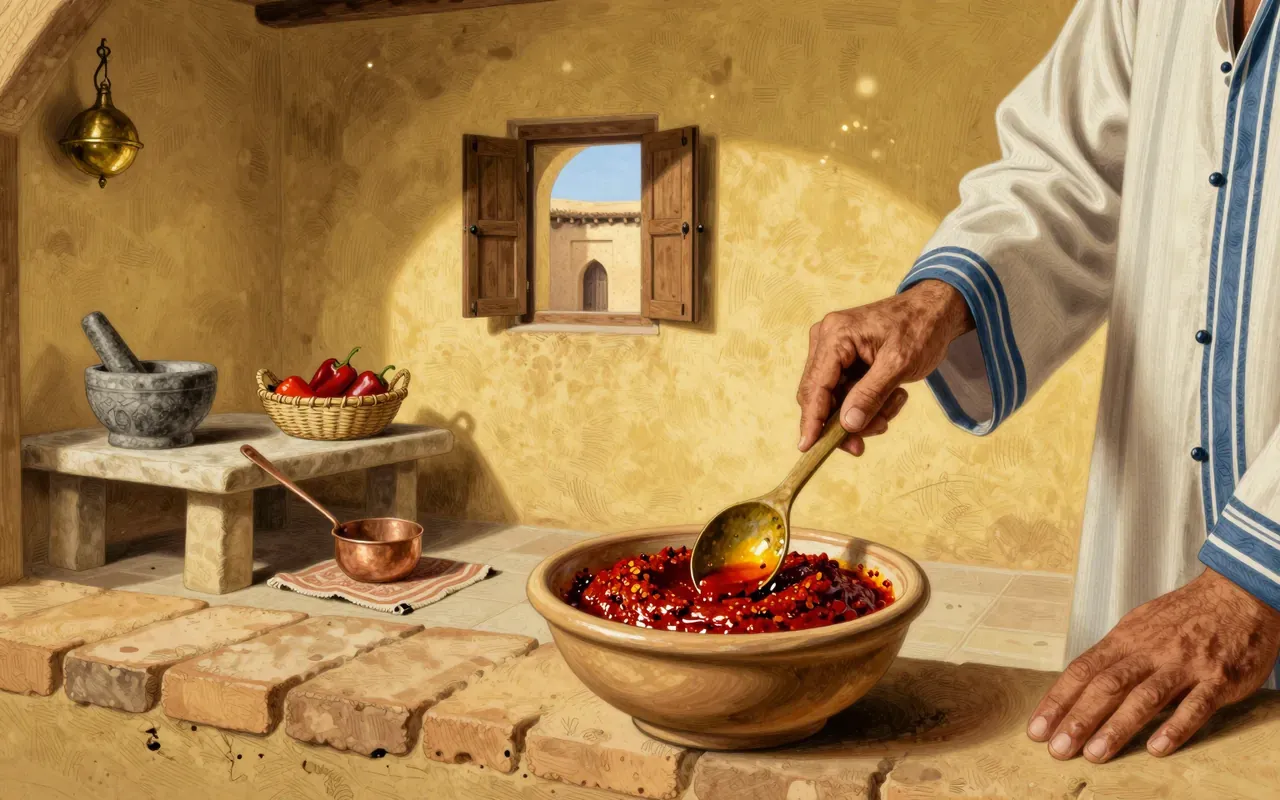
Harissa is a Tunisian hot chili pepper paste. Its origin traces to the introduction of chili peppers into Tunisian cuisine via the Columbian exchange, likely during the Spanish occupation of Hafsid Tunisia (1535–1574).
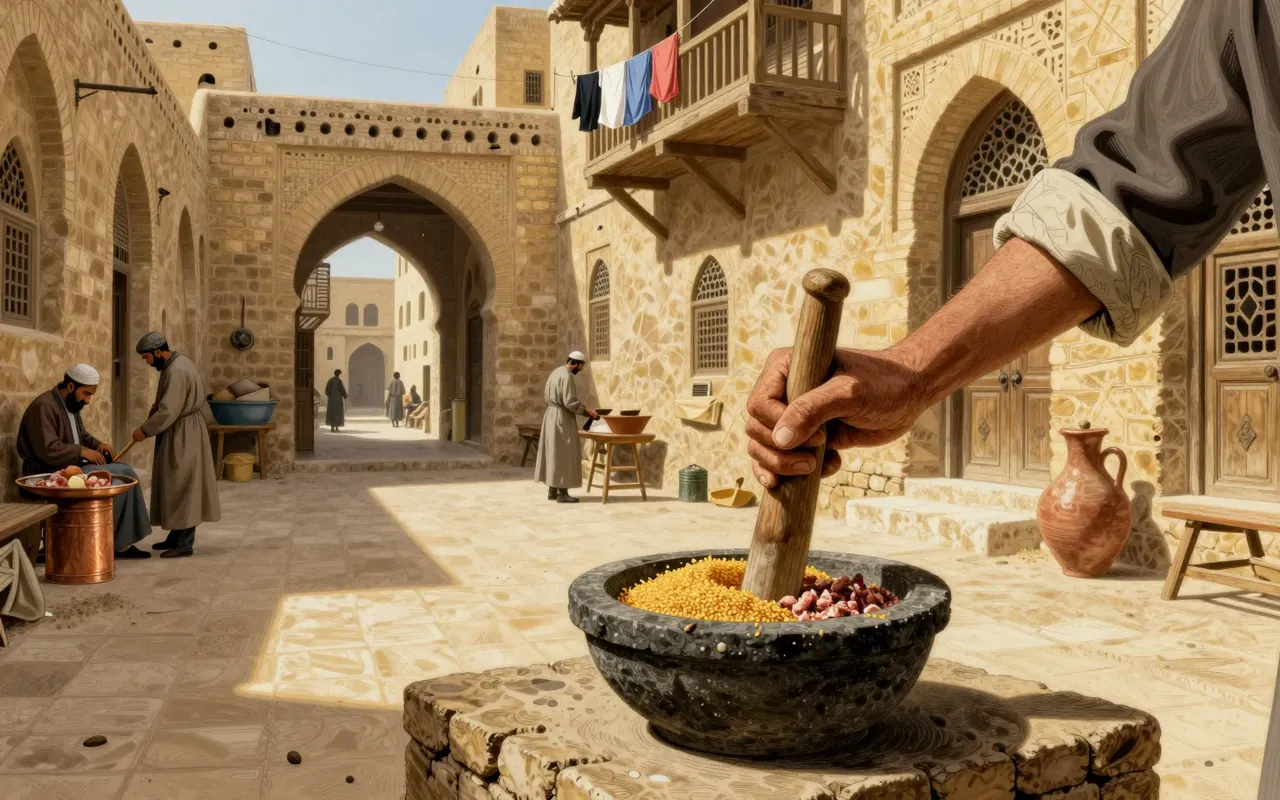
It is made by pounding chilis—traditionally with a Maghrebi tool called a Mehraz.
0:25
What it gets right
It gets right a bold, layered heat and aroma: roasted red peppers and Baklouti peppers combine with garlic paste, caraway, coriander, cumin, and olive oil to carry oil-soluble flavors.
0:37
What it does not
It does not include green peppers—those define the related paste 'Hrous', which uses the same recipe but with green peppers instead.
0:45
What it changed
It changed Tunisia’s culinary identity internationally: Tunisia is the largest exporter of prepared harissa, and UNESCO inscribed 'Harissa, knowledge, skills and culinary and social practices' on its Intangible Cultural Heritage list in 2022.
0:58
Who it is for, and who it is not
It is for people seeking a spicy, aromatic chili paste built around roasted red and Baklouti peppers, garlic, warm spices, and olive oil.
1:12
Is it worth your time
Yes—it is worth your time if you want a globally recognized, culturally anchored condiment: Tunisia produced 22,000 tonnes of harissa in 2006, using 40,000 tonnes of peppers.
Worth your time?
Selectively. Start with the brief, then cook the parts we point at.
What works
It gets right a bold, layered heat and aroma: roasted red peppers and Baklouti peppers combine with garlic paste, caraway, coriander, cumin, and olive oil to carry oil-soluble flavors.
What does not
It does not include green peppers—those define the related paste 'Hrous', which uses the same recipe but with green peppers instead.
Cook it if
Skip it if
The written brief1 min read
What the dish is and where it came from
Harissa is a Tunisian hot chili pepper paste. Its origin traces to the introduction of chili peppers into Tunisian cuisine via the Columbian exchange, likely during the Spanish occupation of Hafsid Tunisia (1535–1574).
How it works, in terms someone would actually use
It is made by pounding chilis—traditionally with a Maghrebi tool called a Mehraz. The word ‘harissa’ comes from the Arabic root harasa, meaning ‘to pound, to break into pieces’.
What it gets right
It gets right a bold, layered heat and aroma: roasted red peppers and Baklouti peppers combine with garlic paste, caraway, coriander, cumin, and olive oil to carry oil-soluble flavors.
What it does not
It does not include green peppers—those define the related paste ‘Hrous’, which uses the same recipe but with green peppers instead.
What it changed
It changed Tunisia’s culinary identity internationally: Tunisia is the largest exporter of prepared harissa, and UNESCO inscribed ‘Harissa, knowledge, skills and culinary and social practices’ on its Intangible Cultural Heritage list in 2022.
Who it is for, and who it is not
It is for people seeking a spicy, aromatic chili paste built around roasted red and Baklouti peppers, garlic, warm spices, and olive oil. It is not for those avoiding chili heat or olive oil.
Is it worth your time
Yes—it is worth your time if you want a globally recognized, culturally anchored condiment: Tunisia produced 22,000 tonnes of harissa in 2006, using 40,000 tonnes of peppers.