1:04in productionCh. 1 · What the dish is and where it came from/ 1:04 · ceiling 15 min
Dishes · Food history
Knafeh
A traditional Arab dessert of spun pastry dough layered with cheese and soaked in sugar syrup.
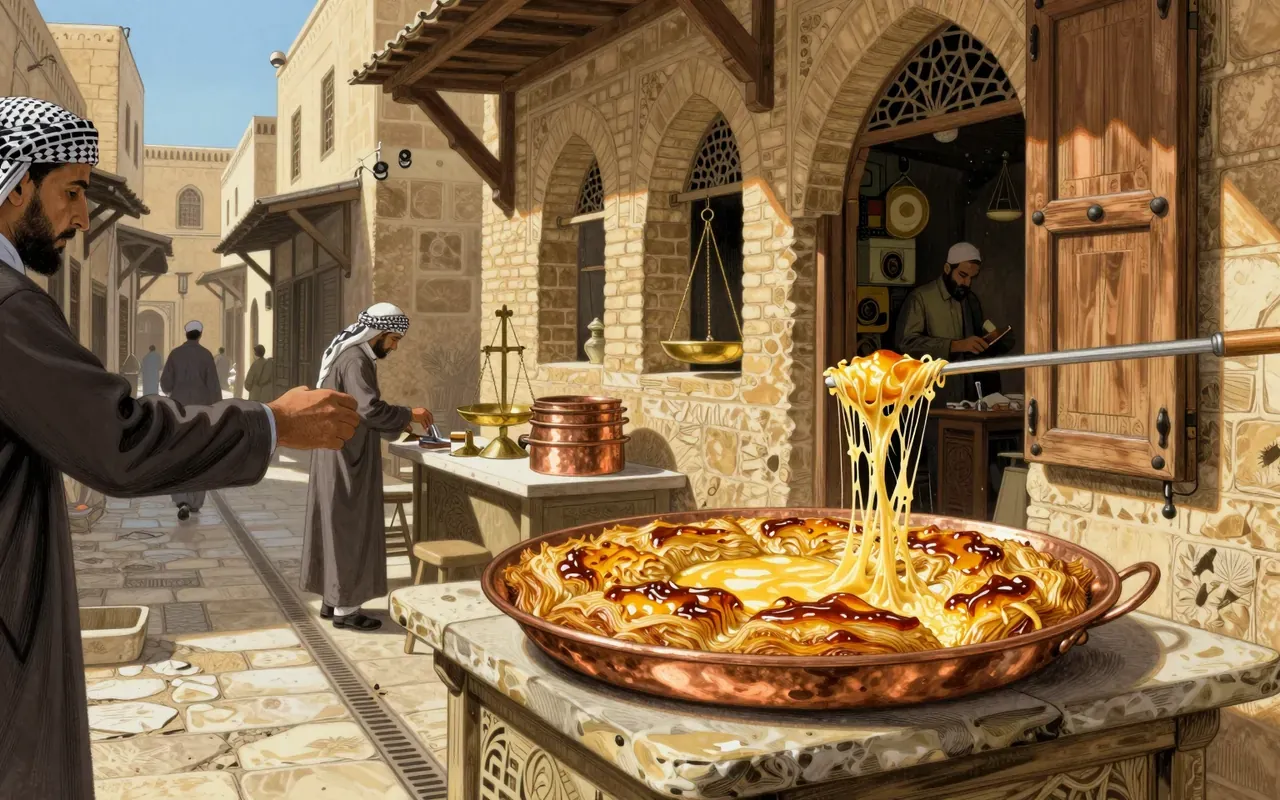
Knafeh is a traditional Arab dessert made with kadayif (spun pastry dough), cheese, and sugar-based syrup. The most common variant, Knafeh Nabulseyeh, originated in Nablus, Palestine.
Knafeh is a traditional Arab dessert made with kadayif (spun pastry dough), cheese, and sugar-based syrup.
0:10
How it works, in terms someone would actually use
It is prepared as a thin pancake dumpling cooked on a flat pan, or by dripping batter through a perforated container to form hair-like strings.
0:27
What it gets right
It gets right a contrast of textures—crisp or stringy pastry with soft cheese—and sweetness from syrup, honey, or rose syrup.
0:35
What it does not
It does not include cheese in documented forms before the 19th century.
0:40
What it changed
Over time, preparation changed to include dripping batter onto metal sheets to create string-like strands.
0:46
Who it is for, and who it is not
It is for people who enjoy sweet, syrup-soaked pastries with dairy elements like cheese or qaymaq.
0:57
Is it worth your time
It is worth your time if you like textured pastries paired with cheese and floral or honeyed syrups.
Worth your time?
Selectively. Start with the brief, then cook the parts we point at.
What works
It gets right a contrast of textures—crisp or stringy pastry with soft cheese—and sweetness from syrup, honey, or rose syrup.
What does not
It does not include cheese in documented forms before the 19th century.
Cook it if
Skip it if
The written brief1 min read
What the dish is and where it came from
Knafeh is a traditional Arab dessert made with kadayif (spun pastry dough), cheese, and sugar-based syrup. The most common variant, Knafeh Nabulseyeh, originated in Nablus, Palestine.
How it works, in terms someone would actually use
It is prepared as a thin pancake dumpling cooked on a flat pan, or by dripping batter through a perforated container to form hair-like strings. Some versions layer thin pancakes with fresh cheese, bake them, then top with honey and rose syrup.
What it gets right
It gets right a contrast of textures—crisp or stringy pastry with soft cheese—and sweetness from syrup, honey, or rose syrup.
What it does not
It does not include cheese in documented forms before the 19th century.
What it changed
Over time, preparation changed to include dripping batter onto metal sheets to create string-like strands.
Who it is for, and who it is not
It is for people who enjoy sweet, syrup-soaked pastries with dairy elements like cheese or qaymaq. It is not for those avoiding dairy or seeking non-sweet desserts.
Is it worth your time
It is worth your time if you like textured pastries paired with cheese and floral or honeyed syrups.