1:15in productionCh. 1 · What the dish is and where it came from/ 1:15 · ceiling 15 min
Street food · Traditions
Acarajé
A fritter of milled cowpeas fried in palm oil, served split and stuffed, rooted in Yoruba tradition and central to Bahian street food and Candomblé practice.
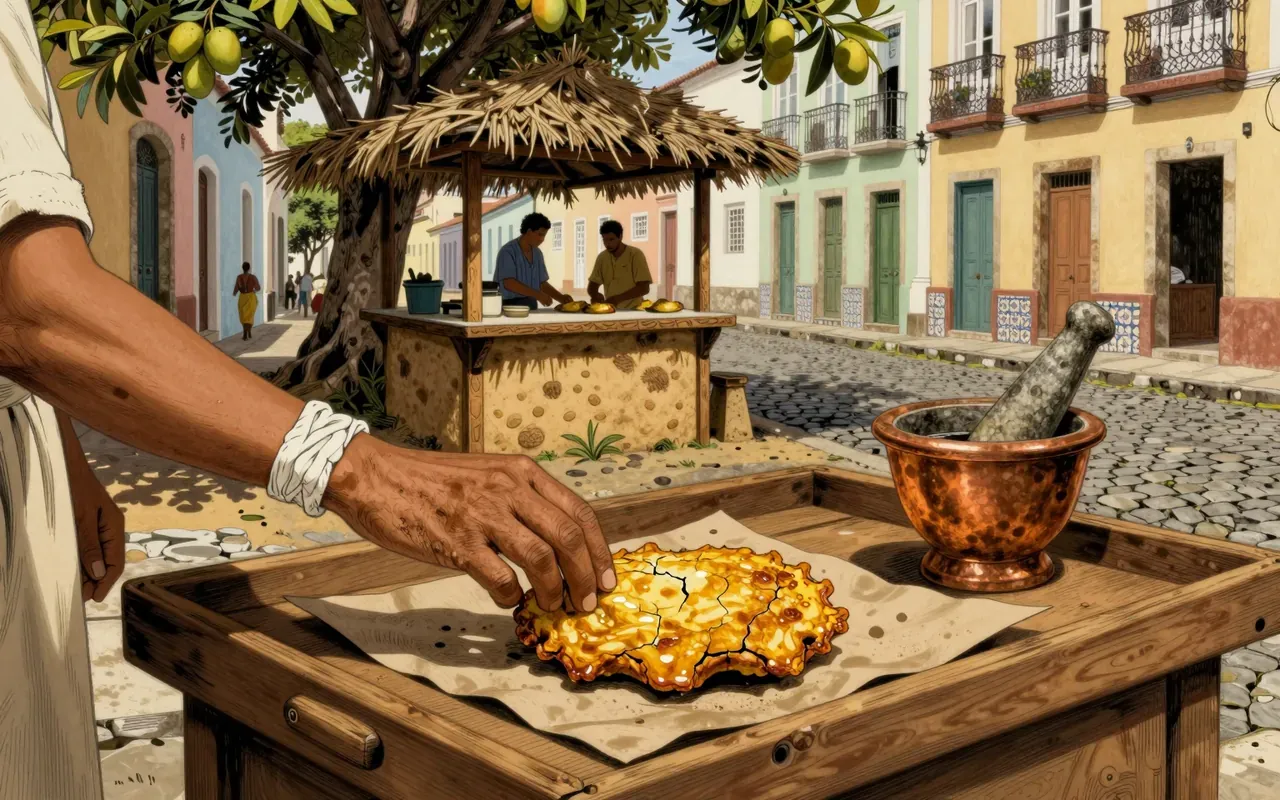
Acarajé is a fritter made from cowpeas or black-eyed peas fried in dendê (palm oil). It descends from Akara, a dish originating in Yorubaland among the Yoruba people. Enslaved Yoruba people brought it to Brazil, where it became traditional in Bahia—especially Salvador.
Acarajé is a fritter made from cowpeas or black-eyed peas fried in dendê (palm oil).
0:17
How it works, in terms someone would actually use
Raw, milled cowpeas are seasoned with salt, pepper, and chopped onions, molded into large scones, and deep-fried in dendê using a wok-like pan—often prepared in view of customers.
0:28
What it gets right
It works as both sacred offering in Candomblé and accessible street food.
0:41
What it does not
The standard version includes shrimp-based pastes, making it unsuitable for vegetarians unless the vegetarian version—with hot peppers and green tomatoes—is chosen.
0:49
What it changed
Since the 19th century, women vendors in Bahia have sold acarajé on city streets, embedding it in local commerce and public ritual life.
0:58
Who it is for, and who it is not
It is for people seeking savory, palm-oil–infused street food or participating in Candomblé practice.
1:08
Is it worth your time
Yes—if you want a culturally significant, handheld fritter with rich fillings and ties to Bahian identity and spirituality.
Worth your time?
Selectively. Start with the brief, then cook the parts we point at.
What works
It works as both sacred offering in Candomblé and accessible street food. The split fritter holds savory pastes—vatapá and caruru—made with shrimp, ground cashews, and palm oil, delivering layered texture and bold flavor.
What does not
The standard version includes shrimp-based pastes, making it unsuitable for vegetarians unless the vegetarian version—with hot peppers and green tomatoes—is chosen.
Cook it if
Skip it if
The written brief1 min read
What the dish is and where it came from
Acarajé is a fritter made from cowpeas or black-eyed peas fried in dendê (palm oil). It descends from Akara, a dish originating in Yorubaland among the Yoruba people. Enslaved Yoruba people brought it to Brazil, where it became traditional in Bahia—especially Salvador.
How it works, in terms someone would actually use
Raw, milled cowpeas are seasoned with salt, pepper, and chopped onions, molded into large scones, and deep-fried in dendê using a wok-like pan—often prepared in view of customers.
What it gets right
It works as both sacred offering in Candomblé and accessible street food. The split fritter holds savory pastes—vatapá and caruru—made with shrimp, ground cashews, and palm oil, delivering layered texture and bold flavor.
What it does not
The standard version includes shrimp-based pastes, making it unsuitable for vegetarians unless the vegetarian version—with hot peppers and green tomatoes—is chosen.
What it changed
Since the 19th century, women vendors in Bahia have sold acarajé on city streets, embedding it in local commerce and public ritual life.
Who it is for, and who it is not
It is for people seeking savory, palm-oil–infused street food or participating in Candomblé practice. It is not for those avoiding shrimp, palm oil, or deep-fried foods.
Is it worth your time
Yes—if you want a culturally significant, handheld fritter with rich fillings and ties to Bahian identity and spirituality.