1:02in productionCh. 1 · What the dish is and where it came from/ 1:02 · ceiling 15 min
Dishes
Baba ghanoush
A Levantine appetizer of roasted eggplant, tahini, olive oil, lemon juice, and seasonings.
Baba ghanoush is a Levantine appetizer made from finely chopped roasted eggplant, olive oil, lemon juice, tahini, and various seasonings. Its name appears in Arabic as bābā ġannūj.
Baba ghanoush is a Levantine appetizer made from finely chopped roasted eggplant, olive oil, lemon juice, tahini, and various seasonings.
0:11
How it works, in terms someone would actually use
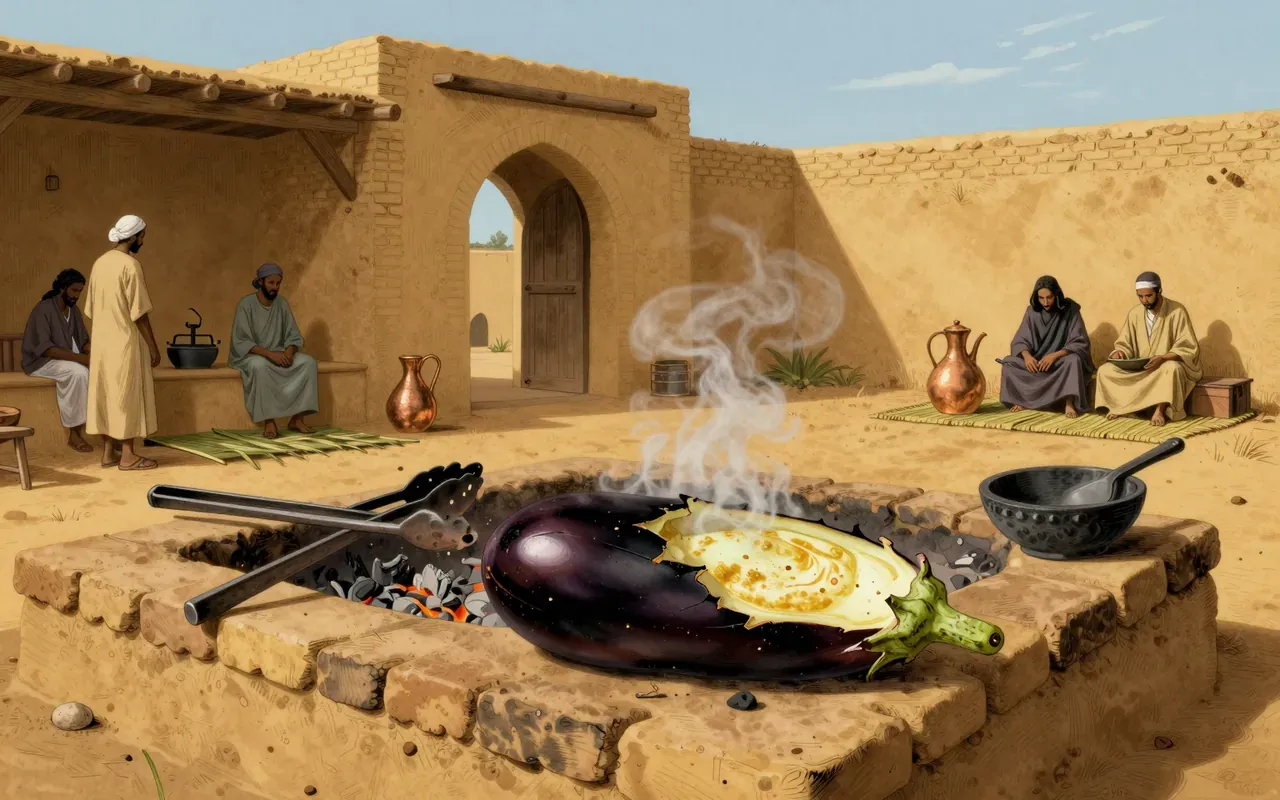
The eggplant is roasted, baked, or broiled over an open flame before peeling.
0:19
What it gets right
It delivers layered texture and contrast: creamy tahini and soft eggplant, bright acidity from lemon juice, richness from olive oil, and depth from smoke.
0:29
What it does not
It is not a vegetable-only dish—it contains tahini and olive oil, so it does not suit those avoiding sesame or added fats.
0:38
What it changed
It became part of Israeli cuisine during the 1949–1959 austerity period, adopted from neighboring Arab countries.
0:44
Who it is for, and who it is not
It is for people seeking a meze or dip for pita bread.
0:54
Is it worth your time
Yes—it is a standard Levantine appetizer served as a side or dip, making it practical for shared meals or casual eating.
Worth your time?
Selectively. Start with the brief, then cook the parts we point at.
What works
It delivers layered texture and contrast: creamy tahini and soft eggplant, bright acidity from lemon juice, richness from olive oil, and depth from smoke.
What does not
It is not a vegetable-only dish—it contains tahini and olive oil, so it does not suit those avoiding sesame or added fats.
Cook it if
Skip it if
The written brief1 min read
What the dish is and where it came from
Baba ghanoush is a Levantine appetizer made from finely chopped roasted eggplant, olive oil, lemon juice, tahini, and various seasonings. Its name appears in Arabic as bābā ġannūj.
How it works, in terms someone would actually use
The eggplant is roasted, baked, or broiled over an open flame before peeling. This yields soft pulp with a smoky taste.
What it gets right
It delivers layered texture and contrast: creamy tahini and soft eggplant, bright acidity from lemon juice, richness from olive oil, and depth from smoke.
What it does not
It is not a vegetable-only dish—it contains tahini and olive oil, so it does not suit those avoiding sesame or added fats.
What it changed
It became part of Israeli cuisine during the 1949–1959 austerity period, adopted from neighboring Arab countries.
Who it is for, and who it is not
It is for people seeking a meze or dip for pita bread. It is not for those avoiding eggplant, sesame (in tahini), or lemon.
Is it worth your time
Yes—it is a standard Levantine appetizer served as a side or dip, making it practical for shared meals or casual eating.