1:20in productionCh. 1 · What the dish is and where it came from/ 1:20 · ceiling 15 min
Dishes · Food history
Bak kut teh
A slow-simmered pork rib soup flavored with star anise, cinnamon, cloves, dong quai, fennel seeds, and garlic, served in Malaysia and Singapore.
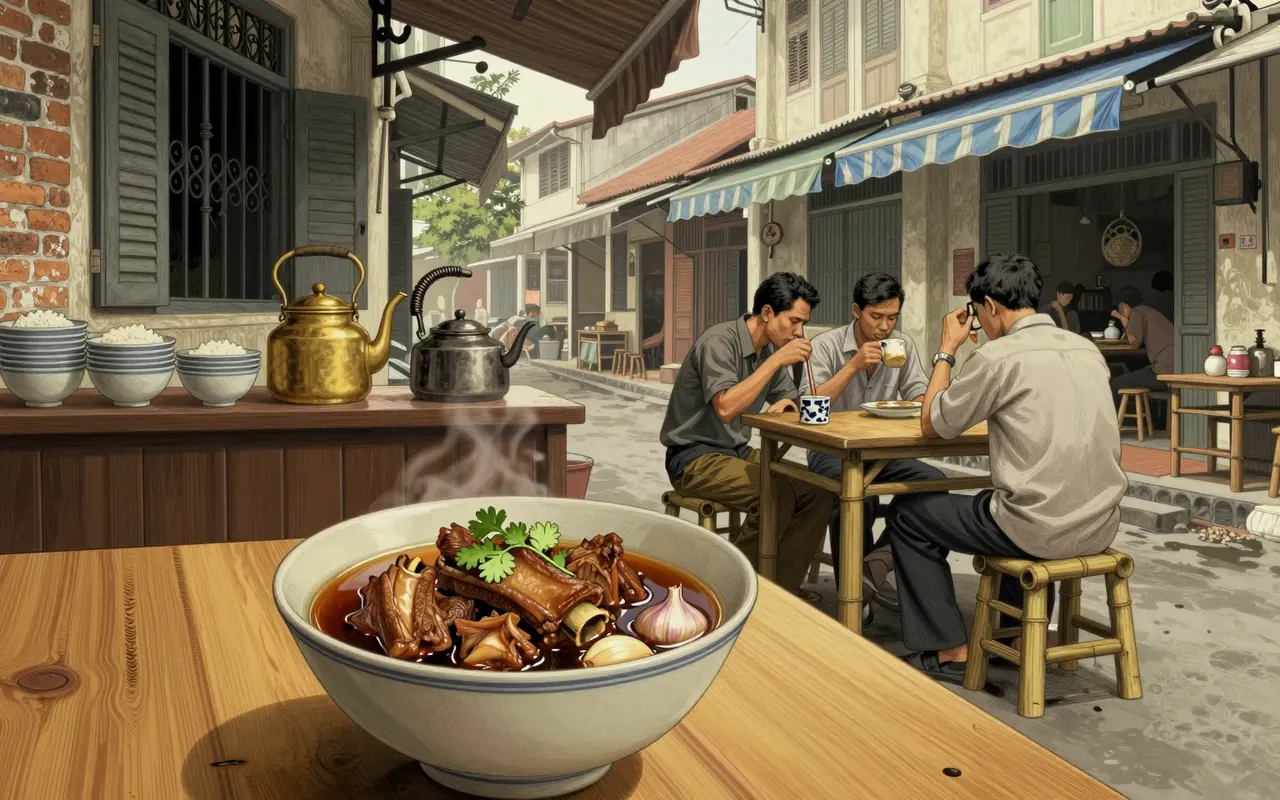
Bak kut teh is a pork rib soup popular in Malaysia and Singapore, especially among Hoklo and Teochew communities. It is associated with Klang, Malaysia, where locals claim it originated. Its roots are unclear but may trace to a Quanzhou, Fujian beef rib dish called niu pai, brought by early Chinese immigrants from Fujian.
Bak kut teh is a pork rib soup popular in Malaysia and Singapore, especially among Hoklo and Teochew communities.
0:22
How it works, in terms someone would actually use
Pork ribs simmer for hours in a broth of star anise, cinnamon, cloves, dong quai, fennel seeds, and garlic.
0:33
What it gets right
It gets right a rich, savory-sweet herbal depth from its spice blend.
0:45
What it does not
It does not contain tea leaves—despite the name—and is not a tea-based beverage or infusion.
0:51
What it changed
The Teochew variant was developed in Singapore after World War II, sold near the Singapore River in Clarke Quay and River Valley.
1:00
Who it is for, and who it is not
It is for people who enjoy slow-cooked pork rib soups with pronounced herbal and warm-spice notes.
1:12
Is it worth your time
It is worth your time if you appreciate aromatic, long-simmered broths with tender pork ribs and layered herbal complexity.
Worth your time?
Selectively. Start with the brief, then cook the parts we point at.
What works
It gets right a rich, savory-sweet herbal depth from its spice blend. Though it contains no tea leaves, the broth’s resemblance to herbal tea gives it a distinctive, soothing character.
What does not
It does not contain tea leaves—despite the name—and is not a tea-based beverage or infusion.
Cook it if
Skip it if
The written brief1 min read
What the dish is and where it came from
Bak kut teh is a pork rib soup popular in Malaysia and Singapore, especially among Hoklo and Teochew communities. It is associated with Klang, Malaysia, where locals claim it originated. Its roots are unclear but may trace to a Quanzhou, Fujian beef rib dish called niu pai, brought by early Chinese immigrants from Fujian.
How it works, in terms someone would actually use
Pork ribs simmer for hours in a broth of star anise, cinnamon, cloves, dong quai, fennel seeds, and garlic. The method produces a deeply aromatic, herb-infused soup.
What it gets right
It gets right a rich, savory-sweet herbal depth from its spice blend. Though it contains no tea leaves, the broth’s resemblance to herbal tea gives it a distinctive, soothing character.
What it does not
It does not contain tea leaves—despite the name—and is not a tea-based beverage or infusion.
What it changed
The Teochew variant was developed in Singapore after World War II, sold near the Singapore River in Clarke Quay and River Valley.
Who it is for, and who it is not
It is for people who enjoy slow-cooked pork rib soups with pronounced herbal and warm-spice notes. It is not for those avoiding pork or seeking vegetarian or tea-leaf-based dishes.
Is it worth your time
It is worth your time if you appreciate aromatic, long-simmered broths with tender pork ribs and layered herbal complexity.