10:53in productionCh. 1 · What kind of dish is it?/ 10:53 · ceiling 15 min
Dishes
Bacalhau com natas
A creamy, forgiving Portuguese casserole that treats salted cod like a garnish—not the star.
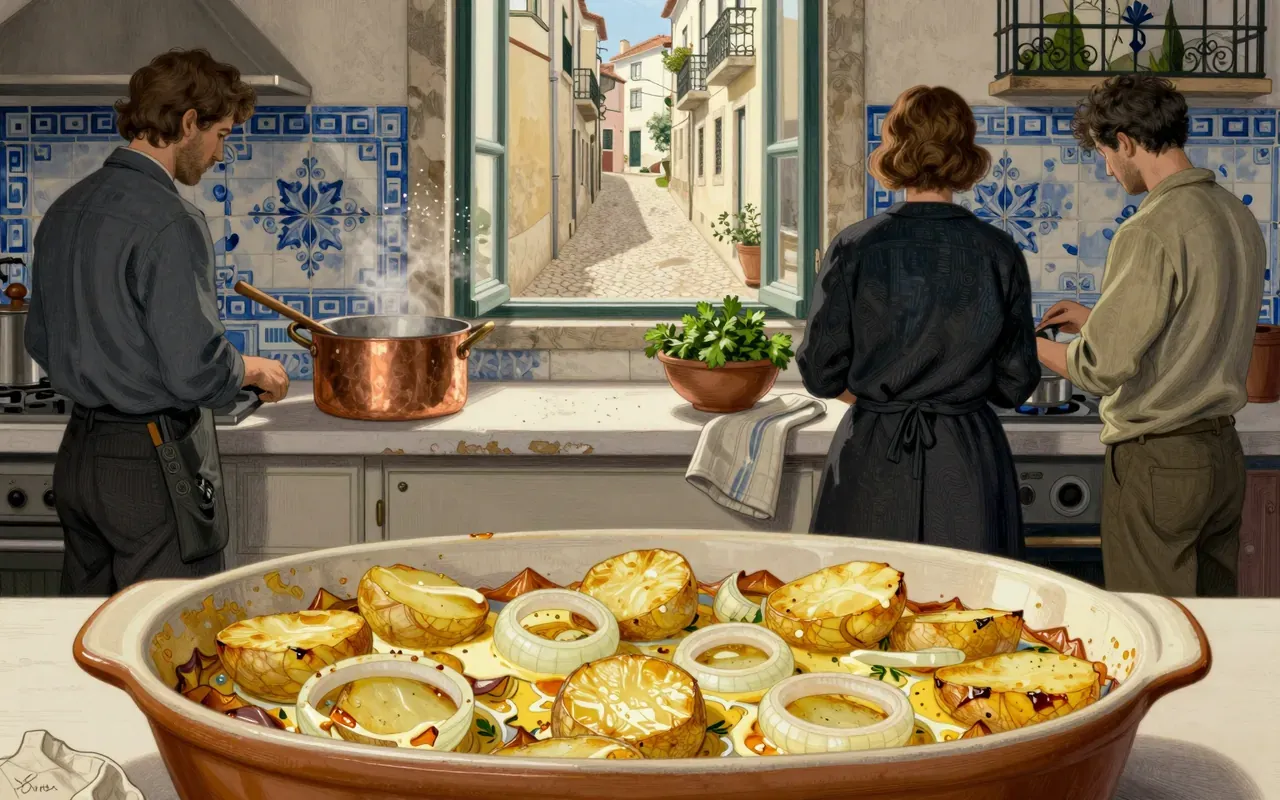
Bacalhau com natas is a Portuguese baked dish of salted cod layered with onions, potatoes, and double cream. It is simple, adaptable to leftovers, and uses little cod. Its origin is uncertain—possibly tied to the Count of Guarda or chef João Ribeiro in the 1930s.
It is a popular Portuguese method—not a regional speciality or holiday staple, but a mainstream oven-baked preparation.
2:22
How is it built?
Layering matters: cod sits between soft onions and crisp-fried (or pre-cooked) potatoes, bound by double cream.
4:15
Why does it work in real kitchens?
Its simplicity makes it viable at home and scalable in restaurants—no stove-top vigilance or timing tricks.
5:45
Why does it stretch so far?
It uses little cod—so it stretches leftovers or serves more people without diluting flavour.
6:44
Who really made it?
No single origin is confirmed: neither the Count of Guarda nor João Ribeiro is definitively credited.
Worth your time?
Yes. Cook the whole thing.
4/ 5
What works
stretches cod
relies on pantry staples
delivers consistent texture and richness
What does not
uses fresh cod
requires precise timing or temperature control
originates from a single documented source
Cook it if
home cooks
restaurants
Skip it if
dairy-avoiders
minimal-ingredient cooks
The written brief1 min read
What the dish is and where it came from
Bacalhau com natas is a Portuguese baked dish of salted cod layered with onions, potatoes, and double cream. Its origin is uncertain—possibly linked to the Count of Guarda or chef João Ribeiro in the 1930s.
How it works, in terms someone would actually use
Bacalhau com natas is baked in the oven. Cod is layered with onions, diced fried or leftover cooked potatoes, and double cream. Nutmeg and white pepper season it.
What it gets right
It gets right the balance of starch, fat, and umami—potatoes absorb cream, onions soften into sweetness, cod melts into the sauce without drying out.
What it does not
It does not rely on fresh cod. It does not require long marinating or desalting steps beyond what the cod already underwent before purchase.
What it changed
It changed how salted cod is used in domestic Portuguese cooking: from whole fillets or stews to a layered, dairy-enriched casserole format.
Who it is for, and who it is not
It is for home cooks wanting simplicity and restaurant kitchens needing yield and consistency. It is not for those avoiding dairy or seeking minimal ingredients.
Is it worth your time
Yes—if you want a rich, creamy, low-cod Portuguese bake that stretches leftovers and works without precision.