foodbriefs
8:30in productionCh. 1 · The core four/ 8:30 · ceiling 15 min
Dishes

Caldo verde

A cabbage-and-potato soup that proves celebration doesn’t need meat — just timing, tradition, and the right green.

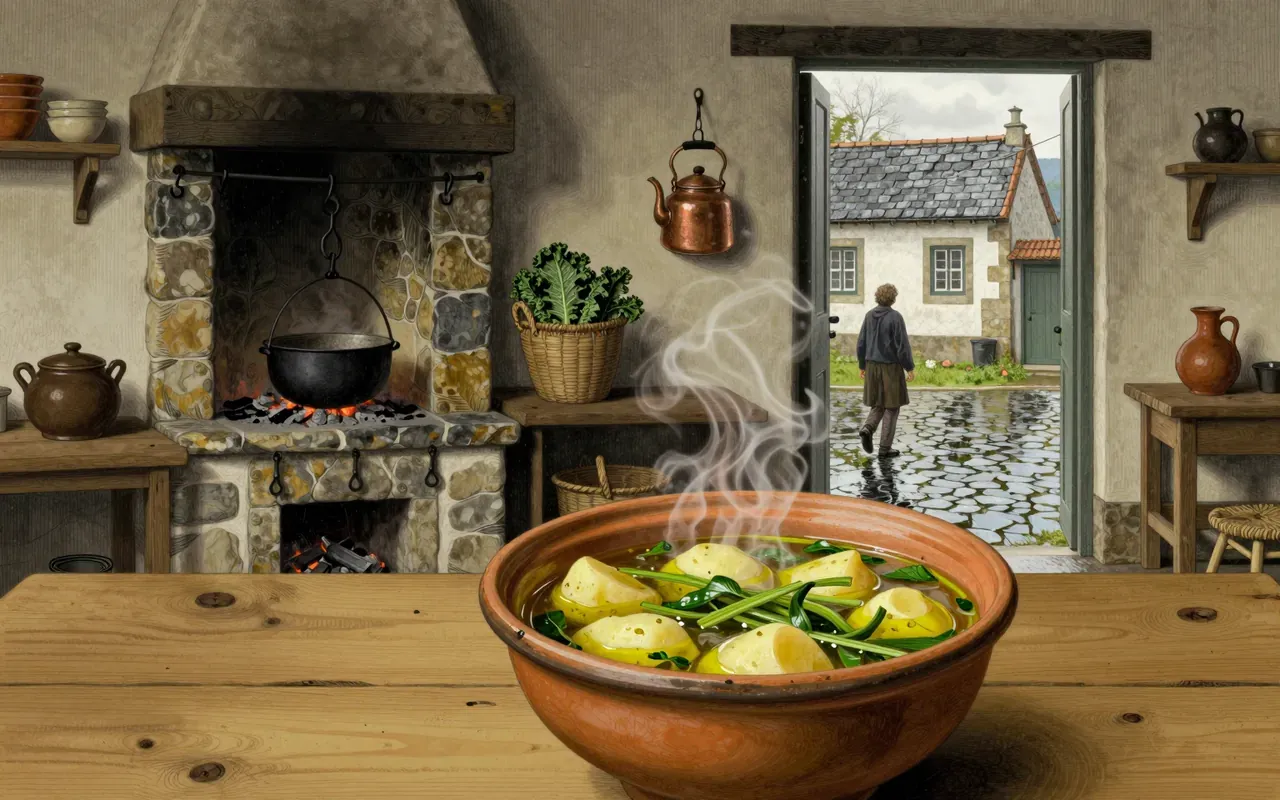
Caldo verde is a Portuguese soup from Minho Province. It uses julienned couve-galega, potatoes, olive oil, onion, garlic, salt and black pepper. It is served with cured pork sausages and broa, in tigela bowls, especially at weddings and celebrations.

Chapters & takeaways4
  1. 1:10
    The core four

    It is defined by couve-galega, potatoes, olive oil, onion, garlic, salt and black pepper — nothing more is required.

  2. 1:59
    The full plate

    It is served with sliced paio, chouriço or linguiça and broa — and always in earthenware tigela bowls.

  3. 3:31
    When it appears

    It functions as both pre-dinner ritual and late-night nourishment — never just background soup.

  4. 4:48
    What shifts, and what sticks

    Turnip greens or ham hock appear only regionally; in Brazil, pão francês replaces broa — but neither changes the soup’s spine.

Worth your time?

Yes. Cook the whole thing.

4.5/ 5
What works
  • balances starch and green
  • delivers savoury comfort with minimal technique
  • holds up to cured meats and rustic bread
What does not
  • rely on meat for depth
  • require long-simmered stock
  • use cream or dairy
Cook it if
  • anyone wanting fast, warming, vegetable-forward soup
  • those who appreciate bold accompaniments
Skip it if
  • those expecting rich stock or long-simmered meat
The written brief1 min read

What the dish is and where it came from

Caldo verde is a Portuguese soup from Minho Province, built on julienned couve-galega, potatoes, olive oil, onion, garlic, salt and black pepper.

How it works, in terms someone would actually use

It simmers potatoes until soft, mashes them into the broth to thicken it, then adds julienned couve-galega just before serving so it stays vibrant and toothsome.

What it gets right

It balances starch and green: potatoes lend body without heaviness, couve-galega gives grassy bitterness and texture, olive oil carries aroma without masking.

What it does not

It does not rely on meat for depth; ham hock appears only in some regional variations, not the traditional base.

What it changed

It turned humble, hardy greens and starchy tubers into a ceremonial dish — served in tigela bowls at weddings and birthdays, not just as sustenance but as communal punctuation.

Who it is for, and who it is not

It is for anyone who wants a fast, warming, vegetable-forward soup that holds up to bold accompaniments — not for those expecting rich stock or long-simmered meat.

Is it worth your time

Yes — it delivers deep savoury comfort with minimal technique, but only if you respect the cabbage’s timing and use authentic couve-galega or a close substitute like kale.

Same course · Dishes4 of 485
Up next in Food

Cannoli

· 8:46

Cannoli are not a dessert—they’re a timed collision of crunch and cream, invented in Arab-influenced Sicily and ruined by sitting.

8:46