1:10in productionCh. 1 · What the dish is and where it came from/ 1:10 · ceiling 15 min
Dishes · Technique
Nasi goreng
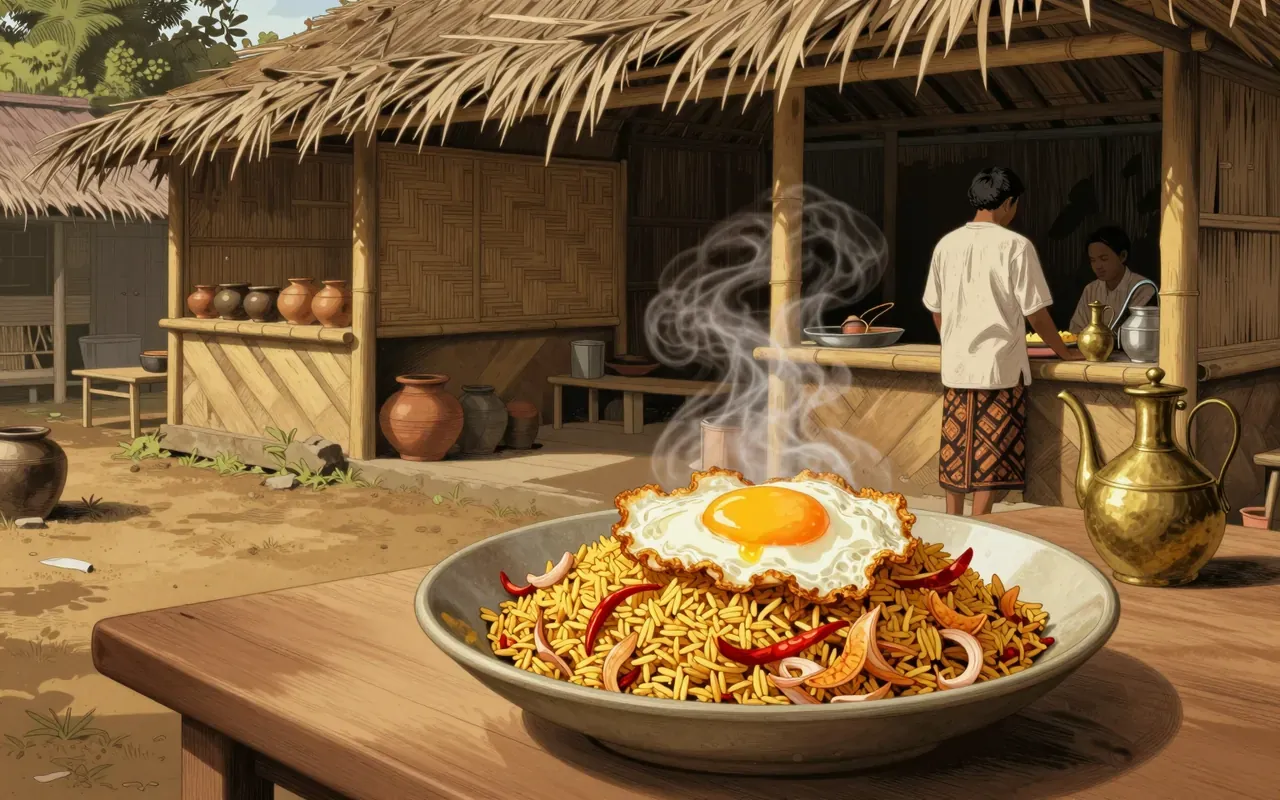
A Southeast Asian stir-fried rice dish made with pre-cooked rice and seasoned with sweet soy sauce, shrimp paste, shallots, garlic, tamarind, and chilli.
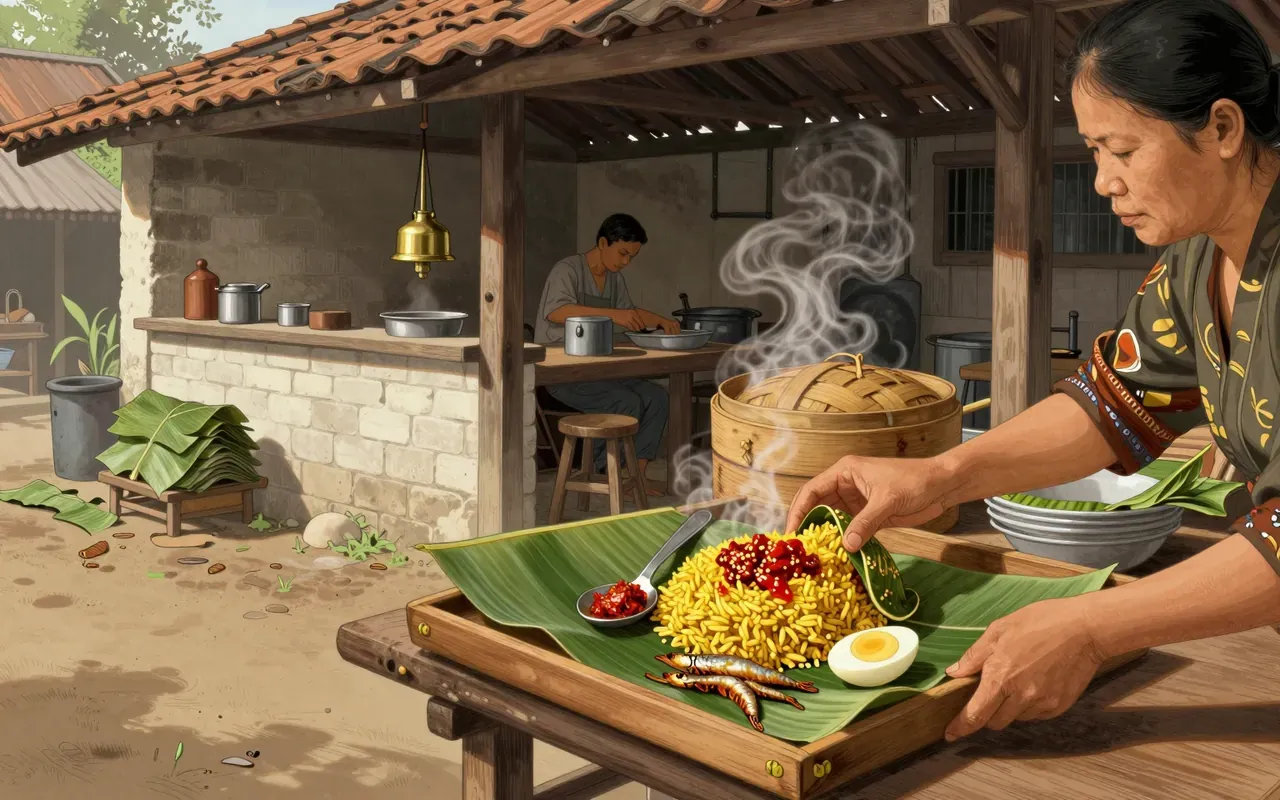
Nasi goreng is a Southeast Asian rice dish—Indonesian and Malay for 'fried rice'—widely consumed in Indonesia, Malaysia, Singapore, Brunei, and southern Thailand. It appears in early 19th-century Javanese literature as 'sekul goreng'.
Nasi goreng is a Southeast Asian rice dish—Indonesian and Malay for 'fried rice'—widely consumed in Indonesia, Malaysia, Singapore, Brunei, and southern Thailand.
0:13
How it works, in terms someone would actually use
It is stir-fried in a small amount of oil or margarine using pre-cooked rice—traditionally leftover rice from the night before—because its drier texture withstands frying better than freshly cooked rice.
0:25
What it gets right
Its appeal lies in its aromatic, smoky flavour from caramelised sweet soy sauce and ground shrimp paste, and its spiciness relative to Chinese-style fried rice.
0:35
What it does not
It is generally spicier than Chinese-style fried rice, which may limit its appeal for those preferring milder dishes.
0:42
What it changed
In 2018, it was officially recognized by the Indonesian government as one of five national dishes, alongside soto, sate, rendang, and gado-gado.
0:51
Who it is for, and who it is not
It suits someone drawn to fried rice with sweet soy sauce, shrimp paste and spice.
1:00
Is it worth your time
Yes—it is a staple across multiple countries, part of daily life, street-food culture, and official national recognition, making it widely accessible and culturally embedded.
Worth your time?
Selectively. Start with the brief, then cook the parts we point at.
What works
Its appeal lies in its aromatic, smoky flavour from caramelised sweet soy sauce and ground shrimp paste, and its spiciness relative to Chinese-style fried rice.
What does not
It is generally spicier than Chinese-style fried rice, which may limit its appeal for those preferring milder dishes.
Cook it if
Skip it if
The written brief1 min read
What the dish is and where it came from
Nasi goreng is a Southeast Asian rice dish—Indonesian and Malay for ‘fried rice’—widely consumed in Indonesia, Malaysia, Singapore, Brunei, and southern Thailand. It appears in early 19th-century Javanese literature as ‘sekul goreng’.
How it works, in terms someone would actually use
It is stir-fried in a small amount of oil or margarine using pre-cooked rice—traditionally leftover rice from the night before—because its drier texture withstands frying better than freshly cooked rice.
What it gets right
Its appeal lies in its aromatic, smoky flavour from caramelised sweet soy sauce and ground shrimp paste, and its spiciness relative to Chinese-style fried rice.
What it does not
It is generally spicier than Chinese-style fried rice, which may limit its appeal for those preferring milder dishes.
What it changed
In 2018, it was officially recognized by the Indonesian government as one of five national dishes, alongside soto, sate, rendang, and gado-gado.
Who it is for, and who it is not
It suits someone drawn to fried rice with sweet soy sauce, shrimp paste and spice. The particular seasonings matter when choosing a version.
Is it worth your time
Yes—it is a staple across multiple countries, part of daily life, street-food culture, and official national recognition, making it widely accessible and culturally embedded.