foodbriefs
9:13in productionCh. 1 · No Single Method/ 9:13 · ceiling 15 min
Traditions · Culture

Regional variations of barbecue

Barbecue is a social contract written in smoke — not a cooking method.

Barbecue is a global set of regional practices anchored in social custom, not technical uniformity. It varies by meat type, fuel, smoke use, equipment, temperature, and timing — and always involves communal eating. Specific dishes like chuanr, char siu, bulgogi, braai, nyama choma, and shisa nyama demonstrate how geography, ingredient, and gathering define the form.

Chapters & takeaways4
  1. 1:03
    No Single Method

    Barbecue has no technical core — only variables: meat, fuel, smoke, timing, and equipment.

  2. 2:28
    Social First, Fire Second

    In South Africa and Kenya, barbecue names a custom — braai, shisa nyama, nyama choma — not just a way to cook meat.

  3. 4:14
    Flavour Is Local Geography

    Chuanr, char siu, and bulgogi prove regional identity lives in skewer shape, marinade composition, and where grilling happens.

  4. 5:27
    No Fixed Sequence

    Meat appears whole, ground, or processed — and preparation steps can happen before, during, or after cooking.

Worth your time?

Yes. Cook the whole thing.

4/ 5
What works
  • as a lens for cultural variation
  • by naming concrete dishes and their contexts
  • through precise technical distinctions
What does not
  • establish a universal method
  • define a consistent flavour profile
  • originate from a single place or moment
Cook it if
  • cooks matching technique to occasion
  • readers studying food as social practice
Skip it if
  • those seeking a definitive recipe
  • beginners wanting one foundational barbecue skill
The written brief1 min read

What the dish is and where it came from

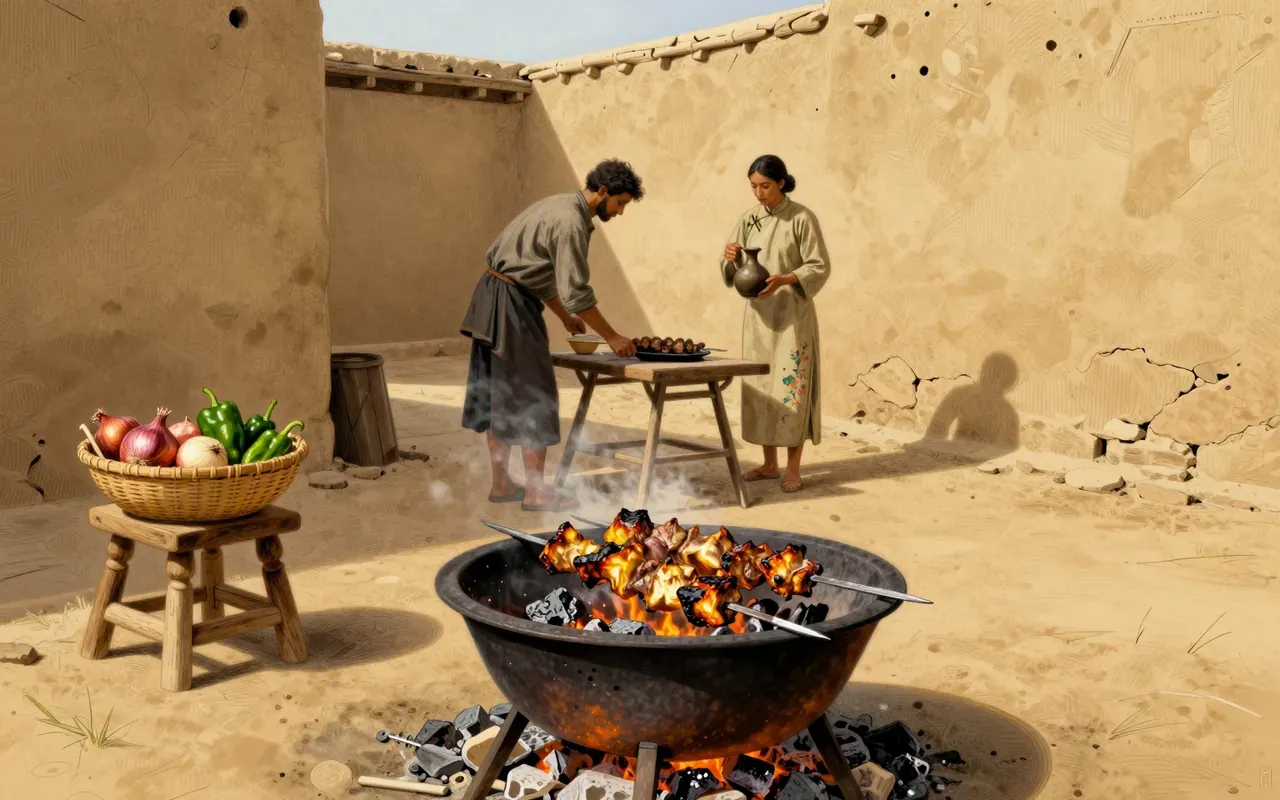
Barbecue is not a dish but a family of regional practices — chuanr from Xinjiang, char siu in Cantonese regions, bulgogi in Korea, braai in South Africa, nyama choma in Kenya, shisa nyama in South African townships.

How it works, in terms someone would actually use

Barbecue works by applying heat to meat — whole, ground, or processed — using variable equipment, fuel, smoke, temperature, and duration. Preparation includes marinating, rubbing, or basting before, during, or after cooking.

What it gets right

It gets right the inseparability of meat, fire, and gathering. Each variation ties equipment (charcoal, open fire, grill), location (near a butchery, at the table), and ritual (communal grilling, social norms) into one practice.

What it does not

It does not establish a core technique, shared origin, or unifying flavour profile. There is no default meat, sauce, fuel, or timing.

What it changed

It changed how meat is framed: from ingredient to social anchor. Braai, nyama choma, and shisa nyama are named as customs first, cooking methods second.

Who it is for, and who it is not

It is for cooks who need to match method to place and purpose — e.g., skewering for street food, table-grilling for Korean meals, open-fire roasting for township gatherings. It is not for those seeking a replicable, standalone recipe.

Is it worth your time

It is worth your time only if you are choosing a method for a specific social occasion or regional dish — not as a universal technique. It offers no single standard to follow, only context-specific decisions.
Same course · Traditions4 of 20
Up next in Food

Brandade

· 8:49

Brandade proves salt cod doesn’t need cream to be creamy—it just needs oil, patience, and the right region.

8:49