foodbriefs
1:19in productionCh. 1 · What the dish is and where it came from/ 1:19 · ceiling 15 min
Traditions · Dishes

Mooncake

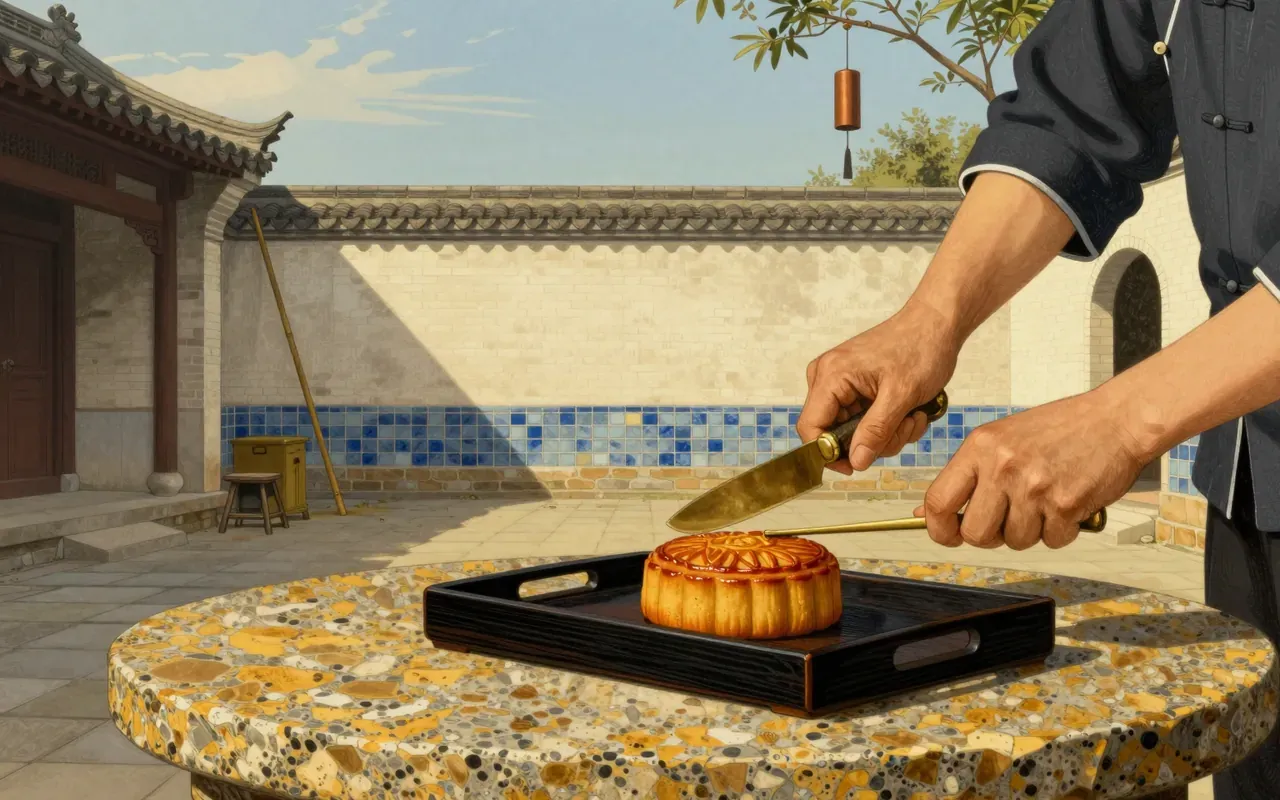
A round, dense Chinese pastry with sweet paste filling and optional salted duck egg yolk, eaten during the Mid-Autumn Festival.

A mooncake is a Chinese baked item traditionally eaten during the Mid-Autumn Festival, one of the four most important Chinese festivals. The Cantonese style originates from Guangdong and Guangxi provinces.

Chapters & takeaways7
  1. 0:00
    What the dish is and where it came from

    A mooncake is a Chinese baked item traditionally eaten during the Mid-Autumn Festival, one of the four most important Chinese festivals.

  2. 0:12
    How it works, in terms someone would actually use

    It is eaten in small wedges, often with tea.

  3. 0:29
    What it gets right

    It gets right a symbolic and textural contrast: dense sweet fillings like lotus seed or red bean paste, sometimes with whole salted duck egg yolks representing the full moon, all wrapped in tender-chewy crust.

  4. 0:43
    What it does not

    It does not offer lightness or vegetable-forward flavor; its richness and density make it less suited for those seeking low-sugar or savory snacks.

  5. 0:52
    What it changed

    Suzhou-style mooncake, with flaky dough and generous sugar and lard, represents a distinct regional variation dating back over a thousand years.

  6. 1:00
    Who it is for, and who it is not

    It is for people participating in Mid-Autumn Festival traditions or exchanging gifts—especially in business or family contexts.

  7. 1:11
    Is it worth your time

    It is worth your time if you’re engaging with Mid-Autumn Festival customs or want a culturally specific, shareable treat with tea.
Worth your time?

Selectively. Start with the brief, then cook the parts we point at.

What works
  • It gets right a symbolic and textural contrast: dense sweet fillings like lotus seed or red bean paste, sometimes with whole salted duck egg yolks representing the full moon, all wrapped in tender-chewy crust.
What does not
  • It does not offer lightness or vegetable-forward flavor; its richness and density make it less suited for those seeking low-sugar or savory snacks.
Cook it if
    Skip it if
      The written brief1 min read

      What the dish is and where it came from

      A mooncake is a Chinese baked item traditionally eaten during the Mid-Autumn Festival, one of the four most important Chinese festivals. The Cantonese style originates from Guangdong and Guangxi provinces.

      How it works, in terms someone would actually use

      It is eaten in small wedges, often with tea. A traditional Cantonese version is round, about 10 cm wide and 3–4 cm thick, with a 2–3 mm chewy crust made from sugar syrup, lye water, flour, and oil, enveloping a rich, thick filling.

      What it gets right

      It gets right a symbolic and textural contrast: dense sweet fillings like lotus seed or red bean paste, sometimes with whole salted duck egg yolks representing the full moon, all wrapped in tender-chewy crust.

      What it does not

      It does not offer lightness or vegetable-forward flavor; its richness and density make it less suited for those seeking low-sugar or savory snacks.

      What it changed

      Suzhou-style mooncake, with flaky dough and generous sugar and lard, represents a distinct regional variation dating back over a thousand years.

      Who it is for, and who it is not

      It is for people participating in Mid-Autumn Festival traditions or exchanging gifts—especially in business or family contexts. It is not primarily for everyday snacking or dietary-restricted eaters.

      Is it worth your time

      It is worth your time if you’re engaging with Mid-Autumn Festival customs or want a culturally specific, shareable treat with tea.
      Same course · Traditions4 of 10
      Up next in Food

      Moqueca

      · 1:16

      A Brazilian seafood stew with regional variations in fish, aromatics, and fats.

      1:16