1:11in productionCh. 1 · What the dish is and where it came from/ 1:11 · ceiling 15 min
Dishes
Caesar salad
A green salad of romaine lettuce and croutons dressed with lemon juice, olive oil, eggs, Worcestershire sauce, anchovies, garlic, mustard, Parmesan, and black pepper.
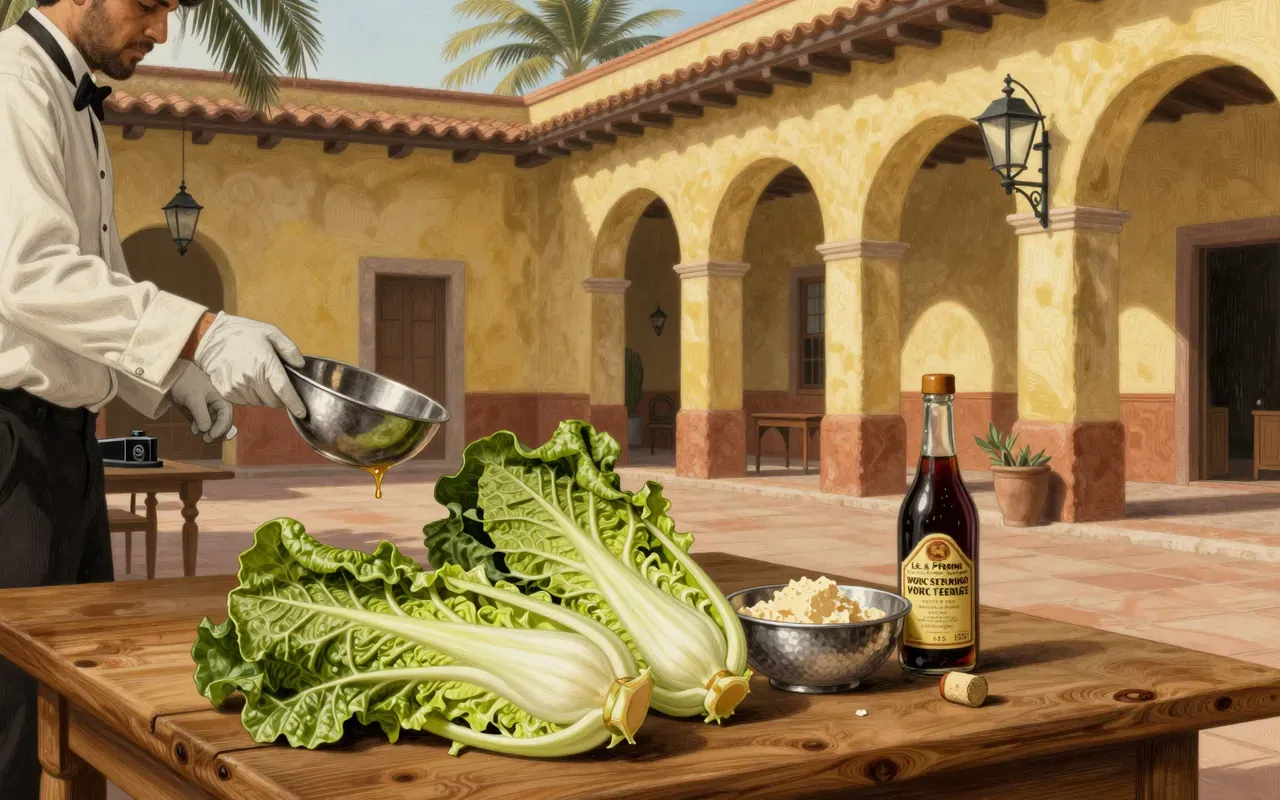
A green salad invented on July 4, 1924, by Caesar Cardini at his restaurant Caesar's in Tijuana, Mexico. It emerged when the kitchen was overwhelmed and short on ingredients.
A green salad invented on July 4, 1924, by Caesar Cardini at his restaurant Caesar's in Tijuana, Mexico.
0:12
How it works, in terms someone would actually use
It is prepared tableside, using whole romaine leaves lifted by the stem and eaten with the fingers.
0:27
What it gets right
It delivers contrast: crisp romaine, crunchy croutons, salty Parmesan, and a rich, tangy dressing.
0:35
What it does not
The original omitted anchovies, mustard, and herbs—ingredients now common in many versions.
0:44
What it changed
It popularized the use of raw egg and Worcestershire sauce in salad dressings and helped standardize romaine as a base for composed green salads.
0:54
Who it is for, and who it is not
It is for people who enjoy bold, savory, creamy, and textured salads.
1:04
Is it worth your time
Yes—if you like its stated ingredients and format.
Worth your time?
Selectively. Start with the brief, then cook the parts we point at.
What works
It delivers contrast: crisp romaine, crunchy croutons, salty Parmesan, and a rich, tangy dressing. The tableside preparation adds theatricality and freshness.
What does not
The original omitted anchovies, mustard, and herbs—ingredients now common in many versions. That makes modern renditions bolder in flavor than Cardini’s intended version.
Cook it if
Skip it if
The written brief1 min read
What the dish is and where it came from
A green salad invented on July 4, 1924, by Caesar Cardini at his restaurant Caesar’s in Tijuana, Mexico. It emerged when the kitchen was overwhelmed and short on ingredients.
How it works, in terms someone would actually use
It is prepared tableside, using whole romaine leaves lifted by the stem and eaten with the fingers. The original dressing included olive oil, salt, pepper, lemon juice, Worcestershire sauce, coddled eggs, Parmesan, and croutons made with garlic-infused oil.
What it gets right
It delivers contrast: crisp romaine, crunchy croutons, salty Parmesan, and a rich, tangy dressing. The tableside preparation adds theatricality and freshness.
What it does not
The original omitted anchovies, mustard, and herbs—ingredients now common in many versions. That makes modern renditions bolder in flavor than Cardini’s intended version.
What it changed
It popularized the use of raw egg and Worcestershire sauce in salad dressings and helped standardize romaine as a base for composed green salads.
Who it is for, and who it is not
It is for people who enjoy bold, savory, creamy, and textured salads. It is less suited for those avoiding eggs, dairy, anchovies, or garlic.
Is it worth your time
Yes—if you like its stated ingredients and format. Its enduring presence across decades and venues signals broad appeal.