foodbriefs
9:56in productionCh. 1 · Where it began/ 9:56 · ceiling 15 min
Dishes · Food history

Lobster roll

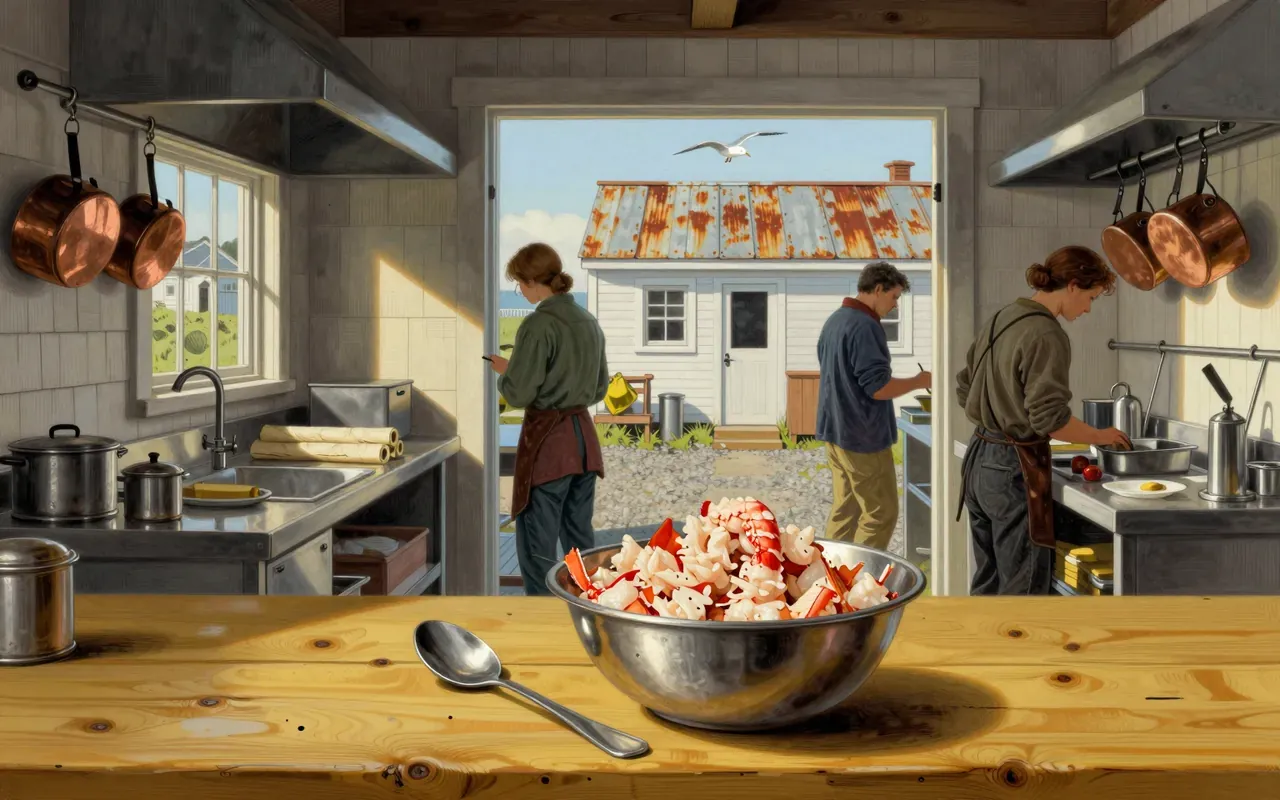
Lobster roll is not luxury—it’s logistics: lobster, split into two camps by temperature and fat, served on a bun that holds it all together.

The lobster roll is a North American dish from Milford, Connecticut, documented as early as 1929 at Perry's. It has two verified preparations: cold lobster with mayonnaise (Maine style) and hot lobster in drawn butter (Connecticut style), both served on a grilled hot dog–style bun. It succeeds by focusing entirely on lobster’s texture and sweetness, fails when it obscures that focus with filler or imbalance, and changed how lobster moves—from table to hand, from feast to roadside stop.

Chapters & takeaways4
  1. 0:50
    Where it began

    Milford, Connecticut—not Maine or Boston—is the documented birthplace, with Perry's serving it as early as 1929.

  2. 2:31
    Cold and creamy

    Maine style means cold lobster, mayonnaise spread inside the bun or tossed with the meat.

  3. 4:10
    Hot and buttered

    Connecticut style means hot lobster, cooked in drawn butter, served in the same grilled bun.

  4. 6:34
    How it went mobile

    By 1970, roadside stands like Red's Eats were already serving chopped lobster in butter on hot dog buns.

Worth your time?

Yes. Cook the whole thing.

4/ 5
What works
  • isolates lobster as the sole star
  • uses grilled bun for crisp contrast
  • creates functional temperature-and-fat binaries
What does not
  • balance acidity
  • use herbs or citrus
  • include celery or onion
  • require accompaniment
Cook it if
  • people who want lobster without ceremony
  • people who value portability and clarity
Skip it if
  • people who need complexity or contrast
The written brief1 min read

What the dish is and where it came from

A North American dish from Milford, Connecticut, featuring lobster meat served on a grilled hot dog–style bun. Documented versions date to 1929 at Perry’s in Milford.

How it works, in terms someone would actually use

Chopped lobster meat is either chilled and mixed with or spread with mayonnaise inside a grilled hot dog bun (Maine style), or heated in drawn butter and served warm in the same bun (Connecticut style).

What it gets right

It isolates lobster as the sole star. The grilled bun adds crisp contrast. The two styles—cold/mayo and hot/butter—create clear, functional binaries for temperature, fat, and texture.

What it does not

It does not balance acidity, heat, or umami beyond butter or mayo. It does not use herbs, citrus, or vinegar. It does not include celery, onion, or other common cold-seafood fillers unless added locally—and those additions are not verified in the sources.

What it changed

It shifted lobster from a formal, boiled-and-served-at-the-table seafood to portable, handheld food—first at roadside stands, then as a regional signature dish.

Who it is for, and who it is not

It is for people who want lobster without ceremony: no shells to crack, no forks to juggle, no side dishes to coordinate. It is not for people who need complexity, contrast, or accompaniment—there is none in the core form.

Is it worth your time

Yes—if you want a direct, unadorned expression of lobster’s sweetness and texture, delivered fast and cleanly on bread. It fails if the lobster is over-chopped, under-seasoned, or buried in sauce.

Same course · Dishes4 of 485
Up next in Food

Ló͘-bah-pn̄g

· 9:05

Ló͘-bah-pn̄g proves that minced pork only matters when it’s swimming in its own soy-simmered fat.

9:05