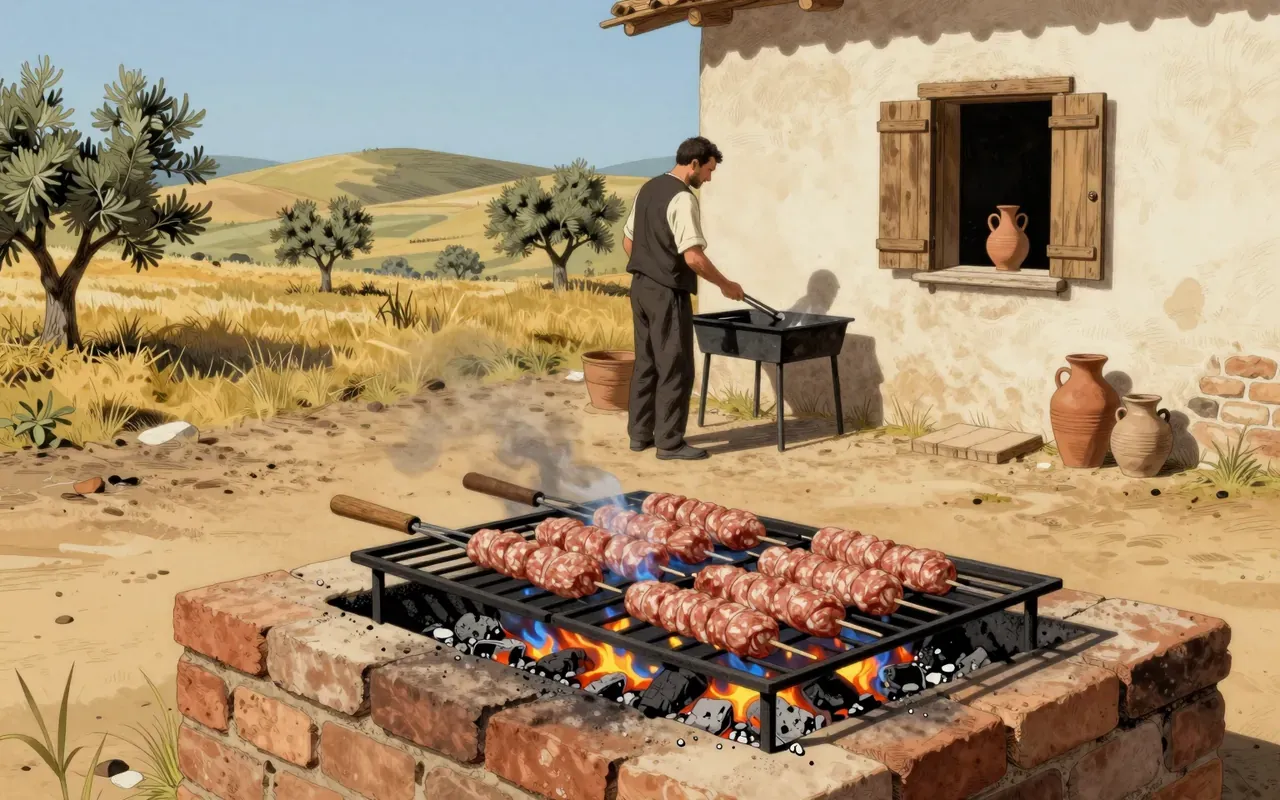
Ćevapi is a grilled dish of minced meat popular in Southeast Europe and countries of former Yugoslavia, where it originated.
0:08
How it works, in terms someone would actually use
It is made by hand-mixing minced meat and forming it — in Bosnian style, using a funnel.
0:16
What it gets right
It gets right regional specificity: Leskovac-style uses pork and beef; Sarajevo-style uses only young-beef; Travnik-style adds veal, lamb, and baking soda.
0:24
What it does not
It does not offer uniform composition: Sarajevo-style excludes pork and veal; Travnik-style includes them.
0:32
What it changed
It changed local food culture: Banja Luka-style appears as a connected 'meat tile' of four ćevapi; the first dedicated restaurants opened in Bosnian cities in the 1960s.
0:43
Who it is for, and who it is not
It is for people who eat beef, pork, veal, or lamb — including combinations.
0:55
Is it worth your time
Yes — it is a documented, regionally varied grilled meat dish with over 170 years of recorded presence in former Yugoslavia.
Worth your time?
Selectively. Start with the brief, then cook the parts we point at.
What works
It gets right regional specificity: Leskovac-style uses pork and beef; Sarajevo-style uses only young-beef; Travnik-style adds veal, lamb, and baking soda.
What does not
It does not offer uniform composition: Sarajevo-style excludes pork and veal; Travnik-style includes them. This limits interchangeability across regions.
Cook it if
Skip it if
The written brief1 min read
What the dish is and where it came from
Ćevapi is a grilled dish of minced meat popular in Southeast Europe and countries of former Yugoslavia, where it originated.
How it works, in terms someone would actually use
It is made by hand-mixing minced meat and forming it — in Bosnian style, using a funnel. The dish is grilled.
What it gets right
It gets right regional specificity: Leskovac-style uses pork and beef; Sarajevo-style uses only young-beef; Travnik-style adds veal, lamb, and baking soda.
What it does not
It does not offer uniform composition: Sarajevo-style excludes pork and veal; Travnik-style includes them. This limits interchangeability across regions.
What it changed
It changed local food culture: Banja Luka-style appears as a connected ‘meat tile’ of four ćevapi; the first dedicated restaurants opened in Bosnian cities in the 1960s.
Who it is for, and who it is not
It is for people who eat beef, pork, veal, or lamb — including combinations. It is not for people avoiding those meats or seeking vegetarian, poultry-only, or standardized national dishes.
Is it worth your time
Yes — it is a documented, regionally varied grilled meat dish with over 170 years of recorded presence in former Yugoslavia.