1:11in productionCh. 1 · What the dish is and where it came from/ 1:11 · ceiling 15 min
Preserving & fermentation · Dishes
Ajvar
A roasted-pepper-and-eggplant condiment from the Balkans, traditionally preserved for winter use.
Ajvar is a Balkan condiment made principally from sweet bell peppers and eggplants. Its name derives from the Turkish word 'havyar' (caviar), referencing a late-19th-century substitution in Belgrade restaurants after Danube sturgeon caviar production faltered.
Ajvar is a Balkan condiment made principally from sweet bell peppers and eggplants.
0:14
How it works, in terms someone would actually use
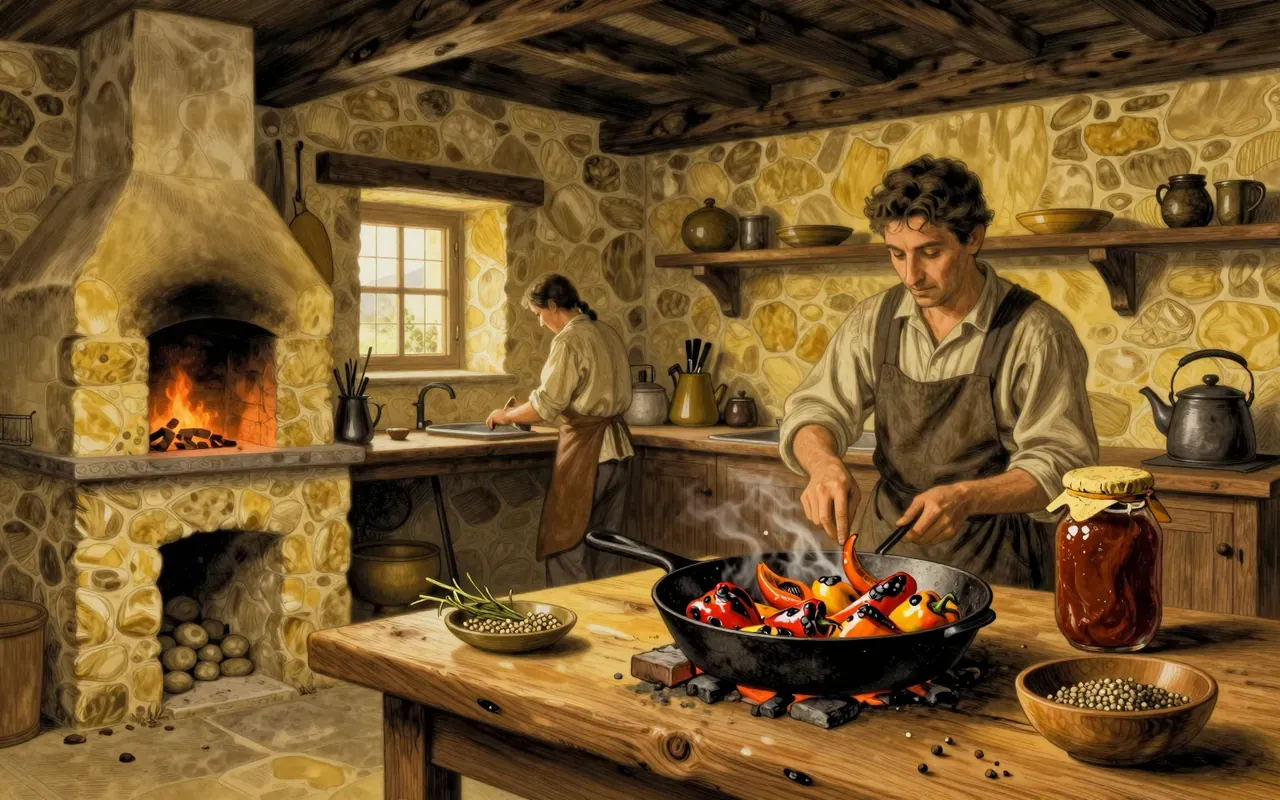
Homemade ajvar is made by roasting peppers, mincing them, and then cooking the mixture.
0:25
What it gets right
It delivers layered flavor through roasted sweetness and adjustable heat—ranging from sweet to very hot—depending on pepper varieties and added chilies.
0:37
What it does not
Preparation requires considerable manual labor, especially peeling roasted peppers, making it more time-intensive than many condiments.
0:43
What it changed
It is traditionally prepared in mid-autumn when peppers are abundant and preserved in glass jars for winter consumption—often running out before spring.
0:52
Who it is for, and who it is not
It is for people seeking a vegetable-based, shelf-stable condiment with adaptable heat.
1:03
Is it worth your time
Yes—it’s worth your time if you want a versatile, seasonally rooted condiment designed for winter meals and long-term pantry storage.
Worth your time?
Selectively. Start with the brief, then cook the parts we point at.
What works
It delivers layered flavor through roasted sweetness and adjustable heat—ranging from sweet to very hot—depending on pepper varieties and added chilies. It functions flexibly as a bread spread or side dish.
What does not
Preparation requires considerable manual labor, especially peeling roasted peppers, making it more time-intensive than many condiments.
Cook it if
Skip it if
The written brief1 min read
What the dish is and where it came from
Ajvar is a Balkan condiment made principally from sweet bell peppers and eggplants. Its name derives from the Turkish word ‘havyar’ (caviar), referencing a late-19th-century substitution in Belgrade restaurants after Danube sturgeon caviar production faltered.
How it works, in terms someone would actually use
Homemade ajvar is made by roasting peppers, mincing them, and then cooking the mixture. Some industrial versions skip roasting and cook fresh minced peppers with sunflower oil instead.
What it gets right
It delivers layered flavor through roasted sweetness and adjustable heat—ranging from sweet to very hot—depending on pepper varieties and added chilies. It functions flexibly as a bread spread or side dish.
What it does not
Preparation requires considerable manual labor, especially peeling roasted peppers, making it more time-intensive than many condiments.
What it changed
It is traditionally prepared in mid-autumn when peppers are abundant and preserved in glass jars for winter consumption—often running out before spring.
Who it is for, and who it is not
It is for people seeking a vegetable-based, shelf-stable condiment with adaptable heat. It is not for those avoiding roasted pepper or eggplant, or preferring raw or uncooked preparations.
Is it worth your time
Yes—it’s worth your time if you want a versatile, seasonally rooted condiment designed for winter meals and long-term pantry storage.