9:50in productionCh. 1 · Origin is linguistic, not botanical/ 9:50 · ceiling 15 min
Dishes
Egusi sauce
Egusi sauce proves fat-rich seeds can thicken soup better than starch — if you treat them like oil, not flour.
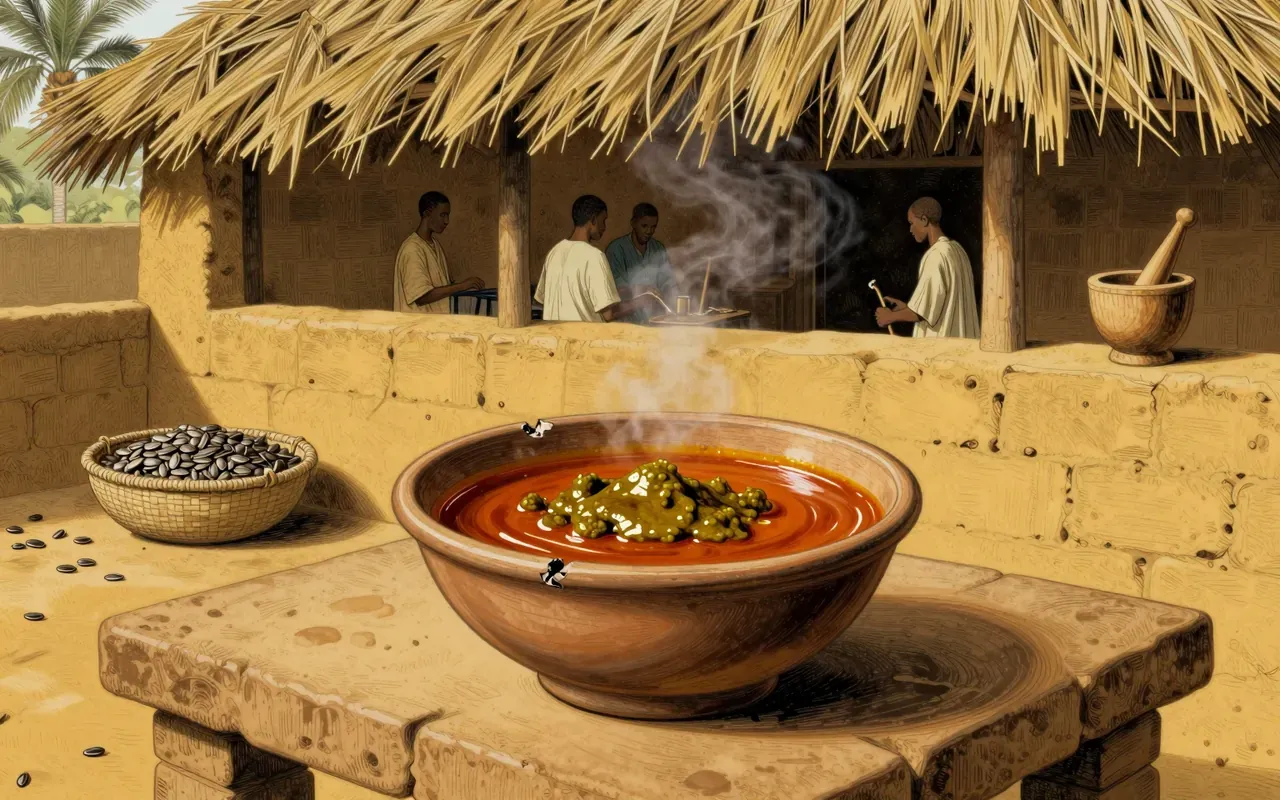
Egusi sauce is a Nigerian soup of Yoruba origin, defined by ground egusi seeds — fat- and protein-rich seeds from squash, melon or gourd plants. It thickens via two methods: frying the paste in palm oil, or adding lumps to boiling water and breaking them down after ten minutes. Tomato, onion, chili pepper and palm oil are common additions. It appears across West and Central Africa, served with fufu, rice or grilled meats. Pumpkin seeds sometimes substitute for egusi seeds.
It is Nigerian. Its name comes from Yoruba — not a generic term for melon seed, but a linguistic anchor.
2:10
Seeds are fat, not filler
Grinding unlocks fat and protein — not starch — so the paste behaves like a nut butter, not a flour.
3:32
Two methods, two textures
Frying or boiling the paste defines the sauce’s mouthfeel — one gives richness, the other purity.
4:50
Palm oil is the binder
Tomato, onion and chili are flavour scaffolds — but palm oil is structural, not optional.
6:02
Substitution fails on physics
Pumpkin seeds substitute only in scarcity — they lack egusi’s fat-to-protein ratio and break differently in heat.
Worth your time?
Yes. Cook the whole thing.
4/ 5
What works
It uses egusi seeds’ natural fat and protein to create a stable, velvety suspension without flour or roux — a technique rooted in Yoruba culinary logic.
What does not
It does not rely on tomatoes or onions for structure — they add flavour and colour, but the sauce holds its form only when egusi paste is properly emulsified or dispersed.
Cook it if
It is for cooks who value ingredient-led texture and plant-based protein density — not for those seeking light, brothy soups or quick weeknight fixes without prep.
Skip it if
It is not for cooks expecting instant thickening or neutral-flavoured bases.
The written brief1 min read
What the dish is and where it came from
Egusi sauce is a Nigerian soup of Yoruba origin, built around ground egusi seeds from squash, melon or gourd plants.
How it works, in terms someone would actually use
Egusi sauce thickens soup by releasing fat and protein from ground egusi seeds — either fried in palm oil to deepen flavour and texture, or added as lumps to boiling water and broken down after ten minutes.
What it gets right
It uses egusi seeds’ natural fat and protein to create a stable, velvety suspension without flour or roux — a technique rooted in Yoruba culinary logic.
What it does not
It does not rely on tomatoes or onions for structure — they add flavour and colour, but the sauce holds its form only when egusi paste is properly emulsified or dispersed.
What it changed
It expanded the use of cucurbitaceous seeds as thickeners across West and Central Africa, shifting reliance from starches to oil-rich seeds for body and nutrition.
Who it is for, and who it is not
It is for cooks who value ingredient-led texture and plant-based protein density — not for those seeking light, brothy soups or quick weeknight fixes without prep.
Is it worth your time
Yes, if you want a protein-rich, plant-based sauce with a nutty depth that clings to fufu or rice — but only if you source or substitute egusi seeds correctly.