0:57in productionCh. 1 · What the dish is and where it came from/ 0:57 · ceiling 15 min
Dishes · Culture
Ndolé
A Cameroonian stew of boiled ndoleh leaves, ground peanuts, crayfish, garlic, onions, and fish or beef.
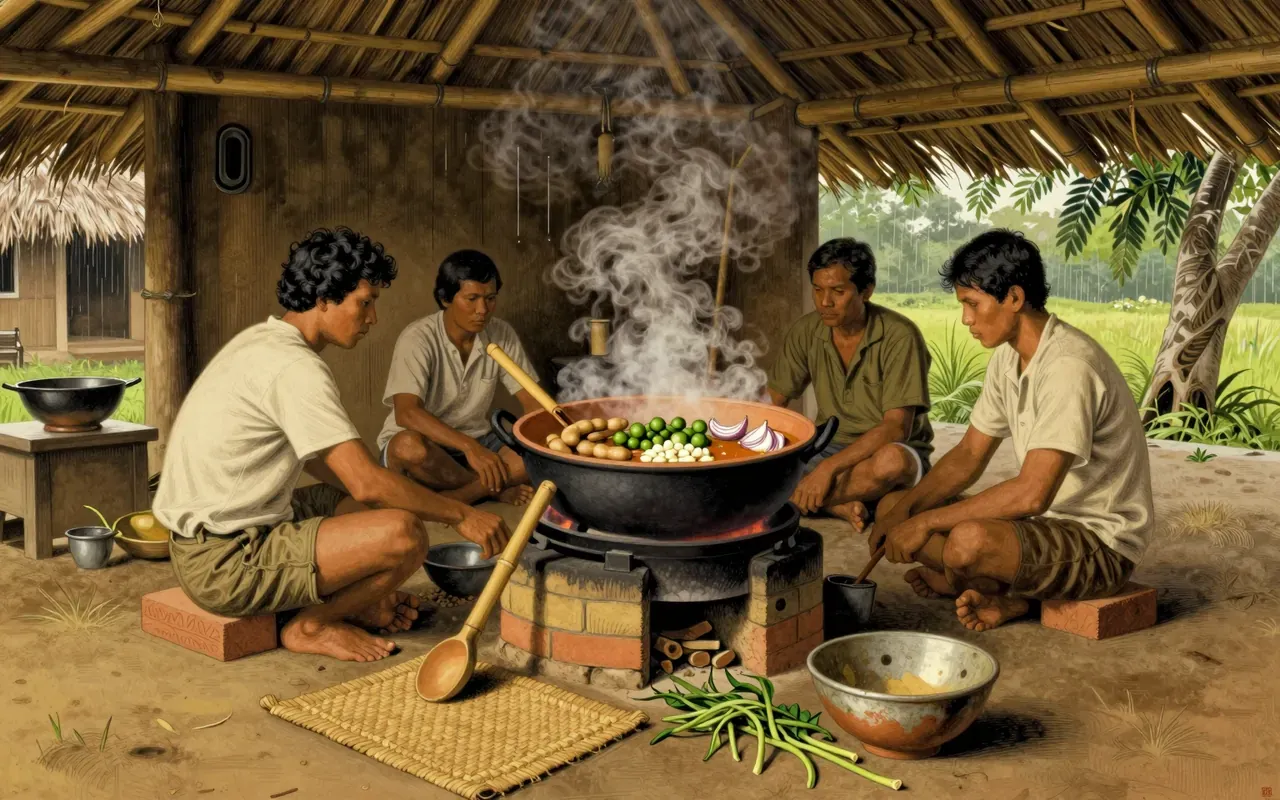
Ndolé is a Cameroonian stew from Douala, Littoral Region. It consists of stewed ground peanuts, crayfish, garlic, onions, and ndoleh leaves—indigenous to West and Central Africa.
Ndolé is a Cameroonian stew from Douala, Littoral Region.
0:10
How it works, in terms someone would actually use
Ndoleh leaves are boiled two to three times in salted water with rock salt to reduce bitterness.
0:20
What it gets right
It balances earthy ndoleh leaves, savory crayfish, rich peanuts, and aromatic alliums.
0:29
What it does not
The boiling step and stewing make it labor-intensive and time-consuming, despite affordable ingredients.
0:34
What it changed
Shrimp has been added in some variations, earning the descriptor 'regal'.
0:38
Who it is for, and who it is not
It is for people who enjoy savory, leafy stews with seafood or meat and nutty depth.
0:49
Is it worth your time
As Cameroon’s widely regarded national dish, it holds cultural significance.
Worth your time?
Selectively. Start with the brief, then cook the parts we point at.
What works
It balances earthy ndoleh leaves, savory crayfish, rich peanuts, and aromatic alliums. Fish or beef adds protein depth; shrimp versions are called 'regal'.
What does not
The boiling step and stewing make it labor-intensive and time-consuming, despite affordable ingredients.
Cook it if
Skip it if
The written brief1 min read
What the dish is and where it came from
Ndolé is a Cameroonian stew from Douala, Littoral Region. It consists of stewed ground peanuts, crayfish, garlic, onions, and ndoleh leaves—indigenous to West and Central Africa.
How it works, in terms someone would actually use
Ndoleh leaves are boiled two to three times in salted water with rock salt to reduce bitterness. The other ingredients are then stewed together.
What it gets right
It balances earthy ndoleh leaves, savory crayfish, rich peanuts, and aromatic alliums. Fish or beef adds protein depth; shrimp versions are called ‘regal’.
What it does not
The boiling step and stewing make it labor-intensive and time-consuming, despite affordable ingredients.
What it changed
Shrimp has been added in some variations, earning the descriptor ‘regal’.
Who it is for, and who it is not
It is for people who enjoy savory, leafy stews with seafood or meat and nutty depth. It is not for those avoiding peanuts, crustaceans, or bitter greens.
Is it worth your time
As Cameroon’s widely regarded national dish, it holds cultural significance. Its labor intensity may affect practicality for everyday cooking.