1:27in productionCh. 1 · What the dish is and where it came from/ 1:27 · ceiling 15 min
Dishes · Preserving & fermentation
Furikake
A dry Japanese rice topping made from dried fish or eggs, seaweed, sesame, sugar, and salt.
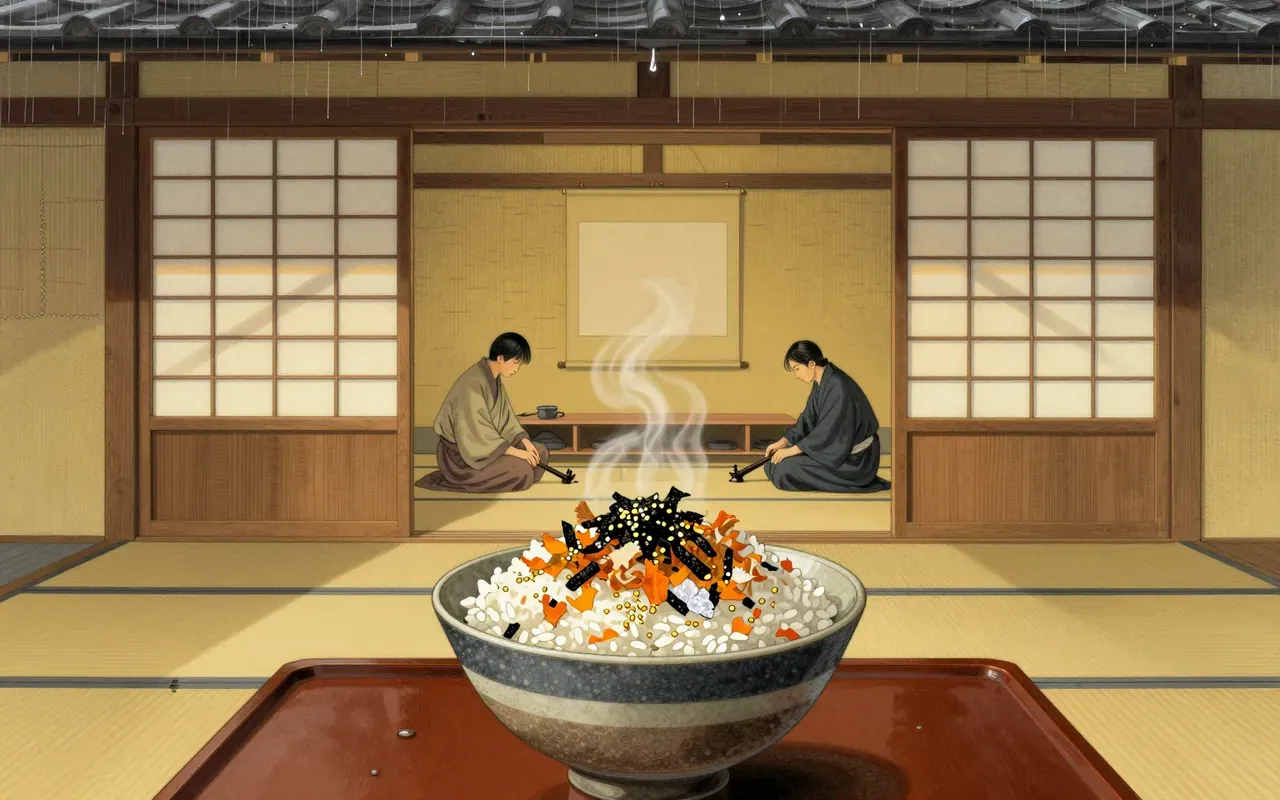
Furikake is a dry Japanese condiment sprinkled on cooked rice or used in onigiri. The term became established in the 1950s, but rice garnishes with similar function appear as early as the 13th century. One account credits pharmacist Suekichi Yoshimaru in Kumamoto during the Taishō period (1912–1926) with developing it.
Furikake is a dry Japanese condiment sprinkled on cooked rice or used in onigiri.
0:20
How it works, in terms someone would actually use
It works by being sprinkled directly onto cooked rice or folded into onigiri.
0:31
What it gets right
It gets right a compact blend of savory, salty, umami, and subtle sweetness—delivered via dried fish or freeze-dried eggs, seaweed, sesame seeds, sugar, and salt.
0:45
What it does not
It does not omit salt or sugar, making it less suitable if you seek a low-sodium or unsweetened rice topping.
0:53
What it changed
It changed how rice garnishes are standardized and commercially packaged: earlier forms like gomashio (1536), denbu (17th century), and fish shreds (13th century) were distinct preparations, not unified under the 'furikake' label until later.
1:07
Who it is for, and who it is not
It is for people who want a ready-to-use, savory-sweet rice topping with marine and seed elements.
1:19
Is it worth your time
Yes—it delivers layered flavor and texture with zero prep time, using ingredients commonly found in Japanese pantries or widely available internationally.
Worth your time?
Selectively. Start with the brief, then cook the parts we point at.
What works
It gets right a compact blend of savory, salty, umami, and subtle sweetness—delivered via dried fish or freeze-dried eggs, seaweed, sesame seeds, sugar, and salt. Its dry format ensures immediate texture and flavor impact.
What does not
It does not omit salt or sugar, making it less suitable if you seek a low-sodium or unsweetened rice topping.
Cook it if
Skip it if
The written brief1 min read
What the dish is and where it came from
Furikake is a dry Japanese condiment sprinkled on cooked rice or used in onigiri. The term became established in the 1950s, but rice garnishes with similar function appear as early as the 13th century. One account credits pharmacist Suekichi Yoshimaru in Kumamoto during the Taishō period (1912–1926) with developing it.
How it works, in terms someone would actually use
It works by being sprinkled directly onto cooked rice or folded into onigiri. No mixing, heating, or preparation is required beyond applying it as a dry topping.
What it gets right
It gets right a compact blend of savory, salty, umami, and subtle sweetness—delivered via dried fish or freeze-dried eggs, seaweed, sesame seeds, sugar, and salt. Its dry format ensures immediate texture and flavor impact.
What it does not
It does not omit salt or sugar, making it less suitable if you seek a low-sodium or unsweetened rice topping.
What it changed
It changed how rice garnishes are standardized and commercially packaged: earlier forms like gomashio (1536), denbu (17th century), and fish shreds (13th century) were distinct preparations, not unified under the ‘furikake’ label until later.
Who it is for, and who it is not
It is for people who want a ready-to-use, savory-sweet rice topping with marine and seed elements. It is not for those avoiding dried fish, seaweed, sesame, or added sugar and salt.
Is it worth your time
Yes—it delivers layered flavor and texture with zero prep time, using ingredients commonly found in Japanese pantries or widely available internationally.