0:59in productionCh. 1 · What the dish is and where it came from/ 0:59 · ceiling 15 min
Dishes
Sōmen
A very thin wheat noodle, less than 1.3 mm wide, with documented roots in Japan by the late 14th century and earlier antecedents in Tang dynasty China.
Sōmen is a very thin wheat noodle, less than 1.3 mm in diameter. The term 'sōmen' first appeared in Japanese records like the Kakaisho in the late 14th century. An earlier form dates to China’s Tang dynasty (618–907), but that was not yet called sōmen.
Sōmen is a very thin wheat noodle, less than 1.3 mm in diameter.
0:18
How it works, in terms someone would actually use
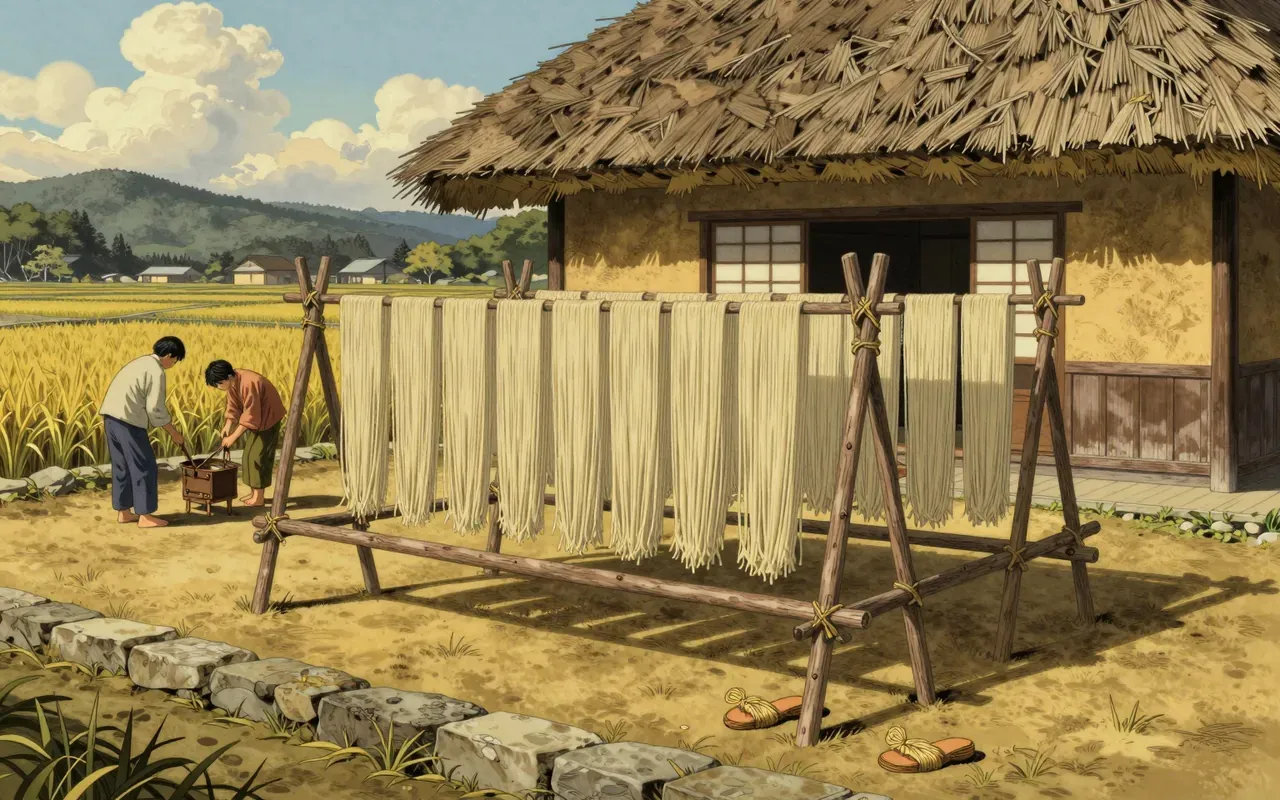
Japanese sōmen is made by stretching dough with vegetable oil into thin strands, then air drying them for later use.
0:26
What it gets right
Its thinness and air-dried format make it lightweight, shelf-stable, and quick to rehydrate or cook.
0:32
What it does not
It contains wheat flour and vegetable oil only—no rice, buckwheat, or gluten-free alternatives are mentioned.
0:38
What it changed
It evolved from the knotted pastry sakubei into thin noodles primarily during the Kamakura period (1185–1333).
0:44
Who it is for, and who it is not
It suits someone interested in very thin wheat noodles and the tradition of stretching and drying the dough.
0:51
Is it worth your time
Yes—if you want a thin, dried wheat noodle with a documented history in East Asia and a simple production method.
Worth your time?
Selectively. Start with the brief, then cook the parts we point at.
What works
Its thinness and air-dried format make it lightweight, shelf-stable, and quick to rehydrate or cook.
What does not
It contains wheat flour and vegetable oil only—no rice, buckwheat, or gluten-free alternatives are mentioned.
Cook it if
Skip it if
The written brief1 min read
What the dish is and where it came from
Sōmen is a very thin wheat noodle, less than 1.3 mm in diameter. The term ‘sōmen’ first appeared in Japanese records like the Kakaisho in the late 14th century. An earlier form dates to China’s Tang dynasty (618–907), but that was not yet called sōmen.
How it works, in terms someone would actually use
Japanese sōmen is made by stretching dough with vegetable oil into thin strands, then air drying them for later use.
What it gets right
Its thinness and air-dried format make it lightweight, shelf-stable, and quick to rehydrate or cook.
What it does not
It contains wheat flour and vegetable oil only—no rice, buckwheat, or gluten-free alternatives are mentioned.
What it changed
It evolved from the knotted pastry sakubei into thin noodles primarily during the Kamakura period (1185–1333).
Who it is for, and who it is not
It suits someone interested in very thin wheat noodles and the tradition of stretching and drying the dough.
Is it worth your time
Yes—if you want a thin, dried wheat noodle with a documented history in East Asia and a simple production method.