1:08in productionCh. 1 · What the dish is and where it came from/ 1:08 · ceiling 15 min
Dishes · Food history
Lumpia
A thin-wrapped roll with savory or sweet fillings, served fried or fresh, rooted in Indonesian and Filipino adaptations of Fujianese and Teochew spring rolls.
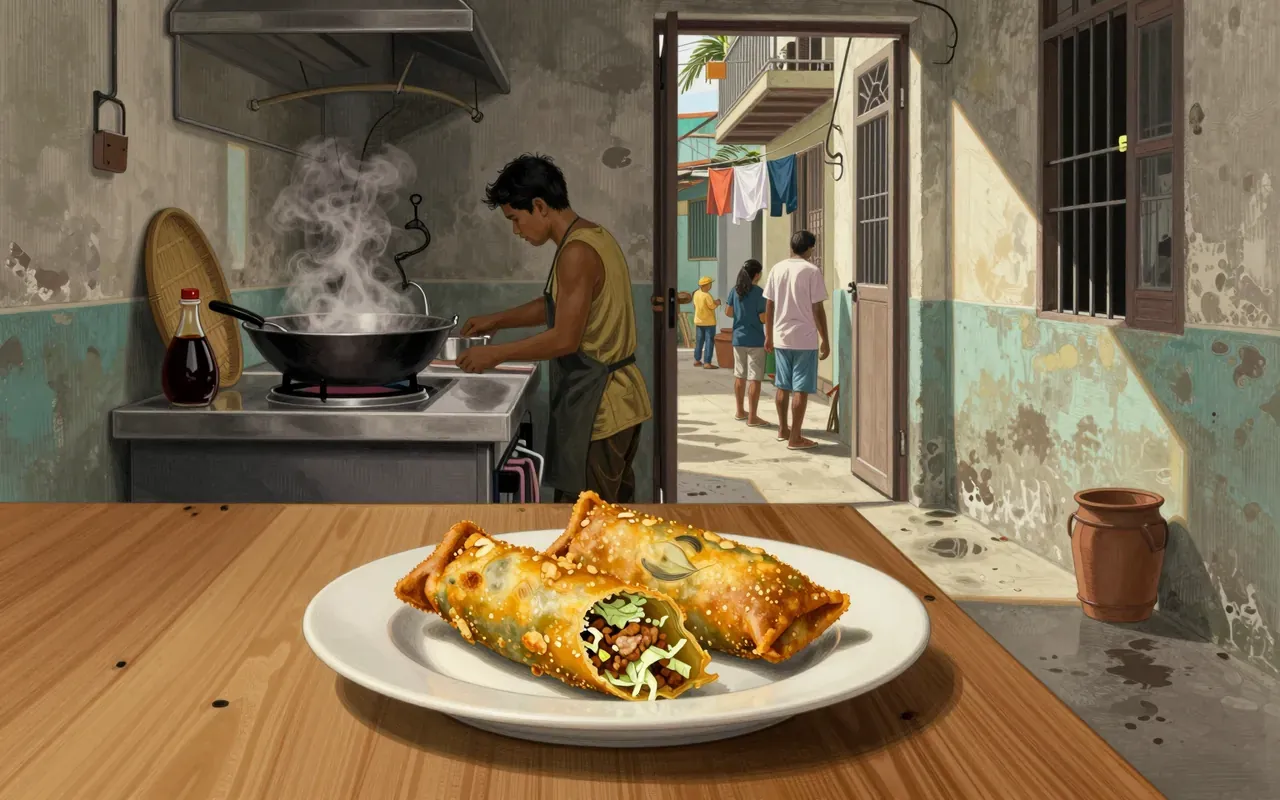
Lumpia are spring rolls from Indonesian and Filipino cuisines. They descend from Fujianese lūn-piáⁿ and Teochew popiah. Hokkien immigrants brought them to the Philippines; Chinese settlers introduced them to Indonesia during colonial times, possibly in the 19th century.
Lumpia are spring rolls from Indonesian and Filipino cuisines.
0:15
How it works, in terms someone would actually use
A thin paper-like or crêpe-like wrapper—called a lumpia wrapper—envelops savory or sweet fillings.
0:25
What it gets right
It works well as an appetizer or snack.
0:35
What it does not
Fried and unfried versions offer different choices, so the name alone does not tell you which preparation you will receive.
0:43
What it changed
It changed from traditionally slender, cigar-shaped rolls to versions in various shapes and sizes.
0:49
Who it is for, and who it is not
It is for people seeking a portable, wrapper-based dish with savory or sweet options.
1:00
Is it worth your time
Yes—it is worth your time if you want a snack or appetizer that can be served fried or fresh.
Worth your time?
Selectively. Start with the brief, then cook the parts we point at.
What works
It works well as an appetizer or snack. Its slender, cigar-like traditional shape and flexibility in size and filling type support varied serving roles.
What does not
Fried and unfried versions offer different choices, so the name alone does not tell you which preparation you will receive.
Cook it if
Skip it if
The written brief1 min read
What the dish is and where it came from
Lumpia are spring rolls from Indonesian and Filipino cuisines. They descend from Fujianese lūn-piáⁿ and Teochew popiah. Hokkien immigrants brought them to the Philippines; Chinese settlers introduced them to Indonesia during colonial times, possibly in the 19th century.
How it works, in terms someone would actually use
A thin paper-like or crêpe-like wrapper—called a lumpia wrapper—envelops savory or sweet fillings. Filipino versions use only flour, water, and salt in the wrapper.
What it gets right
It works well as an appetizer or snack. Its slender, cigar-like traditional shape and flexibility in size and filling type support varied serving roles.
What it does not
Fried and unfried versions offer different choices, so the name alone does not tell you which preparation you will receive.
What it changed
It changed from traditionally slender, cigar-shaped rolls to versions in various shapes and sizes.
Who it is for, and who it is not
It is for people seeking a portable, wrapper-based dish with savory or sweet options. It is not defined as a main course or meal replacement in the source.
Is it worth your time
Yes—it is worth your time if you want a snack or appetizer that can be served fried or fresh.