1:19in productionCh. 1 · What the dish is and where it came from/ 1:19 · ceiling 15 min
Baking · Technique
Macaron
A delicate, meringue-based French confection made with almond meal, egg whites, and sugar, typically filled and brightly colored.
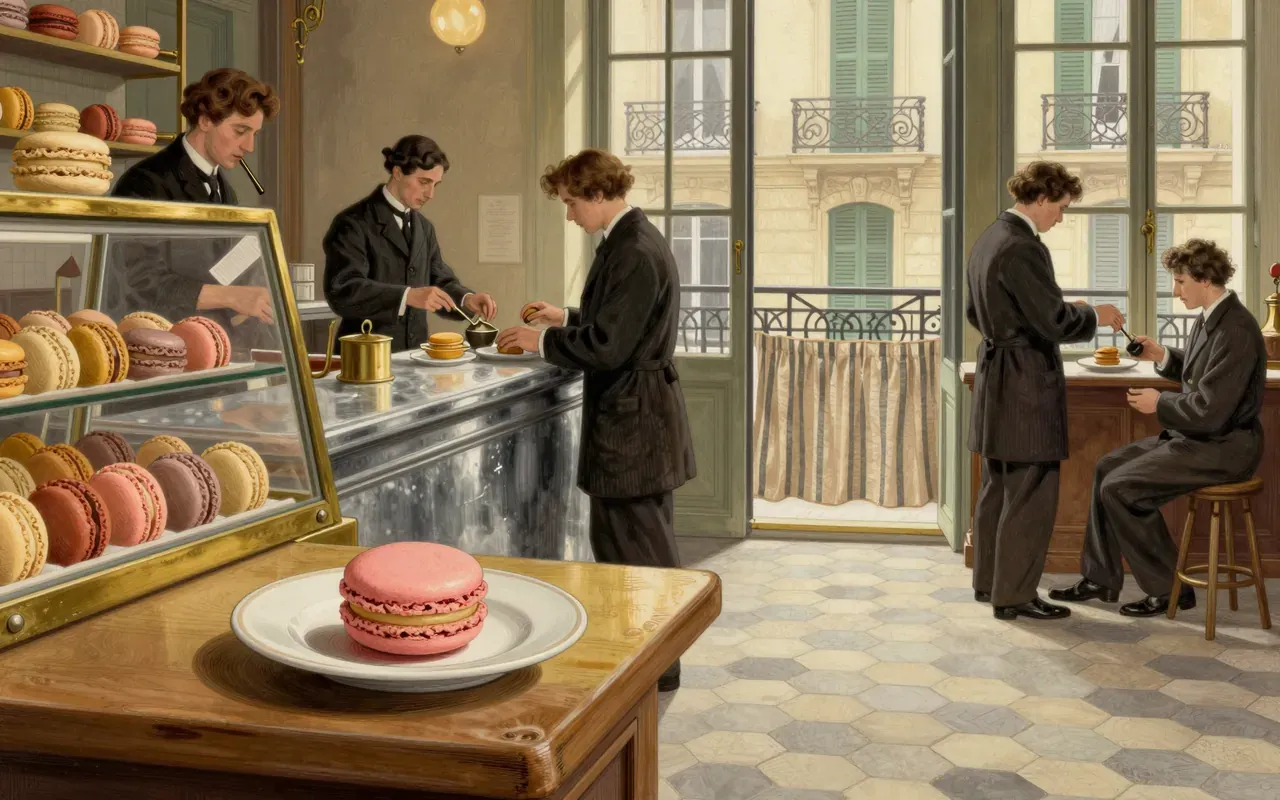
A macaron is a sweet meringue-based confection made with egg white, icing sugar, granulated sugar, almond meal, and often food colouring. Some food historians trace its origin to a French monastery in Cormery in the Loire Valley in 791.
A macaron is a sweet meringue-based confection made with egg white, icing sugar, granulated sugar, almond meal, and often food colouring.
0:16
How it works, in terms someone would actually use
It is made using either French or Italian meringue.
0:36
What it gets right
It delivers visual precision—a smooth top, ruffled 'foot', and flat base—and a mild moisture that makes it melt easily in the mouth.
0:45
What it does not
It contains almond meal and egg whites, making it unsuitable for people with nut or egg allergies.
0:52
What it changed
Since the 19th century, Parisian-style macarons have been filled with ganache, buttercream, or jam—adding a layered format not present in earlier versions.
1:01
Who it is for, and who it is not
It is for people who enjoy sweet, delicate, visually refined confections made with almond meal and egg whites.
1:13
Is it worth your time
Yes—if you seek a small, elegant, meringue-and-almond confection with a soft texture and optional fillings.
Worth your time?
Selectively. Start with the brief, then cook the parts we point at.
What works
It delivers visual precision—a smooth top, ruffled 'foot', and flat base—and a mild moisture that makes it melt easily in the mouth.
What does not
It contains almond meal and egg whites, making it unsuitable for people with nut or egg allergies.
Cook it if
Skip it if
The written brief1 min read
What the dish is and where it came from
A macaron is a sweet meringue-based confection made with egg white, icing sugar, granulated sugar, almond meal, and often food colouring. Some food historians trace its origin to a French monastery in Cormery in the Loire Valley in 791.
How it works, in terms someone would actually use
It is made using either French or Italian meringue. In the French method, stiff-peaked egg white meringue is folded with sifted ground almonds and powdered sugar—a process called macaronage—until the mixture reaches the consistency of shaving foam. The batter is then piped, left to form a skin, and baked.
What it gets right
It delivers visual precision—a smooth top, ruffled ‘foot’, and flat base—and a mild moisture that makes it melt easily in the mouth.
What it does not
It contains almond meal and egg whites, making it unsuitable for people with nut or egg allergies.
What it changed
Since the 19th century, Parisian-style macarons have been filled with ganache, buttercream, or jam—adding a layered format not present in earlier versions.
Who it is for, and who it is not
It is for people who enjoy sweet, delicate, visually refined confections made with almond meal and egg whites. It is not for those avoiding nuts, eggs, or refined sugar.
Is it worth your time
Yes—if you seek a small, elegant, meringue-and-almond confection with a soft texture and optional fillings.