foodbriefs
1:16in productionCh. 1 · What the dish is and where it came from/ 1:16 · ceiling 15 min
Dishes · Culture

Moqueca

A Brazilian seafood stew with regional variations in fish, aromatics, and fats.

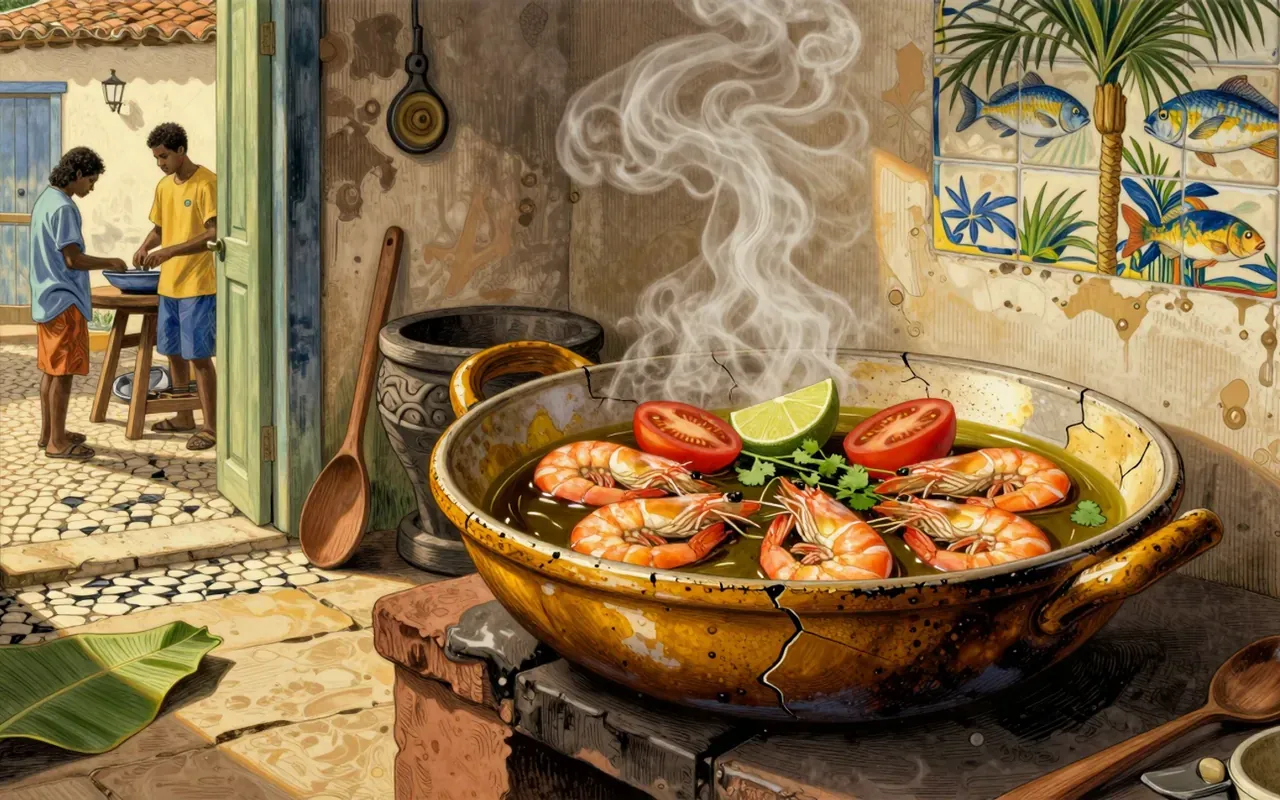
Moqueca is a Brazilian seafood stew. Moqueca baiana originated in Bahia; moqueca capixaba in Espírito Santo. Other versions exist in Pará and Manaus.

Chapters & takeaways7
  1. 0:00
    What the dish is and where it came from

    Moqueca is a Brazilian seafood stew.

  2. 0:09
    How it works, in terms someone would actually use

    It combines shrimp or fish with tomatoes, onions, garlic, lime, and coriander.

  3. 0:23
    What it gets right

    Its appeal lies in the interplay of seafood, bright aromatics, and regionally distinctive fats—coconut milk and palm oil in Bahia, tucupi and jambu in Pará, freshwater fish in Manaus.

  4. 0:35
    What it does not

    It is not a vegetarian or vegan dish due to its reliance on seafood.

  5. 0:48
    What it changed

    The name may derive from the Indigenous word 'pokeka' for fish baked in leaves.

  6. 0:58
    Who it is for, and who it is not

    It is for people who enjoy seafood stews with bold regional character.

  7. 1:10
    Is it worth your time

    Yes—it offers a direct, ingredient-driven window into Brazil’s coastal and Amazonian foodways through accessible, stew-based preparation.
Worth your time?

Selectively. Start with the brief, then cook the parts we point at.

What works
  • Its appeal lies in the interplay of seafood, bright aromatics, and regionally distinctive fats—coconut milk and palm oil in Bahia, tucupi and jambu in Pará, freshwater fish in Manaus.
What does not
  • It is not a vegetarian or vegan dish due to its reliance on seafood. The inclusion of palm oil or coconut milk makes it less suitable for those avoiding saturated plant fats.
Cook it if
    Skip it if
      The written brief1 min read

      What the dish is and where it came from

      Moqueca is a Brazilian seafood stew. Moqueca baiana originated in Bahia; moqueca capixaba in Espírito Santo. Other versions exist in Pará and Manaus.

      How it works, in terms someone would actually use

      It combines shrimp or fish with tomatoes, onions, garlic, lime, and coriander. Regional versions add annatto, palm oil, coconut milk, tucupi, jambu, or Amazonian fish like pirarucu. It is often cooked in a ceramic pan.

      What it gets right

      Its appeal lies in the interplay of seafood, bright aromatics, and regionally distinctive fats—coconut milk and palm oil in Bahia, tucupi and jambu in Pará, freshwater fish in Manaus.

      What it does not

      It is not a vegetarian or vegan dish due to its reliance on seafood. The inclusion of palm oil or coconut milk makes it less suitable for those avoiding saturated plant fats.

      What it changed

      The name may derive from the Indigenous word ‘pokeka’ for fish baked in leaves. The Espírito Santo version reflects Portuguese stew traditions more closely than others.

      Who it is for, and who it is not

      It is for people who enjoy seafood stews with bold regional character. It is not for those avoiding shellfish, fish, or specific regional ingredients like palm oil or tucupi.

      Is it worth your time

      Yes—it offers a direct, ingredient-driven window into Brazil’s coastal and Amazonian foodways through accessible, stew-based preparation.
      Same course · Dishes4 of 327
      Up next in Food

      Mortadella

      · 0:54

      Mortadella is a large Italian cured pork sausage with visible cubes of pork fat.

      0:54