0:58in productionCh. 1 · What the dish is and where it came from/ 0:58 · ceiling 15 min
Ingredients · Technique
Tapioca
Tapioca is a starch extracted from cassava roots, used in forms including pearls, flakes, and powder.
Tapioca is a starch derived from cassava roots. Its name comes from tipi'óka in the Tupi language, spoken by Indigenous people in Brazil’s Northeast Region when the Portuguese arrived around 1500.
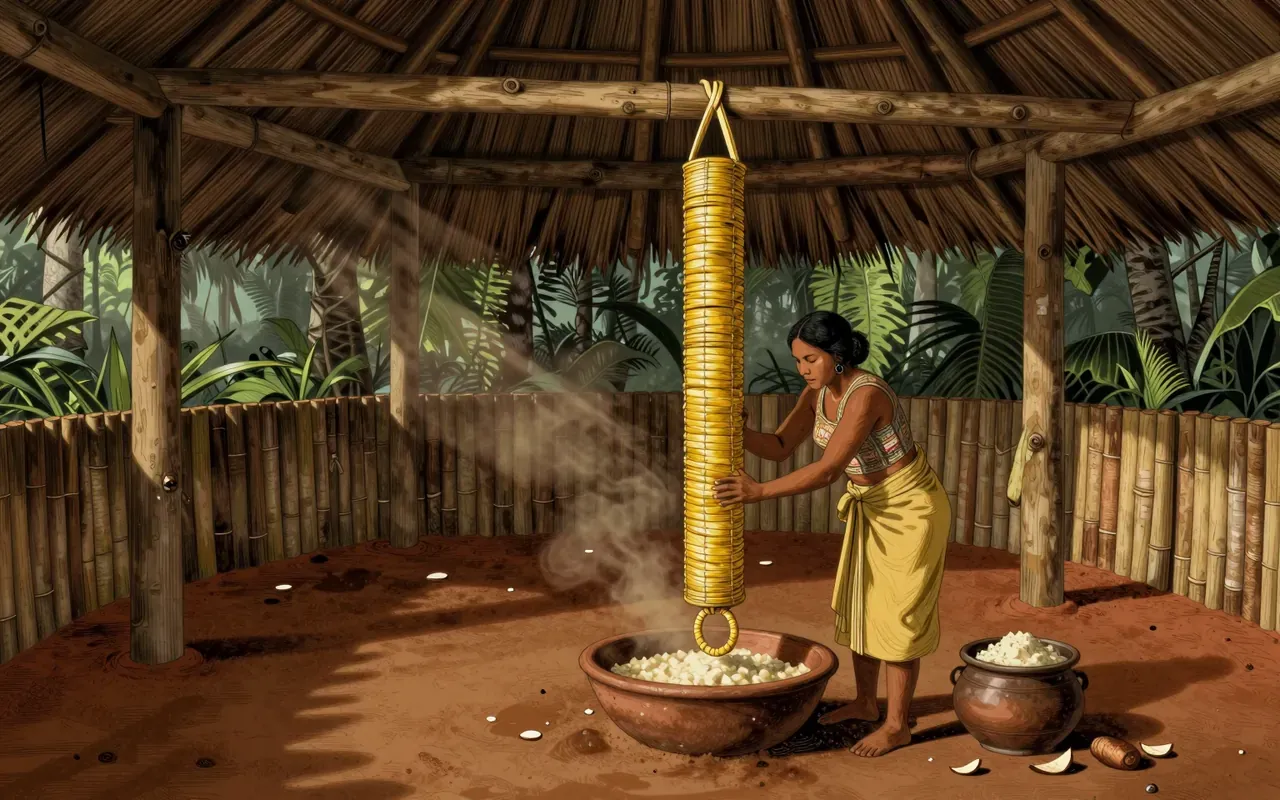
Traditional production involves placing wet masa (cassava pulp) into a woven tube called a tipiti.
0:22
What it gets right
Tapioca pearls deliver distinctive texture and mouthfeel, properties tied to their starch composition and processing.
0:28
What it does not
The form matters when choosing it: powder, flakes and pearls are different ingredients for a preparation rather than interchangeable finished dishes.
0:36
What it changed
Commercial processing expanded its forms: hot-soluble powder, meal, flakes, sticks, and spherical pearls—called boba in East Asia.
0:43
Who it is for, and who it is not
It suits someone exploring how cassava starch is used in foods, especially the different forms offered by powders, flakes and pearls.
0:51
Is it worth your time
Worth understanding as an ingredient if you are interested in starch-based textures and the processing traditions behind them.
Worth your time?
Selectively. Start with the brief, then cook the parts we point at.
What works
Tapioca pearls deliver distinctive texture and mouthfeel, properties tied to their starch composition and processing.
What does not
The form matters when choosing it: powder, flakes and pearls are different ingredients for a preparation rather than interchangeable finished dishes.
Cook it if
Skip it if
The written brief1 min read
What the dish is and where it came from
Tapioca is a starch derived from cassava roots. Its name comes from tipi’óka in the Tupi language, spoken by Indigenous people in Brazil’s Northeast Region when the Portuguese arrived around 1500.
How it works, in terms someone would actually use
Traditional production involves placing wet masa (cassava pulp) into a woven tube called a tipiti. A lever stretches the tube vertically to squeeze out starch-rich liquid.
What it gets right
Tapioca pearls deliver distinctive texture and mouthfeel, properties tied to their starch composition and processing.
What it does not
The form matters when choosing it: powder, flakes and pearls are different ingredients for a preparation rather than interchangeable finished dishes.
What it changed
Commercial processing expanded its forms: hot-soluble powder, meal, flakes, sticks, and spherical pearls—called boba in East Asia.
Who it is for, and who it is not
It suits someone exploring how cassava starch is used in foods, especially the different forms offered by powders, flakes and pearls.
Is it worth your time
Worth understanding as an ingredient if you are interested in starch-based textures and the processing traditions behind them.