8:38in productionCh. 1 · Where it comes from/ 8:38 · ceiling 15 min
Dishes
'Nduja
A molten, fiery pork fat bomb from Spilinga—not a sausage, but a condiment disguised as one.
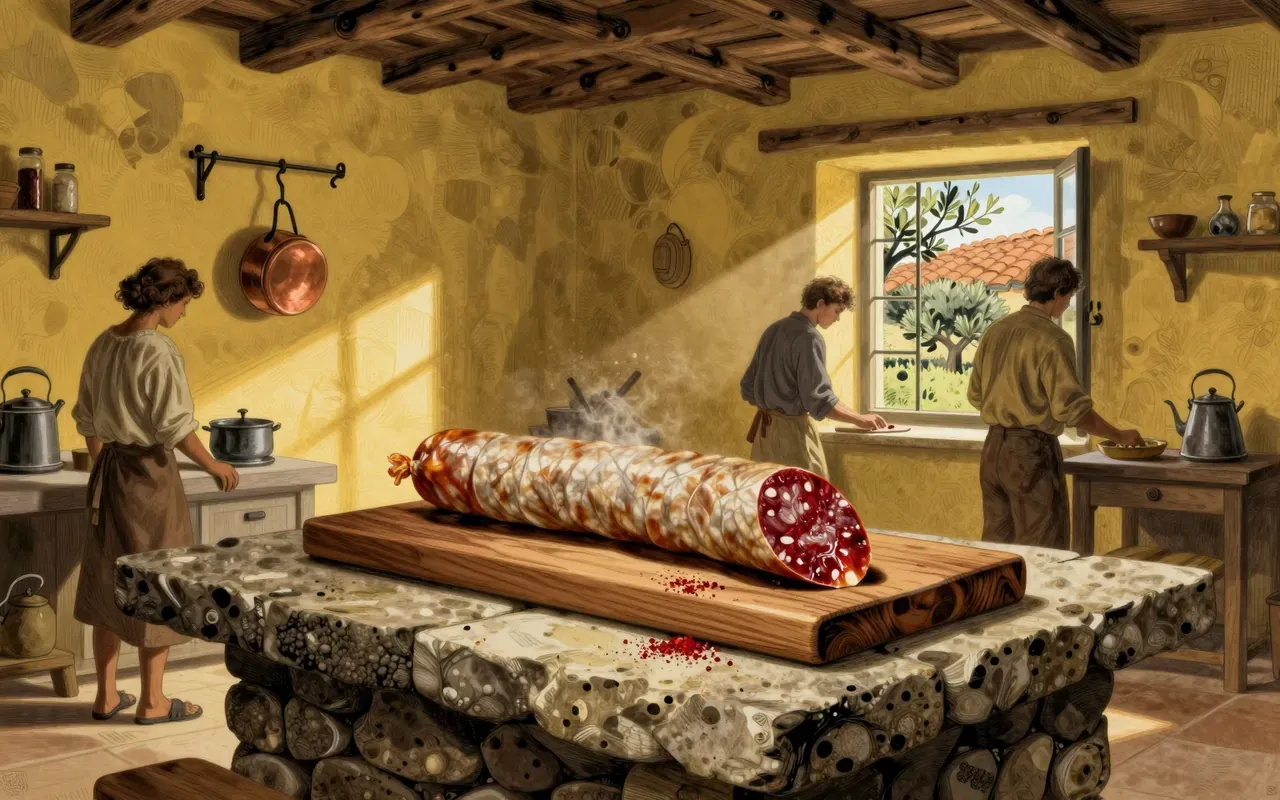
A spicy, spreadable pork sausage from Calabria—specifically the area around Spilinga—made from pork trimmings, fatback, and sun-dried Calabrian chili peppers; minced, stuffed into large casings, smoked, and aged 3–6 months; served scooped onto bread or with ripe cheese; popularised in the UK and US between 2015 and 2016.
It is Calabrian. Not southern Italian, not generic 'Italian', but rooted in Spilinga.
1:52
How it is made
Pork trimmings, fatback, and sun-dried Calabrian chillies are minced, smoked, and aged 3–6 months.
3:33
How it is used
It is scooped—not sliced—and served with bread or ripe cheese.
5:11
When it arrived
Its UK and US breakout happened between 2015 and 2016—not earlier, not later.
Worth your time?
Yes. Cook the whole thing.
4.5/ 5
What works
turns trimmings and fatback into a unified, spreadable whole
binds sun-dried Calabrian chillies to fat so their fire carries cleanly
What does not
holds shape when cold
tames its heat
travels well without refrigeration
Cook it if
cooks who treat fat as flavour infrastructure
Skip it if
those who avoid chilli heat
those who expect firm, sliceable salumi
The written brief1 min read
What the dish is and where it came from
’Nduja is a spicy, spreadable pork sausage from Calabria, Italy—specifically the area around Spilinga.
How it works, in terms someone would actually use
It is scooped from the casing and spread on bread or folded into cheese. Its softness comes from high fat content and long ageing, not emulsification or added oil.
What it gets right
It turns trimmings and fatback into a unified, spreadable whole. The sun-dried Calabrian chili peppers bind to fat, not water, so their fire carries cleanly.
What it does not
It does not hold shape when cold. It does not tame its heat—it amplifies it with fat. It does not travel well without refrigeration.
What it changed
It shifted British and American restaurant menus between 2015 and 2016, appearing in New York City and London kitchens as a shortcut to Calabrian intensity.
Who it is for, and who it is not
It is for cooks who treat fat as flavour infrastructure. It is not for those who avoid chilli heat or expect firm, sliceable salumi.
Is it worth your time
Yes—if you want heat with depth, fat with purpose, and a condiment that reshapes how you use pork fat. No—if you need shelf-stable precision or dislike unrefined spice.