foodbriefs
2:14in productionCh. 1 · What the dish is and where it came from/ 2:14 · ceiling 15 min
Baking

Paris-Brest

A wheel of choux turns a cycling commemoration into a pastry built around praline cream.

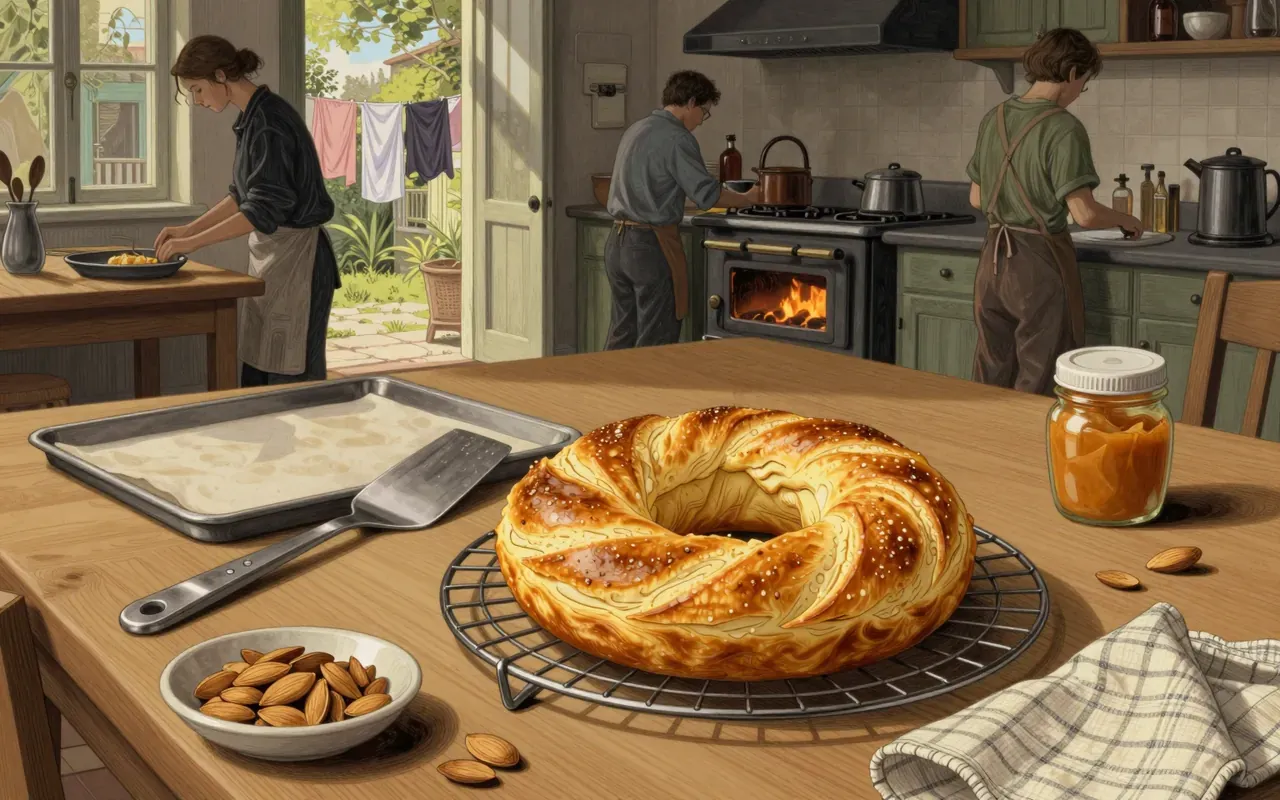
Paris-Brest is a choux ring filled with praline cream and topped with sliced almonds. The Paris region's tourism authority attributes it to Louis Durand in Maisons-Laffitte in 1910, commemorating the Paris-Brest-Paris bicycle race. The Durand bakery gives the same attribution. The wheel shape makes the reference visible before anyone explains the name.

Chapters & takeaways7
  1. 0:00
    What the dish is and where it came from

    Paris-Brest is a choux ring filled with praline cream and topped with sliced almonds.

  2. 0:21
    How it works, in terms someone would actually use

    The ring is baked before it is cut horizontally and filled.

  3. 0:44
    What it gets right

    Its strongest design decision is the connection between shape and story.

  4. 1:03
    What it does not

    A persuasive origin story is not an independent taste test.

  5. 1:22
    What it changed

    The contrast between the praline version and King Arthur's rhubarb version shows how the form can persist while the filling changes.

  6. 1:41
    Who it is for, and who it is not

    It suits a baker who wants to move from individual choux pastries to a larger centerpiece.

  7. 1:58
    Is it worth your time

    Worth seeking out for the relationship between pastry, place and sporting memory.

Worth your time?

Selectively. Start with the brief, then cook the parts we point at.

What works
  • Its strongest design decision is the connection between shape and story. A circular pastry can commemorate a bicycle wheel without requiring lettering or a separate decoration. The split ring also puts the filling on display. Here, the form does explanatory work as well as holding the dessert together.
What does not
  • A persuasive origin story is not an independent taste test. The tourism page praises the Durand version, but that promotional judgment does not establish a ranking. Nor does a modern published adaptation reveal the family's guarded recipe. Keep the documented attribution, the technique and claims of superiority separate.
Cook it if
  • It suits a baker who wants to move from individual choux pastries to a larger centerpiece.
Skip it if
    The written brief2 min read

    What the dish is and where it came from

    Paris-Brest is a choux ring filled with praline cream and topped with sliced almonds. The Paris region’s tourism authority attributes it to Louis Durand in Maisons-Laffitte in 1910, commemorating the Paris-Brest-Paris bicycle race. The Durand bakery gives the same attribution. The wheel shape makes the reference visible before anyone explains the name.

    How it works, in terms someone would actually use

    The ring is baked before it is cut horizontally and filled. King Arthur’s rhubarb adaptation provides a documented example of the construction: adjacent piped circles support an upper layer, the baked shell is pierced to vent, and assembly waits until it cools. Its fruit and whipped-cream filling is a variation, rather than evidence for the original praline formula.

    What it gets right

    Its strongest design decision is the connection between shape and story. A circular pastry can commemorate a bicycle wheel without requiring lettering or a separate decoration. The split ring also puts the filling on display. Here, the form does explanatory work as well as holding the dessert together.

    What it does not

    A persuasive origin story is not an independent taste test. The tourism page praises the Durand version, but that promotional judgment does not establish a ranking. Nor does a modern published adaptation reveal the family’s guarded recipe. Keep the documented attribution, the technique and claims of superiority separate.

    What it changed

    The contrast between the praline version and King Arthur’s rhubarb version shows how the form can persist while the filling changes. What survives is the recognizable ring and its assembly. That is a specific example of adaptation, rather than a claim about how every pastry shop makes it.

    Who it is for, and who it is not

    It suits a baker who wants to move from individual choux pastries to a larger centerpiece. It is a poor match for someone seeking a nut-free version of the traditional almond-and-praline preparation. A different filling should be identified clearly as a variation.

    Is it worth your time

    Worth seeking out for the relationship between pastry, place and sporting memory. For home baking, follow a complete ring recipe and choose deliberately between a praline version and an adaptation; the wheel alone does not make their flavors interchangeable.
    Same course · Baking4 of 19
    Up next in Food

    Pastilla

    · 1:19

    A layered Moroccan pie with savory poultry or seafood, toasted almonds, cinnamon, sugar, and thin werqa pastry.

    1:19