Pissaladière is a flatbread dish from Provence and the city of Nice.
0:09
How it works, in terms someone would actually use
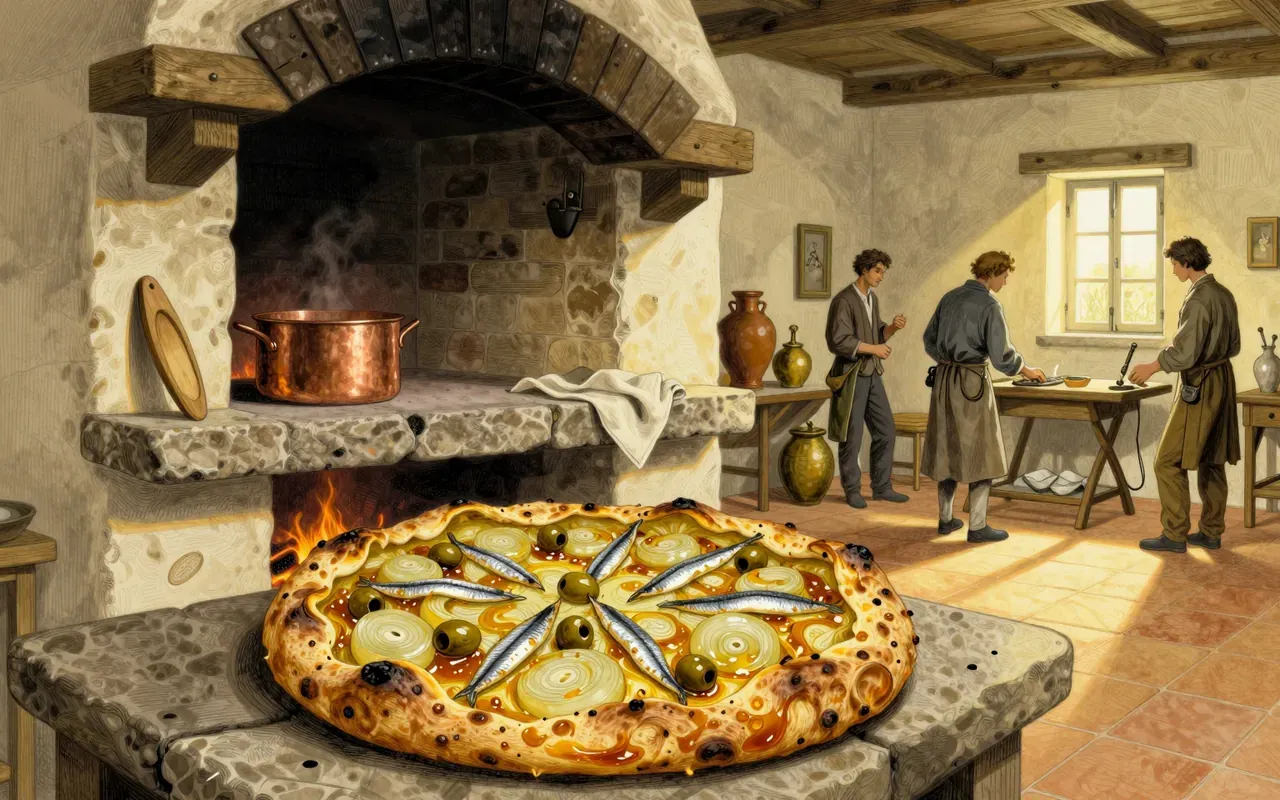
It uses a thick bread dough, topped with caramelised (almost pureed) onions, black olives—typically caillettes—and whole anchovies.
0:19
What it gets right
It gets right a strong regional identity through its core toppings: sweet onions, briny olives, and salty anchovies.
0:29
What it does not
It does not include cheese, tomato, or herbs common in other flatbreads.
0:38
What it changed
It changed from an early medieval preparation—documented in 879—with onions and pissalat into the modern Nice version featuring whole anchovies and caillette olives.
0:47
Who it is for, and who it is not
It is for people who enjoy savoury, umami-rich flatbreads with anchovies and olives.
0:58
Is it worth your time
It is worth your time if you want a historically rooted Provençal dish defined by its specific trio of toppings and thick bread base.
Worth your time?
Selectively. Start with the brief, then cook the parts we point at.
What works
It gets right a strong regional identity through its core toppings: sweet onions, briny olives, and salty anchovies. The thick dough supports these robust, savoury elements.
What does not
It does not include cheese, tomato, or herbs common in other flatbreads. The anchovy focus makes it less appealing if you avoid fish.
Cook it if
Skip it if
The written brief1 min read
What the dish is and where it came from
Pissaladière is a flatbread dish from Provence and the city of Nice. Its name appears in multiple regional variants: Niçard, Ligurian, and French.
How it works, in terms someone would actually use
It uses a thick bread dough, topped with caramelised (almost pureed) onions, black olives—typically caillettes—and whole anchovies. Pissalat, an anchovy paste, may also be included.
What it gets right
It gets right a strong regional identity through its core toppings: sweet onions, briny olives, and salty anchovies. The thick dough supports these robust, savoury elements.
What it does not
It does not include cheese, tomato, or herbs common in other flatbreads. The anchovy focus makes it less appealing if you avoid fish.
What it changed
It changed from an early medieval preparation—documented in 879—with onions and pissalat into the modern Nice version featuring whole anchovies and caillette olives.
Who it is for, and who it is not
It is for people who enjoy savoury, umami-rich flatbreads with anchovies and olives. It is not for those avoiding fish or seeking mild, cheese-based, or tomato-topped breads.
Is it worth your time
It is worth your time if you want a historically rooted Provençal dish defined by its specific trio of toppings and thick bread base.