foodbriefs
9:44in productionCh. 1 · Hogweed, not beets/ 9:44 · ceiling 15 min
Dishes

Borscht

Borscht isn’t red because of beets—it’s red because sourness needed a new vessel.

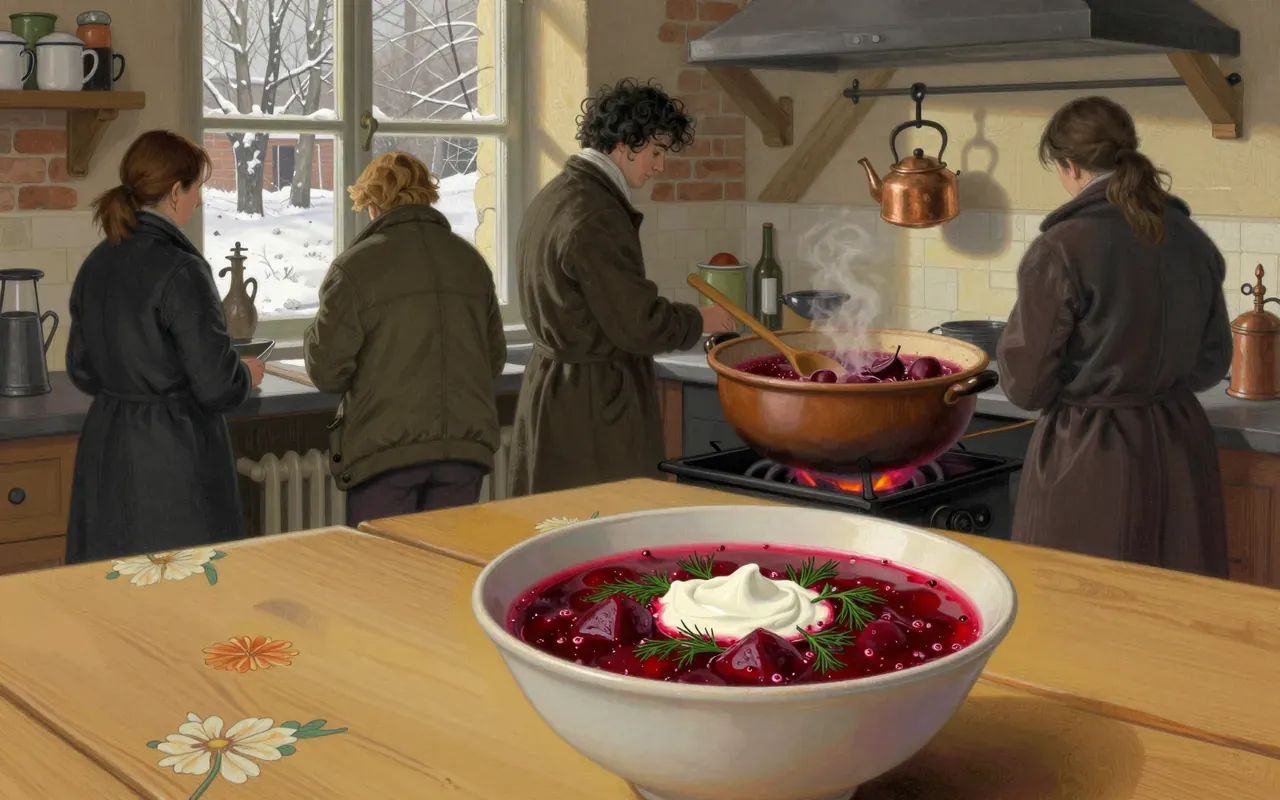
Borscht is a sour soup rooted in ancient Slavic hogweed fermentation. Its modern beet-based form relies on separated vegetable cooking and beet sour for balance. UNESCO recognised Ukrainian borscht cooking in 2022—not as exclusive property, but as shared regional practice needing safeguarding.

Chapters & takeaways4
  1. 1:01
    Hogweed, not beets

    Borscht began not with beets—but with fermented hogweed stems, leaves and umbels.

  2. 2:23
    Two-stage cooking

    Vegetables are never boiled straight into stock—they’re cooked separately first.

  3. 3:49
    Sourness by fermentation

    Beet sour—not vinegar, not lemon—is the traditional source of its defining sweet-and-sour balance.

  4. 5:12
    Shared heritage, urgent safeguarding

    UNESCO listed ‘Ukrainian borscht cooking’ in 2022—but said plainly it does not grant exclusivity.

Worth your time?

Yes. Cook the whole thing.

4.5/ 5
What works
  • sweet-and-sour balance via beet sour
  • two-stage vegetable cooking
What does not
  • belong exclusively to Ukraine
Cook it if
  • cooks who treat sourness as architecture
  • eaters who understand ritual and region as ingredients
Skip it if
  • those seeking a quick, neutral-tasting soup
The written brief1 min read

What the dish is and where it came from

Borscht is a sour soup with ancient Slavic origins in hogweed-based fermentation. It evolved into regional variants, most famously the Ukrainian beet-based red version.

How it works, in terms someone would actually use

It works by precooking vegetables separately—sautéing, braising, boiling or baking them—then combining them with stock. Beet sour delivers the sweet-and-sour balance.

What it gets right

It gets the balance of sweet and sour right through beet sour—not vinegar or lemon—and honours the separation of vegetable cooking from stock building.

What it does not

It does not belong exclusively to Ukraine. UNESCO’s 2022 inscription explicitly rejects exclusivity or ownership by any one country.

What it changed

It shifted from hogweed-based fermentation to beet-root dominance while retaining sourness as structural principle, anchoring ritual and identity across borders.

Who it is for, and who it is not

It is for cooks who treat sourness as architecture, not accent—and for eaters who understand that ritual and region are ingredients, not footnotes.

Is it worth your time

Yes, if you want a soup that demands attention to technique and regional context—not just colour or garnish.

Same course · Dishes4 of 485
Up next in Food

Brandade

· 8:49

Brandade proves salt cod doesn’t need cream to be creamy—it just needs oil, patience, and the right region.

8:49