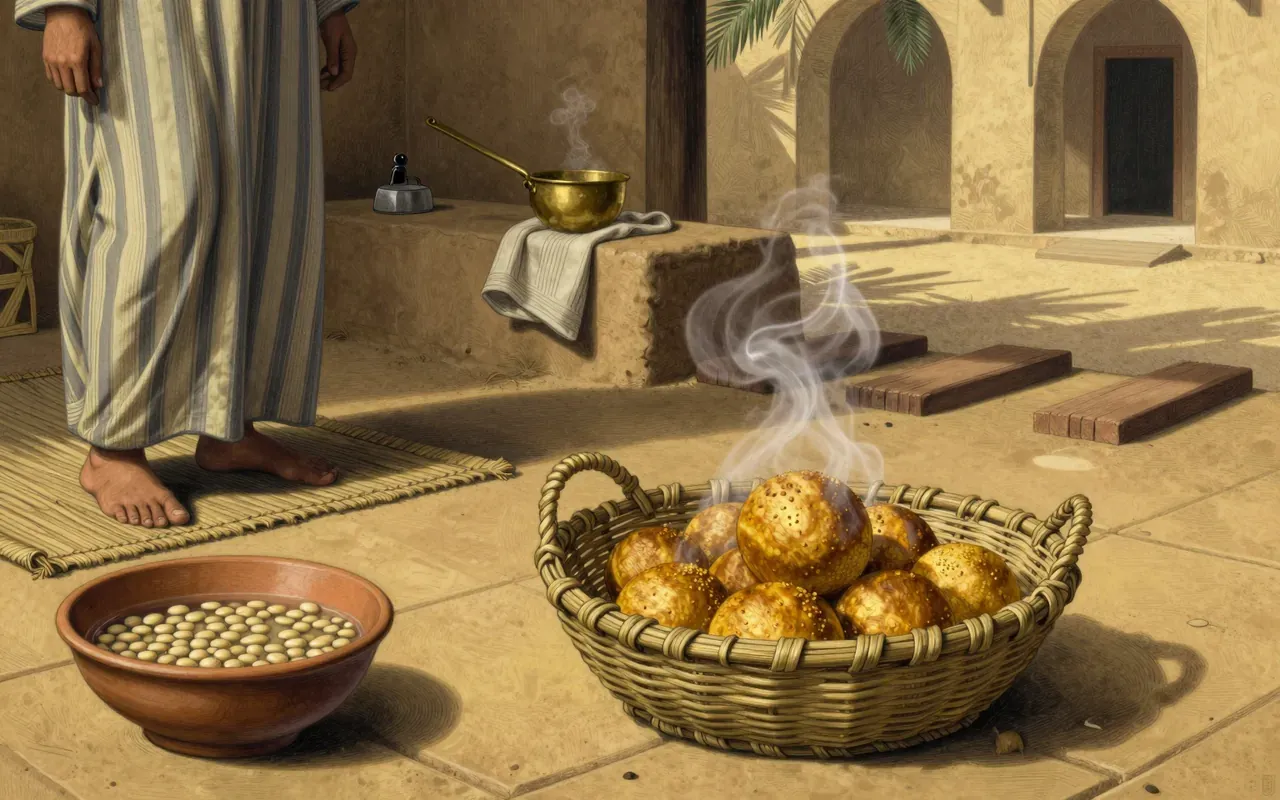
Dhokla is a savoury sponge dish that originated in Gujarat.
0:06
How it works, in terms someone would actually use
Dried rice and split chickpeas are soaked overnight, ground into a paste, fermented for at least four hours, then steamed for about 15 minutes and cut into pieces.
0:17
What it gets right
Its fermented batter and steaming produce a light, cake-like consistency that defines its appeal.
0:23
What it does not
It uses pulses like Bengal gram, chickpeas, pigeon peas, or urad beans—so it is not suited if you avoid all legumes.
0:31
What it changed
The word 'dhokla' first appears in the Gujarati Varanaka Samuchaya (1520 CE), marking its documented naming.
0:37
Who it is for, and who it is not
It is for people who eat fermented, steamed, pulse-and-rice dishes.
0:45
Is it worth your time
With 10,000 kg consumed daily in Ahmedabad alone (2018), it holds sustained local demand.
Worth your time?
Selectively. Start with the brief, then cook the parts we point at.
What works
Its fermented batter and steaming produce a light, cake-like consistency that defines its appeal.
What does not
It uses pulses like Bengal gram, chickpeas, pigeon peas, or urad beans—so it is not suited if you avoid all legumes.
Cook it if
Skip it if
The written brief1 min read
What the dish is and where it came from
Dhokla is a savoury sponge dish that originated in Gujarat. It is popular throughout India.
How it works, in terms someone would actually use
Dried rice and split chickpeas are soaked overnight, ground into a paste, fermented for at least four hours, then steamed for about 15 minutes and cut into pieces.
What it gets right
Its fermented batter and steaming produce a light, cake-like consistency that defines its appeal.
What it does not
It uses pulses like Bengal gram, chickpeas, pigeon peas, or urad beans—so it is not suited if you avoid all legumes.
What it changed
The word ‘dhokla’ first appears in the Gujarati Varanaka Samuchaya (1520 CE), marking its documented naming.
Who it is for, and who it is not
It is for people who eat fermented, steamed, pulse-and-rice dishes. It is not for those avoiding legumes or fermentation.
Is it worth your time
With 10,000 kg consumed daily in Ahmedabad alone (2018), it holds sustained local demand.