1:07in productionCh. 1 · What the dish is and where it came from/ 1:07 · ceiling 15 min
Dishes · Traditions
Porchetta
A boneless, whole-roast pork dish from central Italy, seasoned with salt and wild herbs, roasted with skin and fat intact.
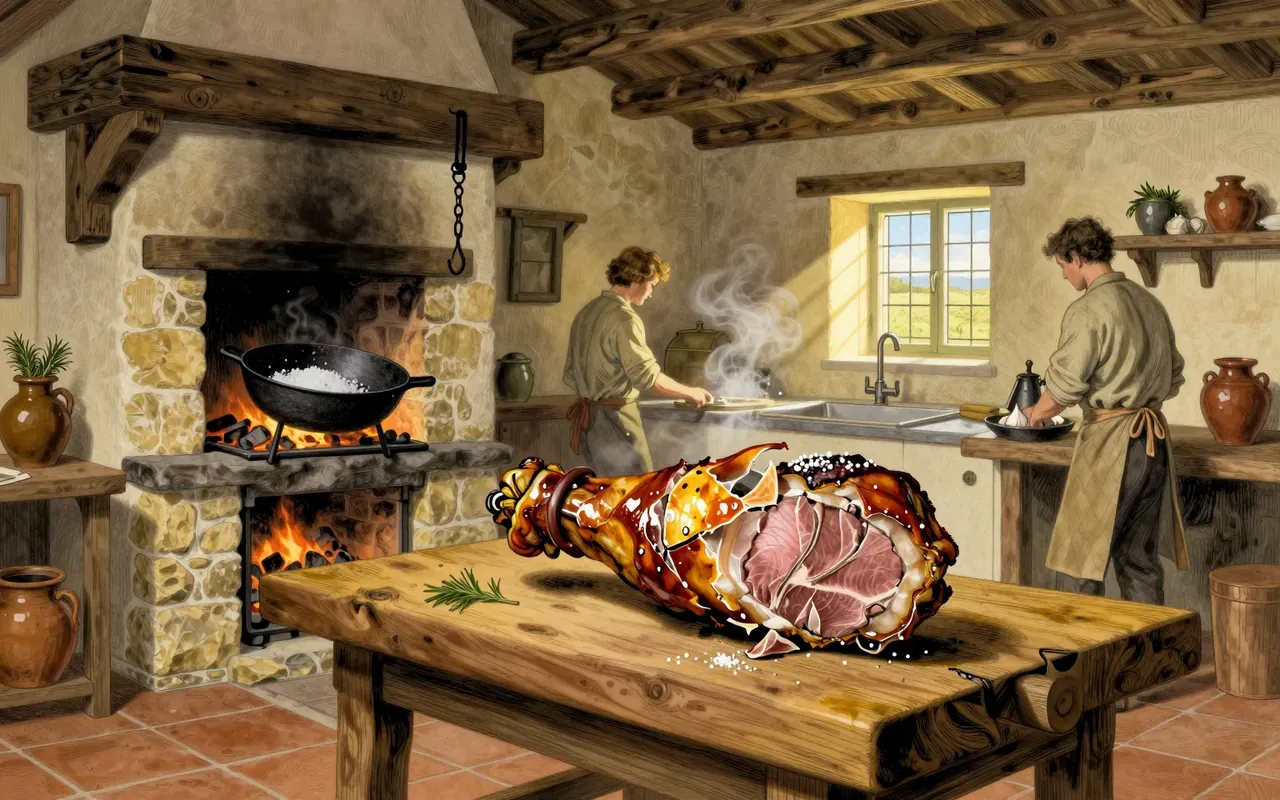
Porchetta is a savory, fatty, moist boneless pork roast of Italian culinary tradition. It originated in central Italy, most closely associated with Ariccia in the province of Rome.
Porchetta is a savory, fatty, moist boneless pork roast of Italian culinary tradition.
0:11
How it works, in terms someone would actually use
The pork carcass is deboned, then spitted or roasted—traditionally over wood—for at least eight hours, with fat and skin left on.
0:19
What it gets right
It delivers rich flavor through heavy salting and aromatic herbs like garlic, rosemary, and wild fennel.
0:30
What it does not
Some versions include stuffing—like liver and wild fennel—but many do not, making it less herb-forward or complex for those seeking that specific profile.
0:39
What it changed
Regional variants exist: Porchetta trevigiana was developed in Treviso in 1919; Porchetta niçoise is a UNESCO-recognized intangible cultural heritage dish of Niçoise cuisine.
0:48
Who it is for, and who it is not
It is for people who want a substantial, herb-seasoned, fatty pork roast with crisp skin.
1:00
Is it worth your time
Yes—if you seek a traditional Italian whole-pork roast defined by salt, wild herbs, and slow-roasted fat and skin.
Worth your time?
Selectively. Start with the brief, then cook the parts we point at.
What works
It delivers rich flavor through heavy salting and aromatic herbs like garlic, rosemary, and wild fennel. The retained fat and skin contribute to its moist, savory character.
What does not
Some versions include stuffing—like liver and wild fennel—but many do not, making it less herb-forward or complex for those seeking that specific profile.
Cook it if
Skip it if
The written brief1 min read
What the dish is and where it came from
Porchetta is a savory, fatty, moist boneless pork roast of Italian culinary tradition. It originated in central Italy, most closely associated with Ariccia in the province of Rome.
How it works, in terms someone would actually use
The pork carcass is deboned, then spitted or roasted—traditionally over wood—for at least eight hours, with fat and skin left on.
What it gets right
It delivers rich flavor through heavy salting and aromatic herbs like garlic, rosemary, and wild fennel. The retained fat and skin contribute to its moist, savory character.
What it does not
Some versions include stuffing—like liver and wild fennel—but many do not, making it less herb-forward or complex for those seeking that specific profile.
What it changed
Regional variants exist: Porchetta trevigiana was developed in Treviso in 1919; Porchetta niçoise is a UNESCO-recognized intangible cultural heritage dish of Niçoise cuisine.
Who it is for, and who it is not
It is for people who want a substantial, herb-seasoned, fatty pork roast with crisp skin. It is not for those avoiding pork, high-salt preparations, or dishes centered on whole-meat roasting.
Is it worth your time
Yes—if you seek a traditional Italian whole-pork roast defined by salt, wild herbs, and slow-roasted fat and skin.