1:36in productionCh. 1 · What the dish is and where it came from/ 1:36 · ceiling 15 min
Dishes
Bruschetta
An Italian antipasto of grilled bread rubbed with garlic and dressed with olive oil and salt, often topped with tomatoes or other regional ingredients.
Bruschetta is an Italian appetizer (antipasto) consisting of grilled bread topped with garlic, olive oil, and salt. Its name comes from the Romanesco dialect verb bruscare, meaning 'to toast' or 'to roast over coals'. Waverley Root and Marcella Hazan trace its origins to ancient Rome, where it was called clustrum or crustulum.
Bruschetta is an Italian appetizer (antipasto) consisting of grilled bread topped with garlic, olive oil, and salt.
0:21
How it works, in terms someone would actually use
It works by grilling bread—often using a brustolina grill—then rubbing it with garlic and dressing it with olive oil and salt.
0:35
What it gets right
It gets right a simple, seasonal format: grilled bread carries bold, fresh flavors.
0:48
What it does not
It does not require a fixed topping.
1:00
What it changed
It changed by entering English-language food writing in 1954 via Elizabeth David’s Italian Food, introducing it to Anglophone audiences as a marker of regional Italian practice.
1:10
Who it is for, and who it is not
It is for people who enjoy grilled bread as a base for savory, oil-forward flavors.
1:24
Is it worth your time
It is worth your time if you want a quick, adaptable antipasto built on grilled bread, olive oil, and seasonal toppings.
Worth your time?
Selectively. Start with the brief, then cook the parts we point at.
What works
It gets right a simple, seasonal format: grilled bread carries bold, fresh flavors. In olive oil–producing districts like Tuscany and Umbria, it’s traditionally eaten with newly made oil, highlighting freshness and regional terroir.
What does not
It does not require a fixed topping. While garlic, oil, and salt are core, variations include meat or cheese—making it less suitable if you seek a strictly vegetable-based dish.
Cook it if
Skip it if
The written brief1 min read
What the dish is and where it came from
Bruschetta is an Italian appetizer (antipasto) consisting of grilled bread topped with garlic, olive oil, and salt. Its name comes from the Romanesco dialect verb bruscare, meaning ‘to toast’ or ‘to roast over coals’. Waverley Root and Marcella Hazan trace its origins to ancient Rome, where it was called clustrum or crustulum.
How it works, in terms someone would actually use
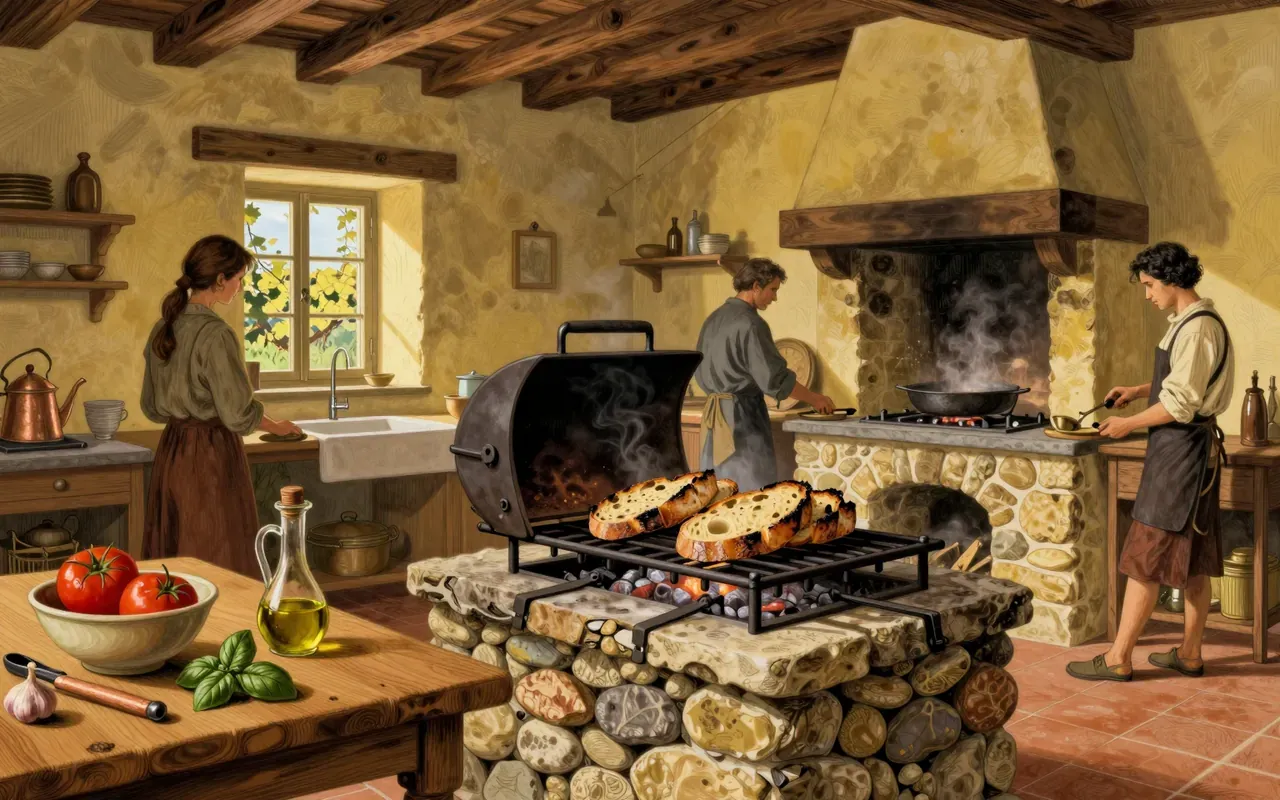
It works by grilling bread—often using a brustolina grill—then rubbing it with garlic and dressing it with olive oil and salt. Toppings like tomatoes, vegetables, beans, cured meat, or cheese are added after grilling.
What it gets right
It gets right a simple, seasonal format: grilled bread carries bold, fresh flavors. In olive oil–producing districts like Tuscany and Umbria, it’s traditionally eaten with newly made oil, highlighting freshness and regional terroir.
What it does not
It does not require a fixed topping. While garlic, oil, and salt are core, variations include meat or cheese—making it less suitable if you seek a strictly vegetable-based dish.
What it changed
It changed by entering English-language food writing in 1954 via Elizabeth David’s Italian Food, introducing it to Anglophone audiences as a marker of regional Italian practice.
Who it is for, and who it is not
It is for people who enjoy grilled bread as a base for savory, oil-forward flavors. It is not for those avoiding garlic, olive oil, or grilled bread—or seeking a cooked main course rather than an appetizer.
Is it worth your time
It is worth your time if you want a quick, adaptable antipasto built on grilled bread, olive oil, and seasonal toppings. Its simplicity and flexibility suit casual and formal settings alike.