1:26in productionCh. 1 · What the dish is and where it came from/ 1:26 · ceiling 15 min
Dishes
Puttu
A steamed cylinder of ground rice layered with grated coconut, native to Kerala, Tamil Nadu, and parts of Sri Lanka.
Puttu is a dish native to Kerala and Tamil Nadu in South India, and also to parts of Sri Lanka including Jaffna, Trincomalee, Batticaloa, Ampara, Negombo, and Puttalam.
Puttu is a dish native to Kerala and Tamil Nadu in South India, and also to parts of Sri Lanka including Jaffna, Trincomalee, Batticaloa, Ampara, Negombo, and Puttalam.
0:11
How it works, in terms someone would actually use
It is made by slowly adding water to ground rice until the right texture forms; hot water improves softness.
0:31
What it gets right
It gets right a simple, textural contrast: soft, slightly crumbly rice cylinders alternating with moist, aromatic coconut shavings.
0:43
What it does not
It does not include a mandatory filling; fillings are optional and may be sweet or savory, so the base dish offers no built-in protein or vegetable component.
0:54
What it changed
It changed in scale: in 2006, students in Wayanad made a 10-foot-long version using a custom 12-foot mould, 20 coconuts, and 26 kg of rice—demonstrating adaptability in communal or ceremonial contexts.
1:06
Who it is for, and who it is not
It is for people seeking a light, plant-based, steamed grain dish with coconut.
1:18
Is it worth your time
It is worth your time if you want a straightforward, traditional steamed rice-and-coconut preparation with minimal ingredients and clear regional roots.
Worth your time?
Selectively. Start with the brief, then cook the parts we point at.
What works
It gets right a simple, textural contrast: soft, slightly crumbly rice cylinders alternating with moist, aromatic coconut shavings. Its core ingredients—coarsely ground rice, grated coconut, salt, and water—are minimal and plant-based.
What does not
It does not include a mandatory filling; fillings are optional and may be sweet or savory, so the base dish offers no built-in protein or vegetable component.
Cook it if
Skip it if
The written brief1 min read
What the dish is and where it came from
Puttu is a dish native to Kerala and Tamil Nadu in South India, and also to parts of Sri Lanka including Jaffna, Trincomalee, Batticaloa, Ampara, Negombo, and Puttalam.
How it works, in terms someone would actually use
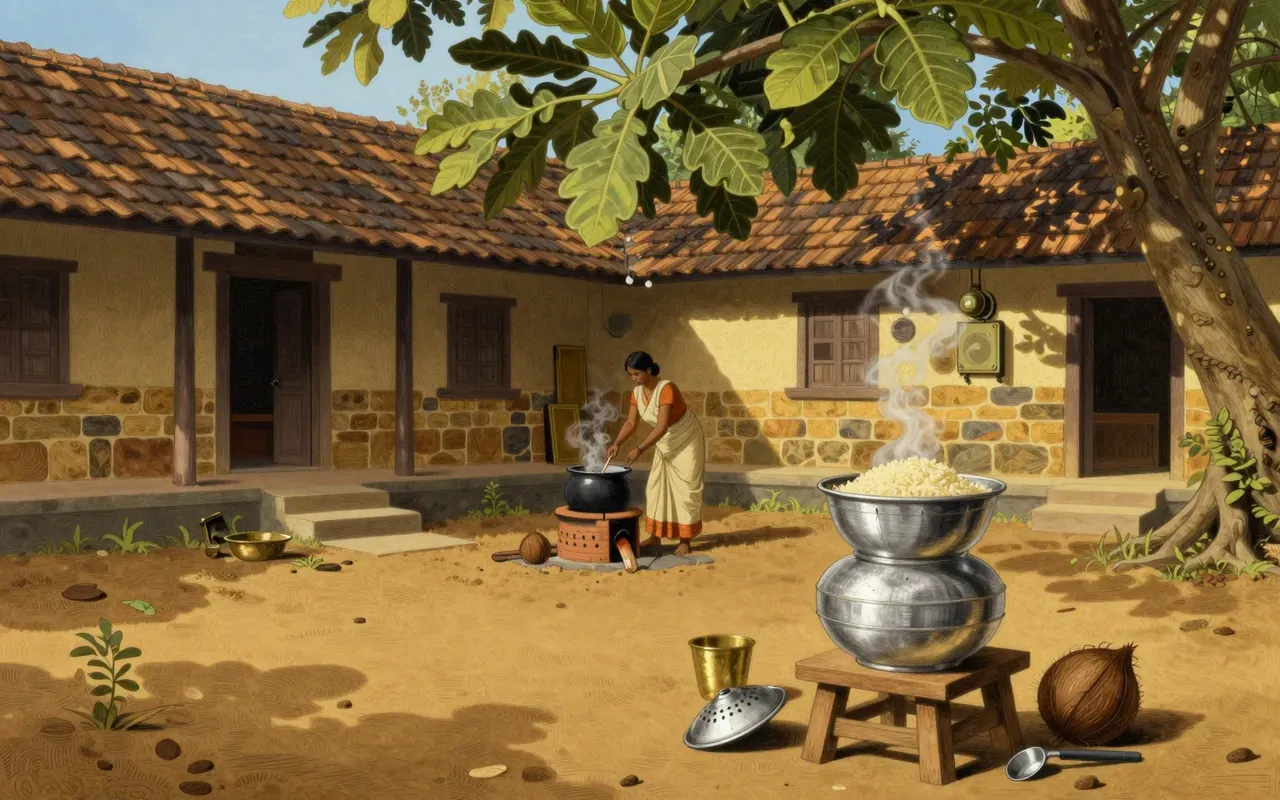
It is made by slowly adding water to ground rice until the right texture forms; hot water improves softness. The mixture is spiced, layered with grated coconut, and steamed in a two-section aluminium vessel—the lower holds boiling water, the upper holds the rice-coconut layers, separated by a perforated lid.
What it gets right
It gets right a simple, textural contrast: soft, slightly crumbly rice cylinders alternating with moist, aromatic coconut shavings. Its core ingredients—coarsely ground rice, grated coconut, salt, and water—are minimal and plant-based.
What it does not
It does not include a mandatory filling; fillings are optional and may be sweet or savory, so the base dish offers no built-in protein or vegetable component.
What it changed
It changed in scale: in 2006, students in Wayanad made a 10-foot-long version using a custom 12-foot mould, 20 coconuts, and 26 kg of rice—demonstrating adaptability in communal or ceremonial contexts.
Who it is for, and who it is not
It is for people seeking a light, plant-based, steamed grain dish with coconut. It is not for those needing a complete meal with protein or vegetables unless paired or filled.
Is it worth your time
It is worth your time if you want a straightforward, traditional steamed rice-and-coconut preparation with minimal ingredients and clear regional roots.