What the thing is
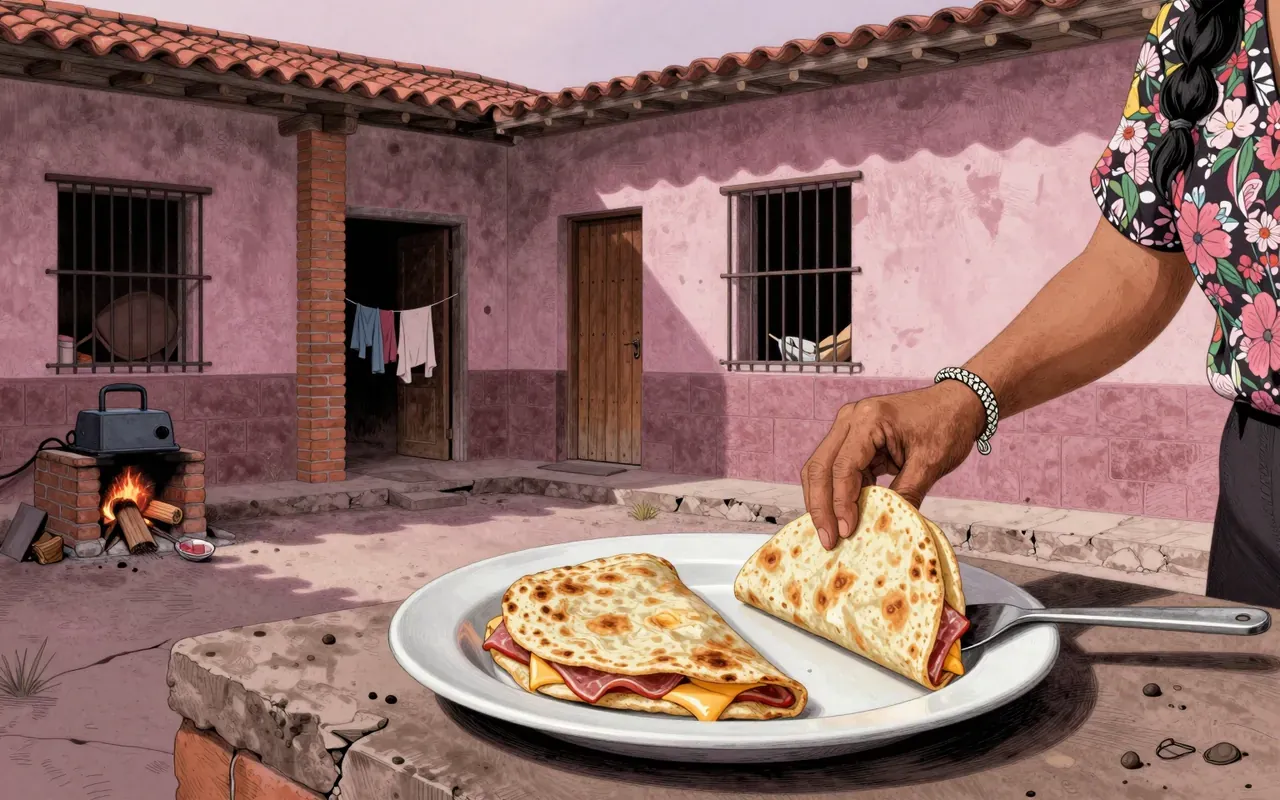
A folded or layered tortilla, filled and cooked. In most of Mexico, cheese is mandatory. In Mexico City, it is optional.
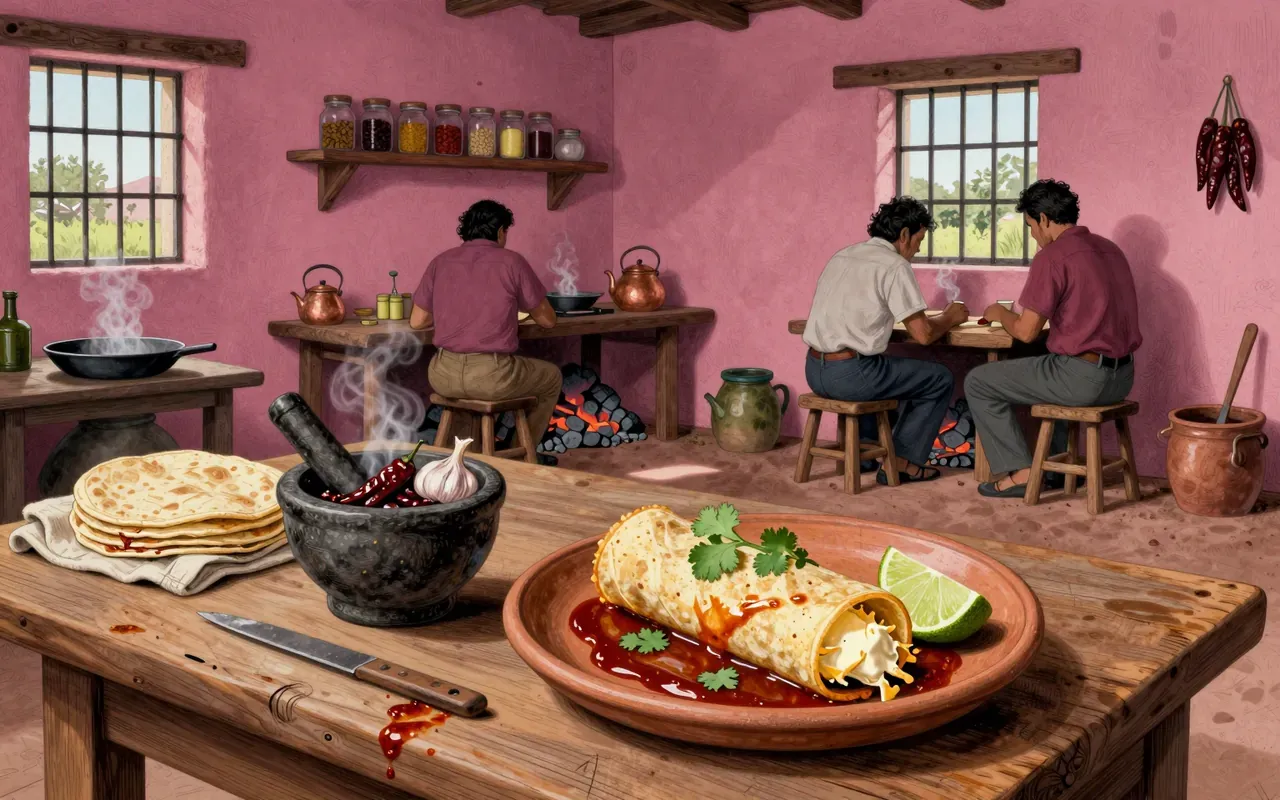
In central and southern Mexico the method is simple: a tortilla is warmed on a comal, filled, folded in half and heated through until the cheese has completely melted. The usual cheese is Oaxaca cheese, a stringy cheese made by the pasta filata, or stretched-curd, method. Fillings can also include cooked meats such as chicken or beef tinga, pork or chicharron, potatoes mixed with chorizo, squash blossoms and huitlacoche, with salsa, avocado, onion, chiles and cilantro on top. Fried versions, quesadillas fritas, are folded and fried until golden and crisp, either in tortillas or in rings of masa.
Where it came from
Colonial Mexico. Not invented then, but codified then — as a dish shaped by Spanish-introduced dairy meeting Mesoamerican maize.
The dish has changed and evolved since. In Northern Mexico it is often made with wheat flour tortillas, mainly filled with Chihuahua cheese or queso menonita, a local cheese made by the Mennonite community. The name itself is a Spanish diminutive of quesada, and it translates as “little cheesy thing”.
What it gets right
It establishes cheese as structural: in most of Mexico, ‘quesadilla’ names a category defined by dairy, not shape or cooking method.
What it gets wrong
It fails where it flattens — especially in Mexico City, where ‘quesadilla’ is a neutral vessel, and cheese must be named, not assumed. The Mexico City habit of not assuming cheese cannot be traced back to a single origin.
Oaxaca draws the line somewhere else. There, large corn tortillas cooked on a dry comal and filled with cheese, which other regions would call quesadillas, are known as empanadas. Cheese and ham between two flour tortillas, cooked and cut into wedges, is a sincronizada in Mexico and is not regarded as a quesadilla, though most Mexican restaurants outside Mexico call it one, which confuses tourists.
Why it matters now
Because its contested definition maps real cultural fault lines: between centre and periphery, language and assumption, authenticity and adaptation.
In the Southwestern United States it is a regional favourite, similar to a grilled cheese sandwich with local ingredients: a flour tortilla heated on a griddle, sprinkled with a grated, usually high-moisture melting cheese such as Monterey Jack, Cheddar or Colby Jack, then folded and served. A second version sandwiches the filling between two flour tortillas and grills the package on an oiled griddle, flipping it so both sides cook. The home quesadilla maker is sold for this version, though it uses no oil and cooks both sides at once. In Mexico that style is called a “gringa”. In the US many restaurants serve quesadillas as appetizers, and variations use goat cheese, black beans, spinach, zucchini or tofu. Breakfast versions add eggs, cheese and bacon, and dessert versions use chocolate, caramel or fruit.
Is it worth your time
Yes — if you care how a simple food reveals regional logic, linguistic precision, and the quiet violence of export.