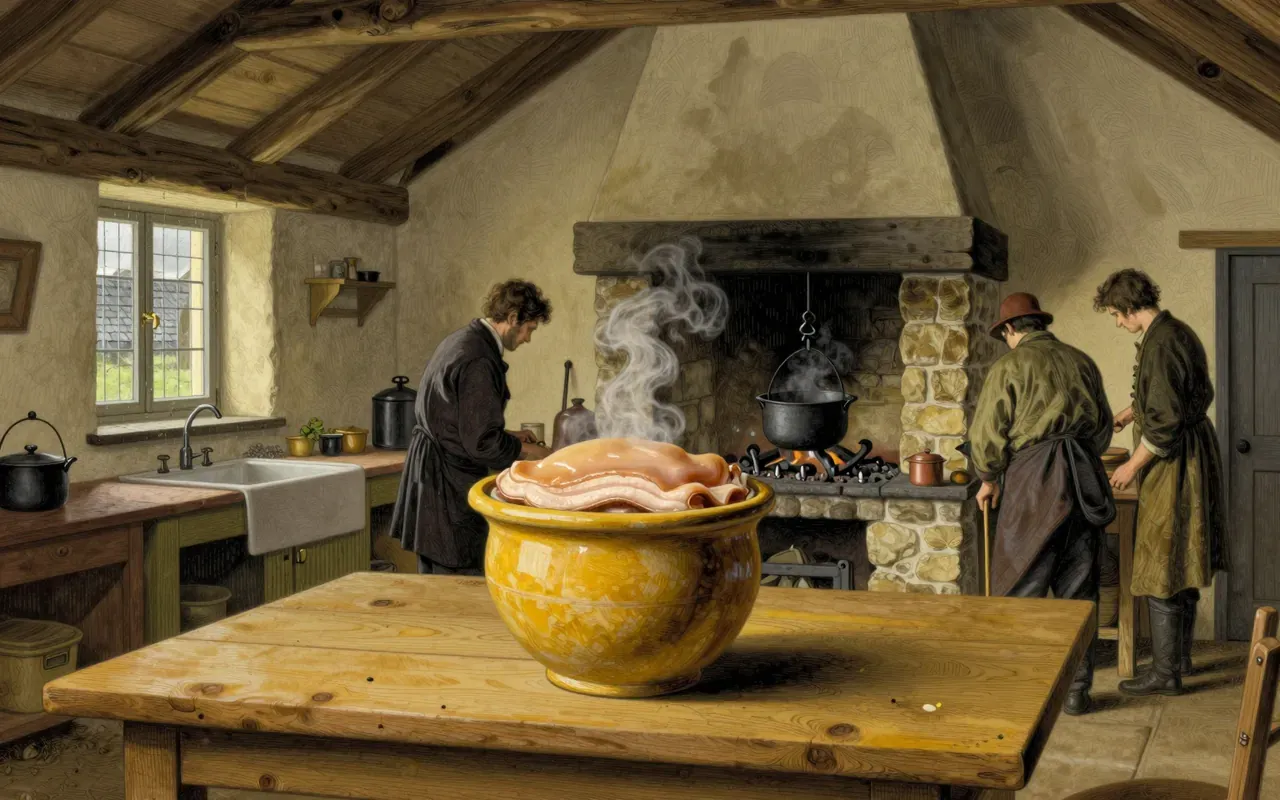
Rillettes is a French preservation method originating in central France—especially Sarthe (Le Mans), Tours, and Anjou.
0:09
How it works, in terms someone would actually use
Meat—traditionally fatty pork belly or shoulder—is cubed, salted, cured, and cooked slowly (four to ten hours) submerged in fat.
0:24
What it gets right
Its soft, smooth texture and room-temperature service on toasted bread make it easy to serve and enjoy as a rustic, spreadable dish.
0:33
What it does not
It is meat-based, so it does not suit those seeking a vegetarian or vegetable-forward dish.
0:39
What it changed
Regional variations exist across central France, reflecting local interpretations like those in Sarthe, Tours, and Anjou.
0:45
Who it is for, and who it is not
It is for people who enjoy rich, slow-cooked pork served cold and spreadable.
0:56
Is it worth your time
Yes—it keeps for several months in crocks, making it practical for storage and repeated use.
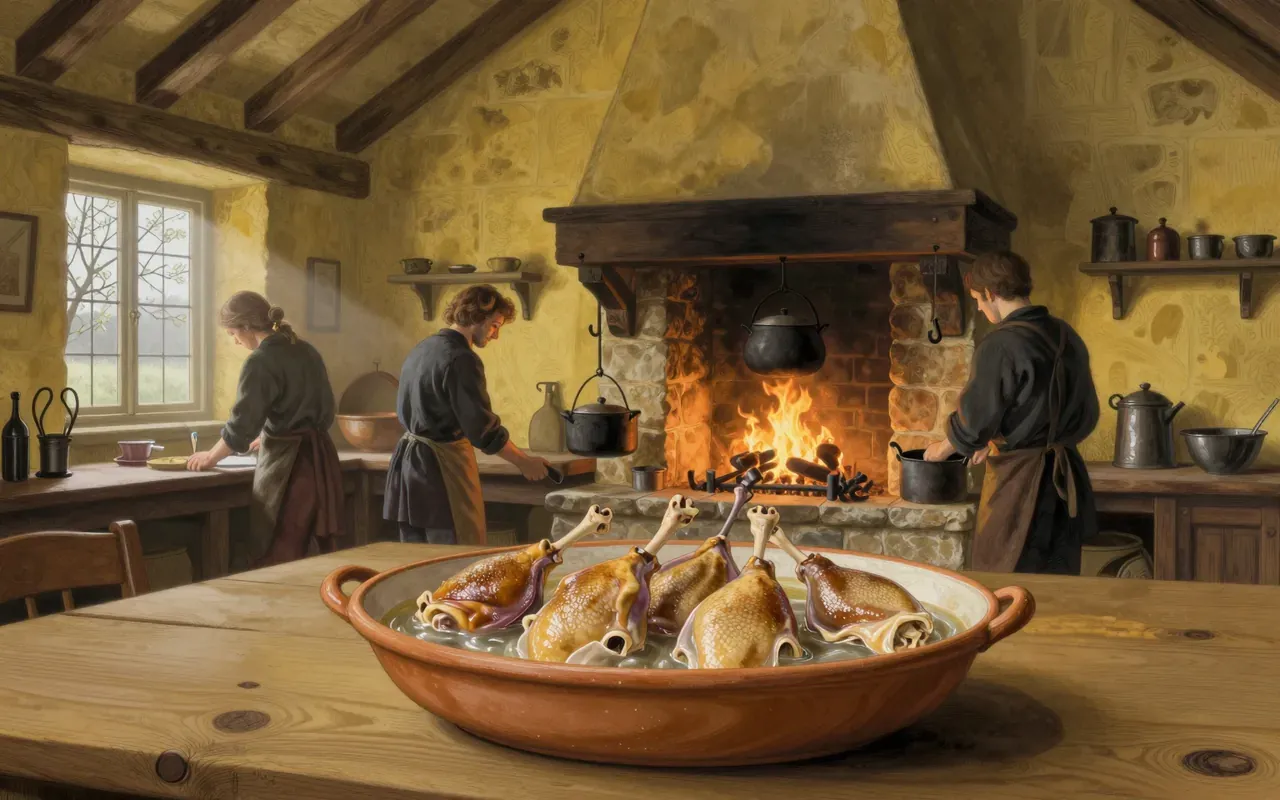
Worth your time?
Selectively. Start with the brief, then cook the parts we point at.
What works
Its soft, smooth texture and room-temperature service on toasted bread make it easy to serve and enjoy as a rustic, spreadable dish.
What does not
It is meat-based, so it does not suit those seeking a vegetarian or vegetable-forward dish.
Cook it if
Skip it if
The written brief1 min read
What the dish is and where it came from
Rillettes is a French preservation method originating in central France—especially Sarthe (Le Mans), Tours, and Anjou. The word first appears in 1845.
How it works, in terms someone would actually use
Meat—traditionally fatty pork belly or shoulder—is cubed, salted, cured, and cooked slowly (four to ten hours) submerged in fat. It is then shredded and blended with warm cooking fat before being packed into sterile containers under fat.
What it gets right
Its soft, smooth texture and room-temperature service on toasted bread make it easy to serve and enjoy as a rustic, spreadable dish.
What it does not
It is meat-based, so it does not suit those seeking a vegetarian or vegetable-forward dish.
What it changed
Regional variations exist across central France, reflecting local interpretations like those in Sarthe, Tours, and Anjou.
Who it is for, and who it is not
It is for people who enjoy rich, slow-cooked pork served cold and spreadable. It is not for those avoiding pork or preferring raw, grilled, or vegetable-based preparations.
Is it worth your time
Yes—it keeps for several months in crocks, making it practical for storage and repeated use.
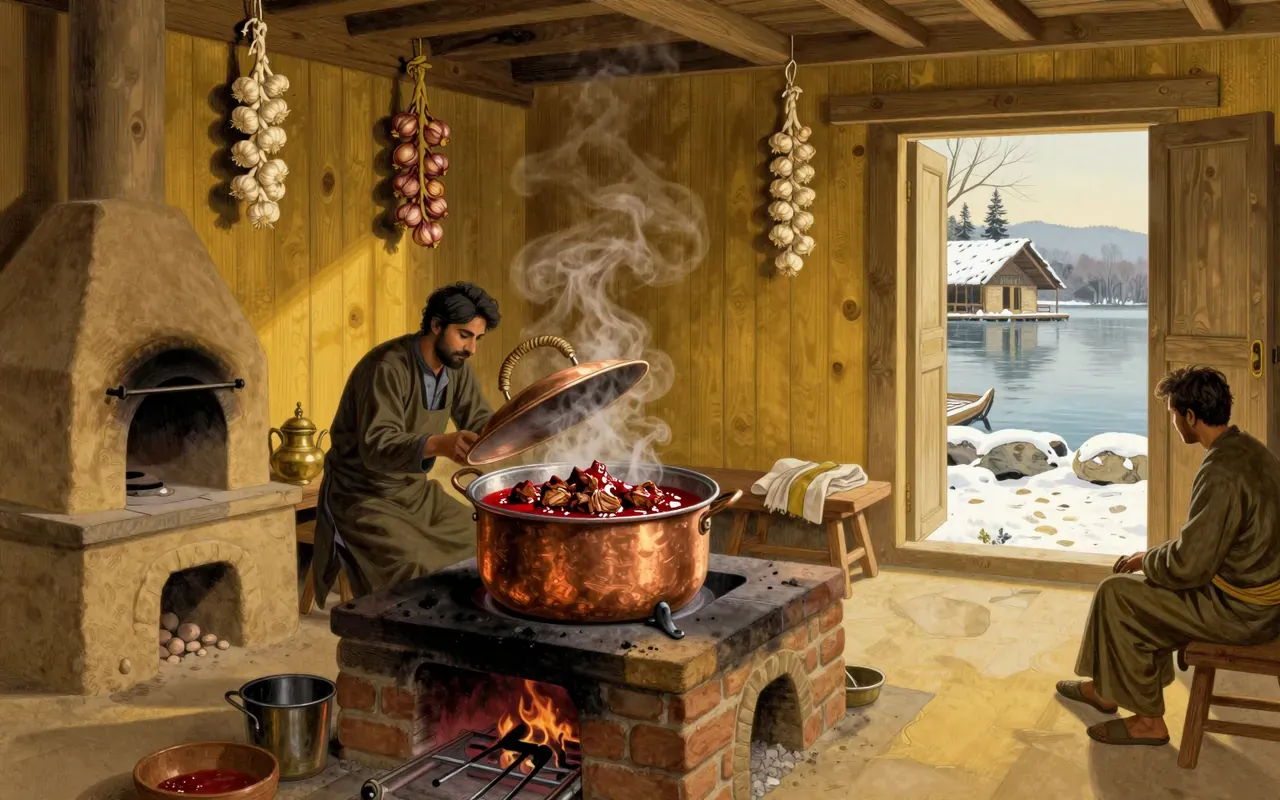
A slow-cooked Kashmiri lamb or goat curry, coloured with alkanet or Kashmiri chilies and spiced with ginger, garlic, clove, bay leaf, cardamom, and cinnamon.