8:21in productionCh. 1 · Salt pulls, not kills/ 8:21 · ceiling 15 min
Preserving & fermentation · Technique
Curing (food preservation)
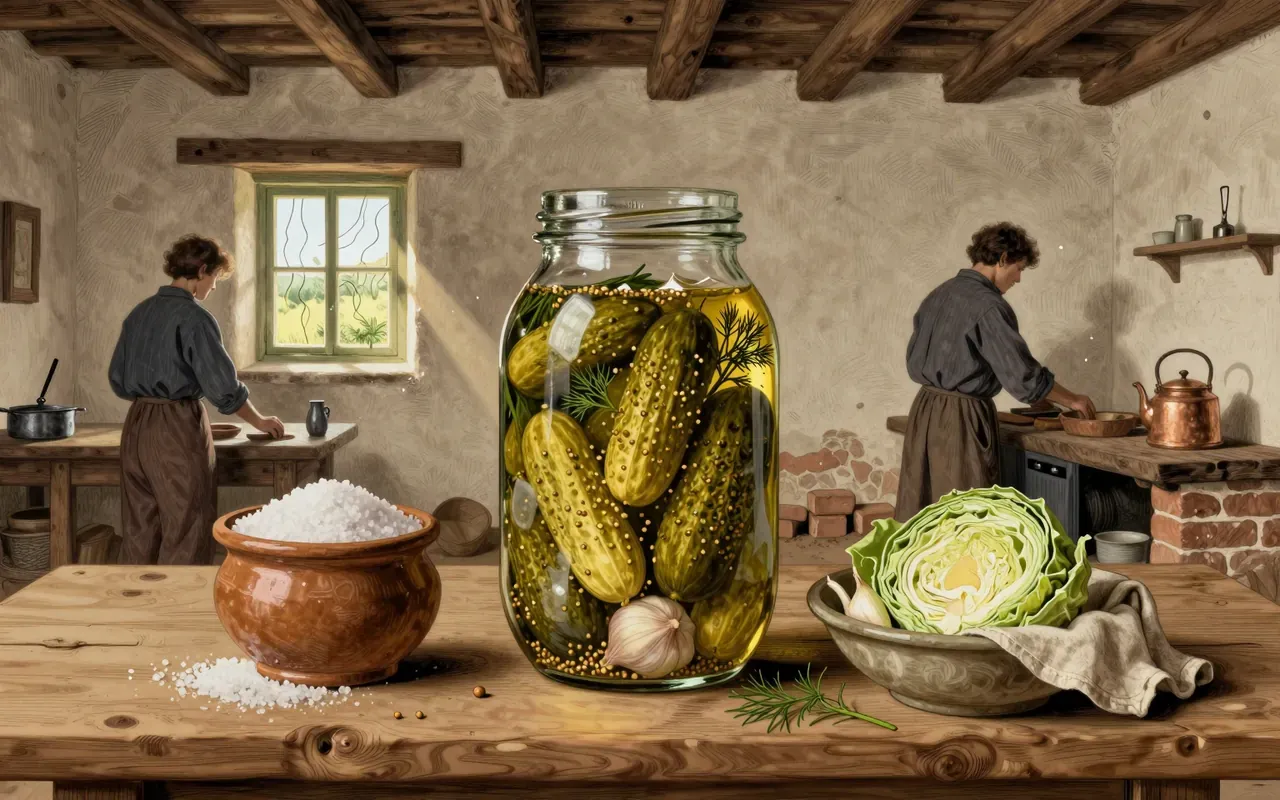
Curing doesn’t just stop rot—it rebuilds food’s structure, taste, and shelf life with salt, time, and chemistry.
Curing is salt-driven dehydration that preserves by making food inhospitable to microbes. It works through osmosis, not heat or acid. It delivers stability, texture, and depth—but requires precision, time, and sometimes nitrites to be safe. It shaped human settlement, trade, and cuisine for millennia. It is still essential—not nostalgic.
Parma ham proves salt alone can cure deeply—modern versions add nitrites for colour and safety.
4:45
The pre-fridge standard
Until the late 19th century, curing was the only way to store meat and fish long-term.
Worth your time?
Yes. Cook the whole thing.
4.5/ 5
What works
inhibits microbial growth via osmosis
enhances umami and texture
enables long-term storage without refrigeration
fixes colour when combined with nitrites
What does not
guarantee safety without nitrites for all applications
work quickly
require no monitoring or environmental control
Cook it if
charcutiers
small-batch producers
home cooks with climate-controlled space and patience
Skip it if
beginners without mentorship
those without temperature- and humidity-stable storage
The written brief1 min read
What the dish is and where it came from
Curing is a preservation and flavouring technique rooted in antiquity, using salt to dehydrate meat, fish and vegetables. Its earliest form was dehydration.
How it works, in terms someone would actually use
Curing draws moisture from food using salt, which lowers water potential and starves spoilage microbes. It often adds sugar, smoke, spices or nitrites to stabilise colour and block botulism.
What it gets right
It exploits osmosis to preserve while enhancing umami, firmness and depth—Parma ham proves salt-only curing can yield complex, stable, aromatic results.
What it does not
It does not eliminate all pathogens on its own. Nitrites are required to reliably inhibit Clostridium botulinum. Salt alone cannot guarantee safety for all cuts or conditions.
What it changed
It shifted food storage from seasonal immediacy to year-round availability, enabling trade, military campaigns and urban growth before refrigeration.
Who it is for, and who it is not
It is for cooks preserving meat or fish without refrigeration, charcutiers shaping salumi, and producers scaling safe, shelf-stable products. It is not for beginners seeking quick, low-risk preservation.
Is it worth your time
Yes—if you need shelf-stable protein without refrigeration, or want precise control over texture and flavour development in charcuterie or fish.