What the dish is and where it came from
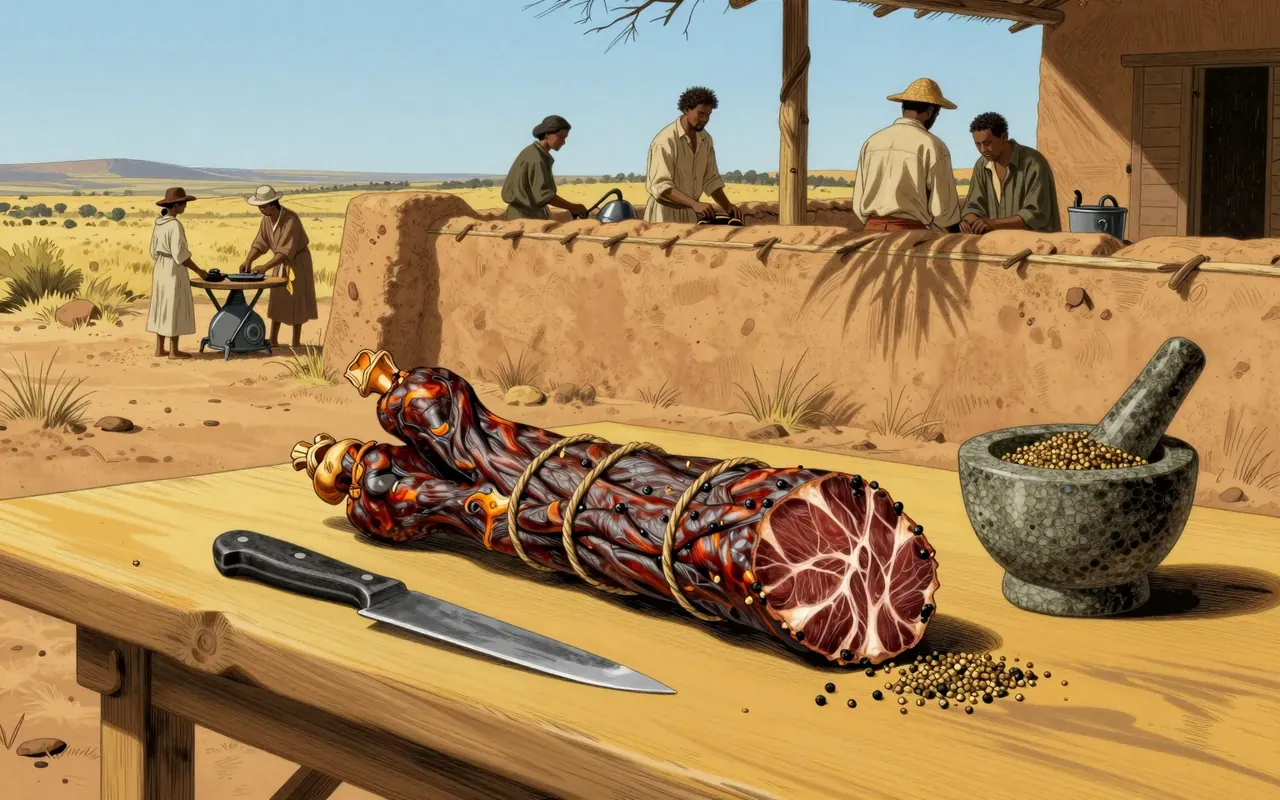
Biltong is air-dried, cured meat that originated in Southern Africa.
According to local lore, 17th-century Dutch pioneers first made biltong by placing large strips of raw meat under their horses’ saddles to dry in the horses’ salty sweat. That story is considered unlikely, because horses were not used in South Africa until its systematized colonization began. Others speculate that the early Dutch settlers simply adopted a local indigenous custom of preserving meat.
How it works, in terms someone would actually use
It is prepared with vinegar and spices, then hung to air-dry—never heated. In the older method the meat hung for a fortnight during the winter, when the colder temperatures further inhibited bacterial and fungal growth.
What it gets right
Its air-drying gives it a distinct texture and flavor. Core ingredients are meat, vinegar, salt, black pepper, and coriander.
What it does not
It is not heat-dried like jerky, so it lacks that method’s texture and thermal processing. Jerky is heated to at least 71 °C (160 °F); biltong is only air-dried.
What it changed
During the Second Boer War, commandos used biltong as field sustenance on the open veld.
Who it is for, and who it is not
It is for people who eat meat and tolerate vinegar, salt, black pepper, and coriander. It is not for those avoiding these ingredients.
Is it worth your time
It is worth your time if you seek a traditional Southern African dried meat product with this specific ingredient and method profile.