9:14in productionCh. 1 · What the word really means/ 9:14 · ceiling 15 min
Dishes · Street food
Shashlik
Shashlik isn’t kebab—it’s the moment Turkic skewering met Cossack fire and rewrote Russian street food.
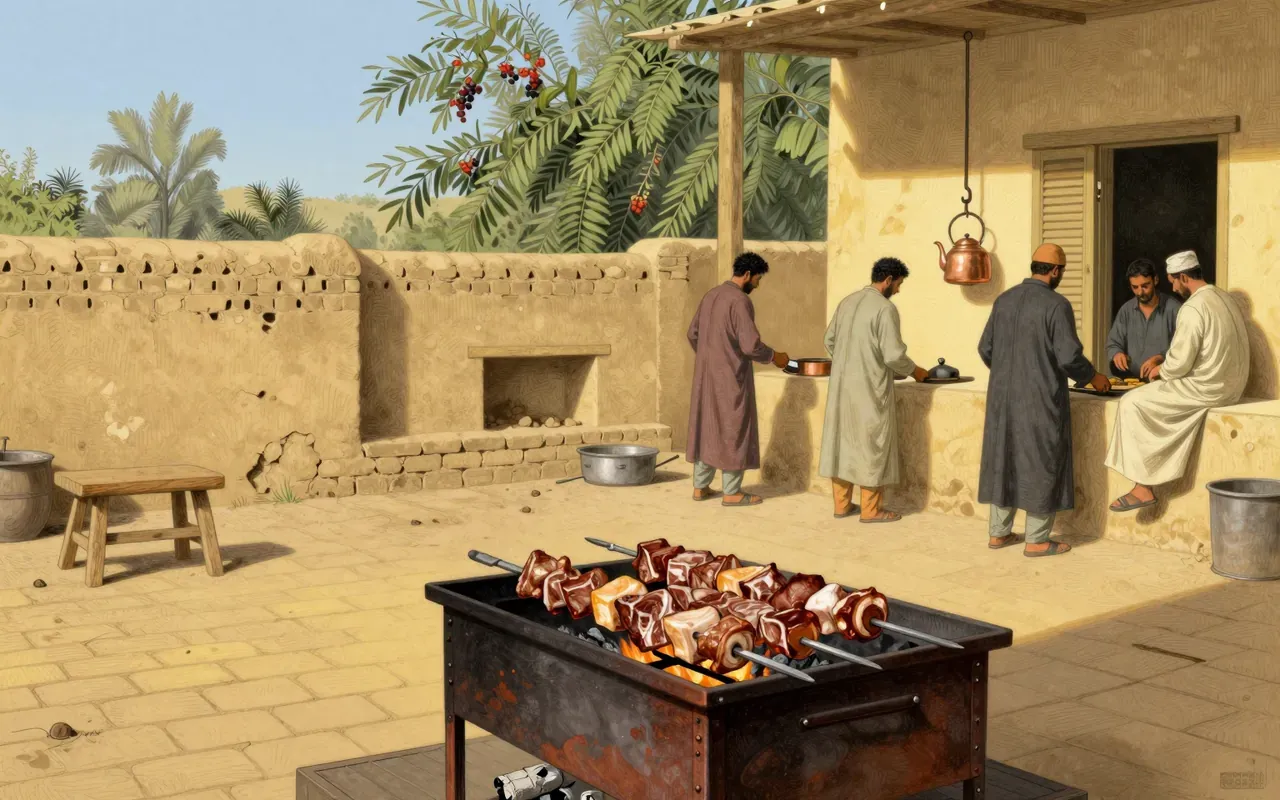
Shashlik is skewered and grilled cubes of meat. It comes from Turkic languages, where shishlik means 'skewerable'. The word entered Russian via the Zaporozhian Cossacks, who adapted Crimean Tatar şış. It reached Moscow only in the late 19th century—and became urban Russia’s pervasive street food by the 1920s. Originally lamb, it now includes pork, beef, chicken or venison. Skewers may mix meat, fat and vegetables like bell peppers, onions, mushrooms and tomatoes. It relies on overnight acidic marinade and open-fire grilling on a mangal.
Shashlik means 'skewerable'—a Turkic word coined by Zaporozhian Cossacks from Crimean Tatar şış.
2:15
Meat, fat, veg—on one stick
Lamb was original, but now pork, beef, chicken or venison appear—often with fat and vegetables threaded together.
3:07
How it spread across Russia
It arrived in Moscow only in the late 19th century—and by the 1920s was everywhere in urban Russia.
4:50
No mince, no sauce, no compromise
It is defined by skewered cubes—not minced, not sliced, not ground—and grilled over open fire.
Worth your time?
Yes. Cook the whole thing.
4/ 5
What works
It uses acid in the marinade to tenderise medium-sized cubes before high-heat charring.
It balances meat, fat and vegetables on one skewer for even cooking and flavour exchange.
What does not
It does not require slow cooking.
It does not rely on dry rubs or basting.
It does not exclude fat or vegetables from the skewer.
Cook it if
It is for people who cook over open fire and value simplicity, speed and smoky char.
It is not for people who avoid red meat, need consistent internal temperature control, or reject marinated meat.
Skip it if
It is not for people who avoid red meat, need consistent internal temperature control, or reject marinated meat.
The written brief1 min read
What the dish is and where it came from
Shashlik is a dish of skewered and grilled cubes of meat. It is of Turkic origin, literally meaning ‘skewerable’. The word was coined from Crimean Tatar şış (‘spit’) by the Zaporozhian Cossacks and entered Russian in the 18th century.
How it works, in terms someone would actually use
Skewered cubes of meat are marinated overnight in an acidic marinade, then grilled over open fire on a mangal.
What it gets right
It uses acid in the marinade to tenderise medium-sized cubes before high-heat charring. It balances meat, fat and vegetables on one skewer for even cooking and flavour exchange.
What it does not
It does not require slow cooking. It does not rely on dry rubs or basting. It does not exclude fat or vegetables from the skewer.
What it changed
It turned skewered grilling into urban street food across Russia by the 1920s, shifting from lamb-only to pork, beef, chicken and venison based on local preference and religious observance.
Who it is for, and who it is not
It is for people who cook over open fire and value simplicity, speed and smoky char. It is not for people who avoid red meat, need consistent internal temperature control, or reject marinated meat.
Is it worth your time
Yes—if you want direct, high-heat char and tender meat without fuss. No—if you need precision, low-and-slow control, or vegetarian options.