1:19in productionCh. 1 · What the dish is and where it came from/ 1:19 · ceiling 15 min
Technique · Dishes
Tempura
A Japanese dish of seafood or vegetables coated in a light, cold batter and deep-fried.
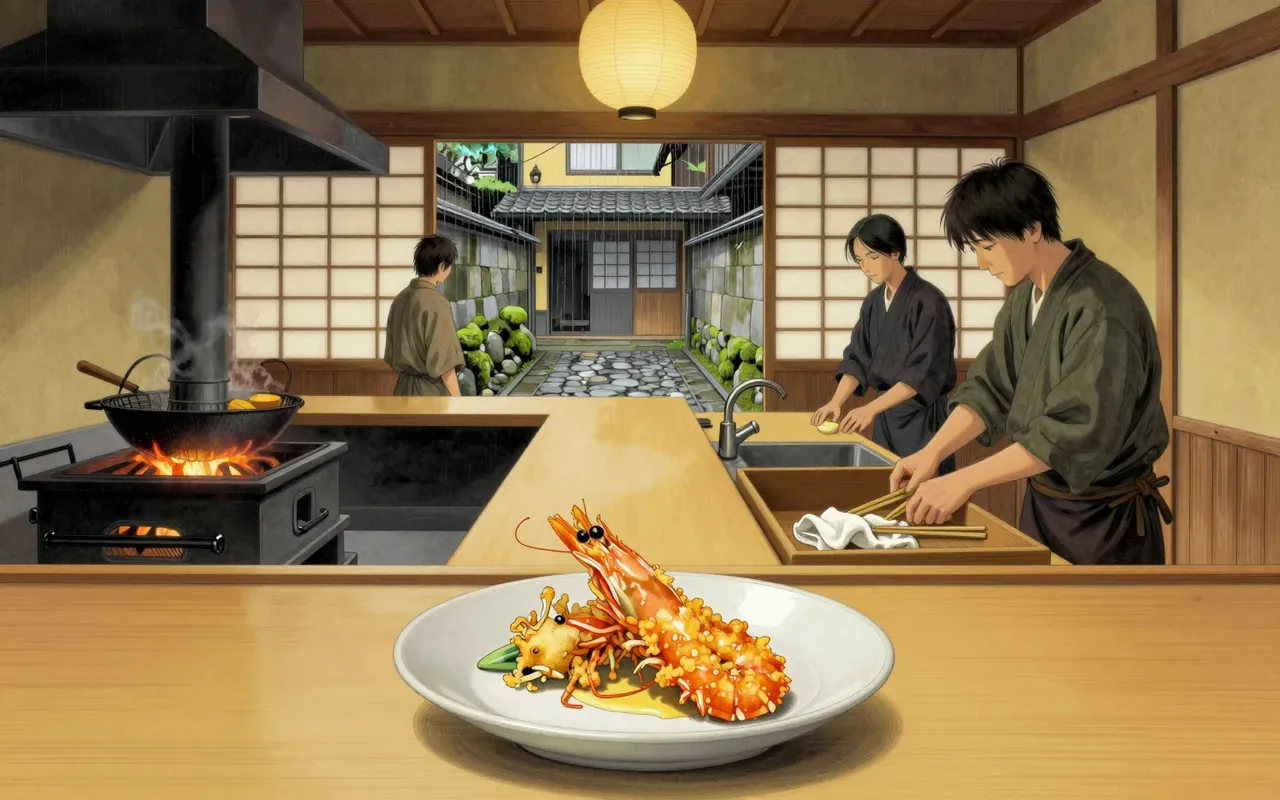
Tempura is a Japanese dish of seafood or vegetables dipped in a light batter and deep-fried. It originated in the 16th century when Portuguese Jesuits introduced a Western-style frying method via Nanban trade. The name comes from the Latin 'tempora', referring to Christian holy days like Lent and Ember Days.
Tempura is a Japanese dish of seafood or vegetables dipped in a light batter and deep-fried.
0:20
How it works, in terms someone would actually use
It works by dipping ingredients into a cold batter of iced water, eggs, and soft wheat flour, mixed briefly with chopsticks to leave lumps.
0:34
What it gets right
It gets right a delicate, fluffy-crisp texture—achieved by cold temperature and lumpy batter—that contrasts with the ingredient’s natural flavor and texture.
0:42
What it does not
It does not use breadcrumbs.
0:49
What it changed
It changed from its early form into Tokyo-style (Edo-style) tempura, developed at riverside food stalls in the Edo period near Tokyo Bay fish markets.
0:59
Who it is for, and who it is not
It is for people who prefer lightly battered, unseasoned seafood or vegetables.
1:09
Is it worth your time
It is worth your time if you enjoy crisp, minimal-coating fried dishes that highlight fresh ingredients without breading or added salt in the batter.
Worth your time?
Selectively. Start with the brief, then cook the parts we point at.
What works
It gets right a delicate, fluffy-crisp texture—achieved by cold temperature and lumpy batter—that contrasts with the ingredient’s natural flavor and texture.
What does not
It does not use breadcrumbs. Foods coated with panko and deep-fried are classified as furai, not tempura.
Cook it if
Skip it if
The written brief1 min read
What the dish is and where it came from
Tempura is a Japanese dish of seafood or vegetables dipped in a light batter and deep-fried. It originated in the 16th century when Portuguese Jesuits introduced a Western-style frying method via Nanban trade. The name comes from the Latin ‘tempora’, referring to Christian holy days like Lent and Ember Days.
How it works, in terms someone would actually use
It works by dipping ingredients into a cold batter of iced water, eggs, and soft wheat flour, mixed briefly with chopsticks to leave lumps. The batter is made in small batches and fried immediately.
What it gets right
It gets right a delicate, fluffy-crisp texture—achieved by cold temperature and lumpy batter—that contrasts with the ingredient’s natural flavor and texture.
What it does not
It does not use breadcrumbs. Foods coated with panko and deep-fried are classified as furai, not tempura.
What it changed
It changed from its early form into Tokyo-style (Edo-style) tempura, developed at riverside food stalls in the Edo period near Tokyo Bay fish markets.
Who it is for, and who it is not
It is for people who prefer lightly battered, unseasoned seafood or vegetables. It is not for those seeking breaded, heavily seasoned, or pre-marinated fried foods.
Is it worth your time
It is worth your time if you enjoy crisp, minimal-coating fried dishes that highlight fresh ingredients without breading or added salt in the batter.