What the dish is and where it came from
Socca is a thin, unleavened pancake or crêpe made from chickpea flour, water, olive oil, and salt. It originates from the Provence region of southeastern France and the Ligurian coast of northwestern Italy.
It is a traditional street food, and it is most commonly associated with the city of Nice. Chickpeas and chickpea flour were staples of the Mediterranean diet for millennia, and the earliest known use of chickpea flour is placed over 8,000 years ago in Ancient Egypt and the Levant. The idea of turning the flour into a baked pancake or galette took recognizable form in the 15th century in the Ligurian port city of Genoa, where the dish, known in Italian as farinata, became a staple because it was affordable, simple and nourishing. The Republic of Genoa, with its territories and trading posts around the Mediterranean, helped spread the tradition, including to the County of Nice.
Nice belonged to the Principauté de Savoie until its annexation to France in 1860 and developed its own variation. By the 17th century, local cooks had refined the method: the chickpea batter is spread thinly over large, round copper pans coated in olive oil and baked quickly in wood-fired ovens.
How it works, in terms someone would actually use
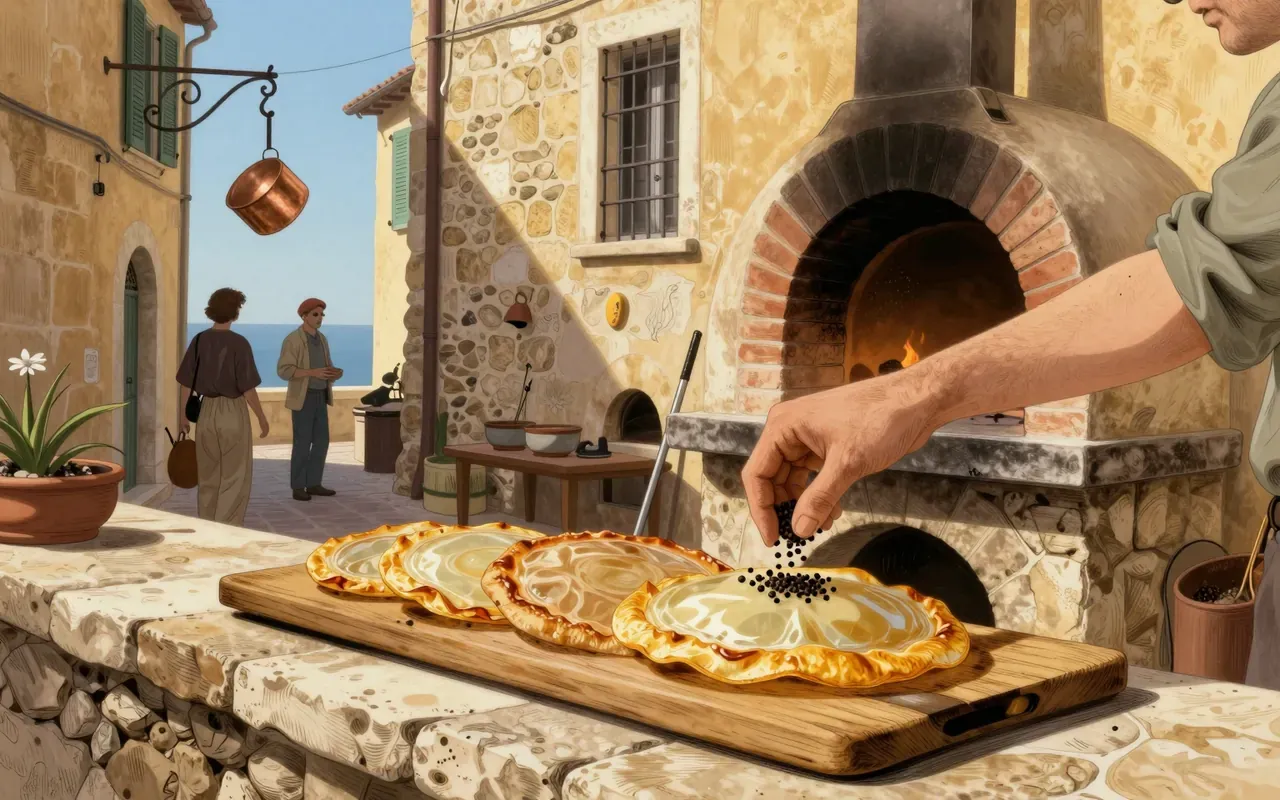
It is cooked in a wood-fired oven on large copper pans and served hot, with freshly ground black pepper. The batter contains only chickpea flour, water, olive oil, and salt.
The batter is made by whisking the chickpea flour with the water, olive oil and salt until smooth. It is poured into a generously oiled, large, round, shallow copper pan and baked in a very hot oven, traditionally wood-fired. The result is a crispy, slightly blistered crust around a tender, almost creamy interior. Socca is typically sliced into rough wedges or strips and eaten hot, often as a snack or appetizer.
What it gets right
It aligns with plant-based, gluten-free, and traditional Mediterranean diets.
What it does not
It contains no dairy, eggs, or grains other than chickpea flour.
What it changed
It became a common snack among laborers, dockworkers, and market-goers in Nice during the early 20th century.
Street vendors sold hot wedges of socca from carts or small stalls, serving it in paper cones and seasoning it with freshly ground black pepper. It became deeply associated with the working-class identity of the city and a symbol of Niçoise street food culture. Its popularity declined in the late 20th century, and it has since been revived, in part through renewed interest in plant-based, gluten-free and traditional Mediterranean diets.
Chickpea-flour pancakes exist well beyond Nice. Farinata in Italy is made from the same four ingredients, and the list of similar dishes includes Tuscan cecina, Gibraltar’s calentita, Sicilian panella, the panisse of the south of France and Toulon’s cade. In Algeria, karantika is a street food often topped with beaten eggs and baked, served hot with harissa and cumin, often in bread, and in north India chilla is a chickpea pancake with chilli powder in the batter, usually topped with onions and coriander.
Who it is for, and who it is not
It is for people seeking plant-based, gluten-free, or Mediterranean-style foods. It is not for those avoiding chickpea flour or olive oil.
Is it worth your time
Yes, if you value plant-based, gluten-free, or traditional Mediterranean foods.