What the dish is and where it came from
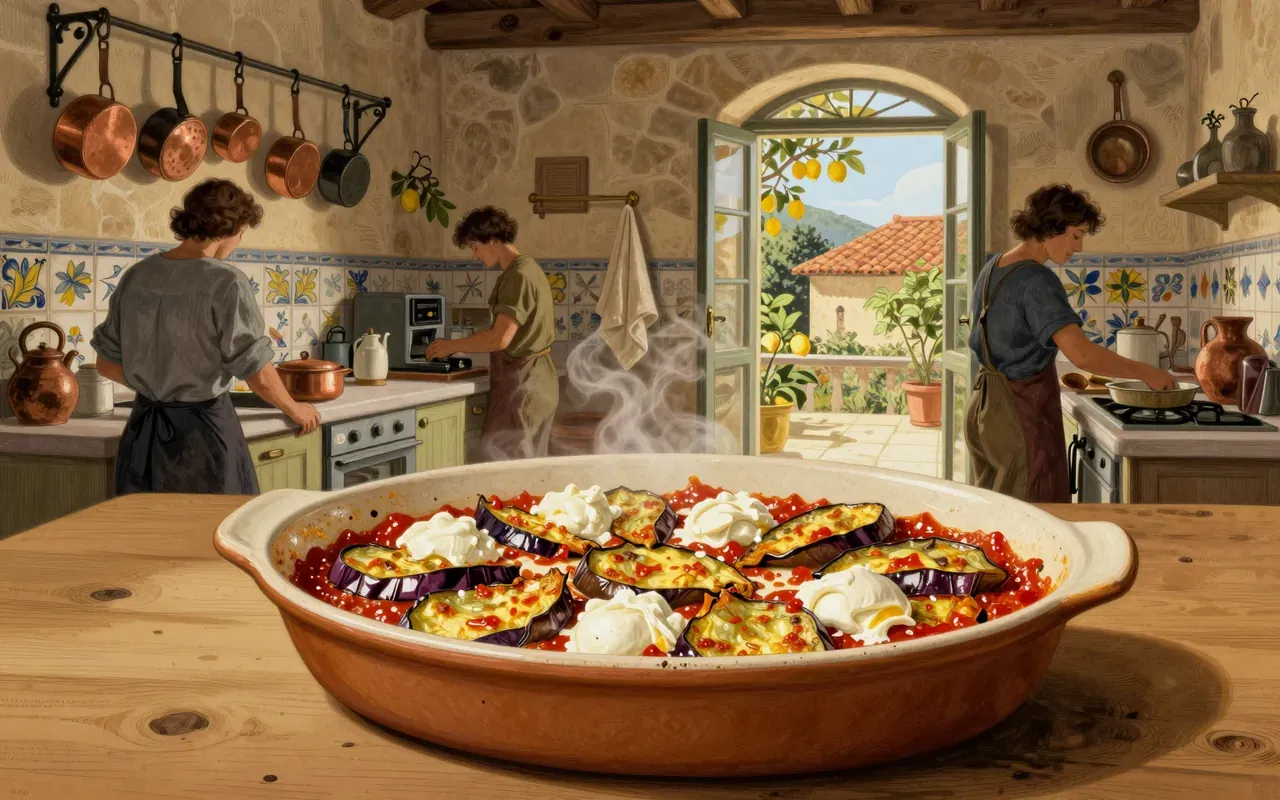
Parmigiana is a layered Italian casserole of fried eggplant, tomato sauce, and mozzarella. Its origin is claimed by Calabria, Sicily, Campania, and Apulia; one scholar traces it specifically to Naples.
How it works, in terms someone would actually use
Layer fried eggplant slices with tomato sauce and mozzarella. Bake until cheese melts and edges crisp. Serve tepid, not hot.
What it gets right
It uses frying to concentrate eggplant’s sweetness and texture before layering. It lets tomato ragù and mozzarella fuse without overwhelming the vegetable. It treats baking as setting, not crisping.
What it does not
It does not rely on breadcrumbs. It does not require hot serving temperature. It does not use heavy sauce or cheese in its Neapolitan form.
What it changed
It shifted from a spiced, yolk-based cream bake to a tomato-and-cheese layered casserole. It expanded beyond eggplant to zucchini, fennel, and artichokes in Naples.
Who it is for, and who it is not
It is for someone who values structure over spectacle, vegetable integrity over disguise, and temperate service over theatrical heat. It is not for those who need crunch, sharp acidity, or immediate gratification.
Is it worth your time
Yes—if you want a layered vegetable casserole that balances richness and restraint. No—if you expect deep browning, crunch, or intense heat.