1:18in productionCh. 1 · What the dish is and where it came from/ 1:18 · ceiling 15 min
Dishes · Technique
Sundubu-jjigae
A Korean stew built around unpressed, freshly curdled soft tofu, cooked at the table with vegetables, optional seafood or meat, and chili paste or flakes.
Sundubu-jjigae is a Korean jjigae. Records from the Joseon dynasty archives show an early form was served. It is named for its defining ingredient: sundubu, extra-soft tofu.
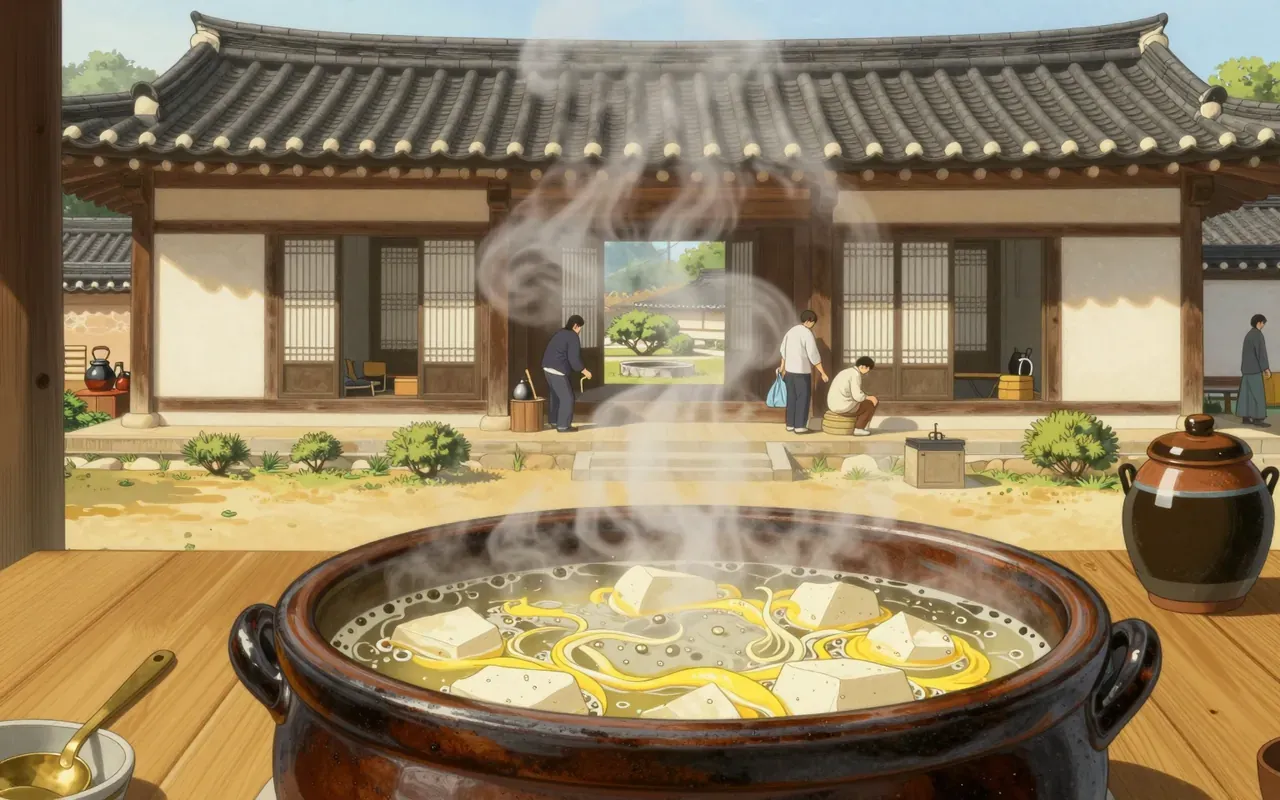
The dish is assembled and cooked directly in its serving vessel — traditionally thick porcelain or solid stone — and delivered bubbling vigorously, often with a raw egg added just before serving.
0:24
What it gets right
It gets right a layered texture and heat contrast: unpressed tofu stays delicate, while vegetables, optional seafood (oysters, mussels, clams, shrimp), optional meat (beef or pork), and gochujang or gochugaru add savory depth and spice.
0:38
What it does not
It does not exclude animal ingredients: seafood and meat are common options, so it is not inherently vegetarian or vegan.
0:46
What it changed
The key ingredient, sundubu, originated in Chodang village when Joseon official Chodang Heoyeop used spring water and seawater instead of brine to make tofu.
0:56
Who it is for, and who it is not
It is for people who enjoy hot, spicy stews with soft tofu and customizable protein.
1:08
Is it worth your time
It is worth your time if you seek a traditional Korean stew defined by fresh, unpressed tofu and served bubbling hot at the table.
Worth your time?
Selectively. Start with the brief, then cook the parts we point at.
What works
It gets right a layered texture and heat contrast: unpressed tofu stays delicate, while vegetables, optional seafood (oysters, mussels, clams, shrimp), optional meat (beef or pork), and gochujang or gochugaru add savory depth and spice.
What does not
It does not exclude animal ingredients: seafood and meat are common options, so it is not inherently vegetarian or vegan.
Cook it if
Skip it if
The written brief1 min read
What the dish is and where it came from
Sundubu-jjigae is a Korean jjigae. Records from the Joseon dynasty archives show an early form was served. It is named for its defining ingredient: sundubu, extra-soft tofu.
How it works, in terms someone would actually use
The dish is assembled and cooked directly in its serving vessel — traditionally thick porcelain or solid stone — and delivered bubbling vigorously, often with a raw egg added just before serving.
What it gets right
It gets right a layered texture and heat contrast: unpressed tofu stays delicate, while vegetables, optional seafood (oysters, mussels, clams, shrimp), optional meat (beef or pork), and gochujang or gochugaru add savory depth and spice.
What it does not
It does not exclude animal ingredients: seafood and meat are common options, so it is not inherently vegetarian or vegan.
What it changed
The key ingredient, sundubu, originated in Chodang village when Joseon official Chodang Heoyeop used spring water and seawater instead of brine to make tofu.
Who it is for, and who it is not
It is for people who enjoy hot, spicy stews with soft tofu and customizable protein. It is not for those avoiding chili paste, chili flakes, or common seafood or meats.
Is it worth your time
It is worth your time if you seek a traditional Korean stew defined by fresh, unpressed tofu and served bubbling hot at the table.