1:12in productionCh. 1 · What the dish is and where it came from/ 1:12 · ceiling 15 min
Dishes · Food history
Waakye
A Ghanaian dish of rice and beans cooked together with sorghum leaves and powdered limestone, yielding a red hue and distinct flavor.
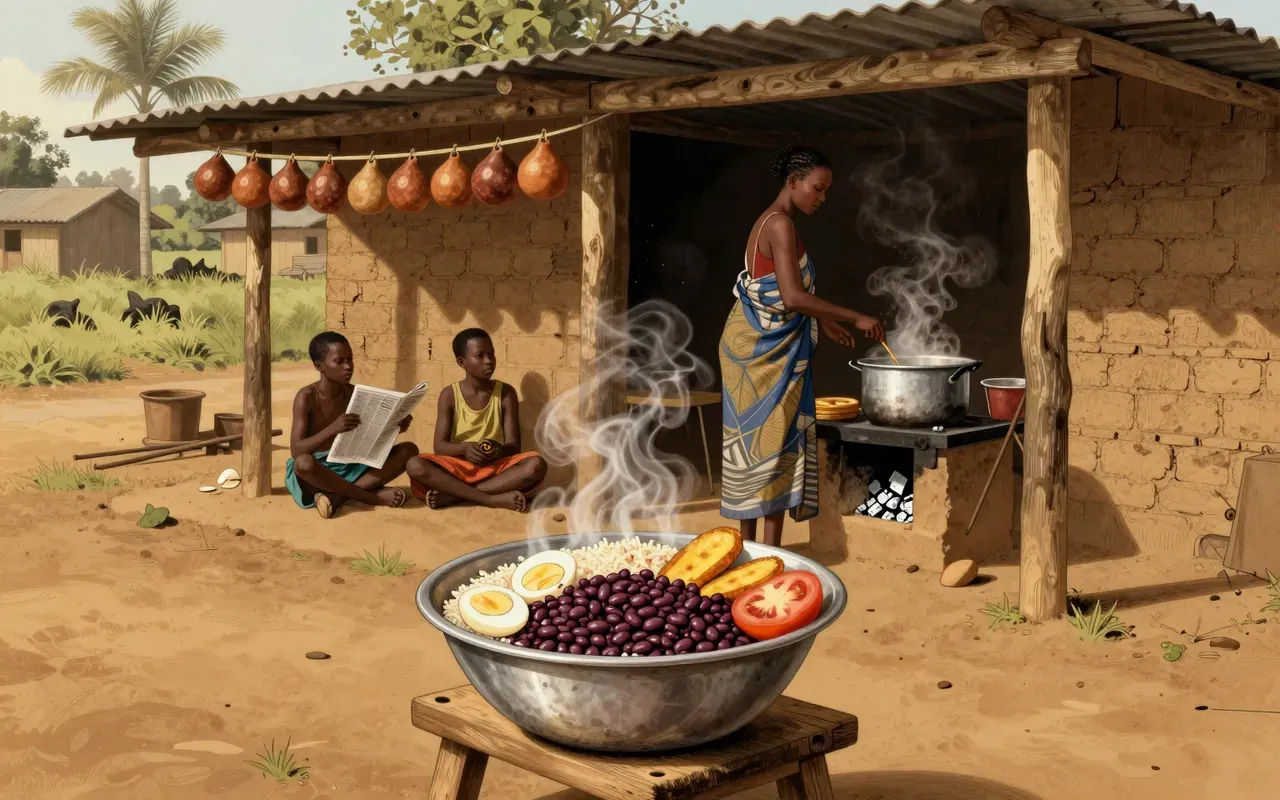
Waakye is a Ghanaian dish of cooked rice and beans, commonly eaten for breakfast or lunch. It is thought to have originated in northern Ghana among the Mole-Dagbon people.
Waakye is a Ghanaian dish of cooked rice and beans, commonly eaten for breakfast or lunch.
0:12
How it works, in terms someone would actually use
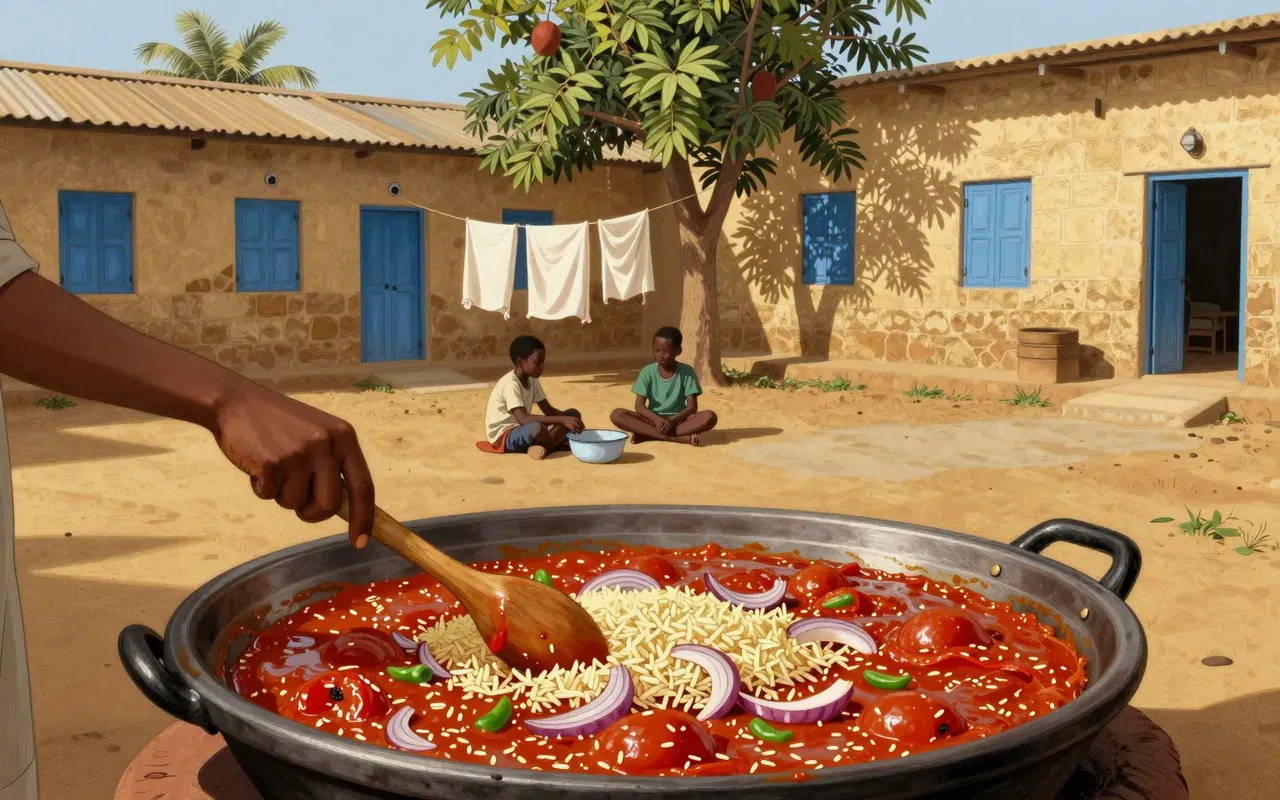
Rice and beans—usually black-eyed peas or cow beans—are cooked together with red dried sorghum leaf sheaths or stalks and kaun (powdered limestone).
0:21
What it gets right
The sorghum leaves and limestone give Waakye its characteristic flavor and red appearance.
0:29
What it does not
It contains animal-derived limestone (kaun) and plant-based sorghum, making it unsuitable for some dietary or religious practices that avoid mineral additives or specific plant preparations.
0:39
What it changed
It may be a precursor to rice-and-beans dishes in the Caribbean and South America, linked historically to the transatlantic slave trade.
0:47
Who it is for, and who it is not
It is for people who eat rice, beans, and limestone-treated foods, including those in northern Ghana and Hausa settlers in southern Ghana’s Zongo communities.
1:01
Is it worth your time
It is worth your time if you seek a traditional Ghanaian staple served at breakfast or lunch and are open to its core ingredients and preparation method.
Worth your time?
Selectively. Start with the brief, then cook the parts we point at.
What works
The sorghum leaves and limestone give Waakye its characteristic flavor and red appearance. The sorghum is removed before eating.
What does not
It contains animal-derived limestone (kaun) and plant-based sorghum, making it unsuitable for some dietary or religious practices that avoid mineral additives or specific plant preparations.
Cook it if
Skip it if
The written brief1 min read
What the dish is and where it came from
Waakye is a Ghanaian dish of cooked rice and beans, commonly eaten for breakfast or lunch. It is thought to have originated in northern Ghana among the Mole-Dagbon people.
How it works, in terms someone would actually use
Rice and beans—usually black-eyed peas or cow beans—are cooked together with red dried sorghum leaf sheaths or stalks and kaun (powdered limestone).
What it gets right
The sorghum leaves and limestone give Waakye its characteristic flavor and red appearance. The sorghum is removed before eating.
What it does not
It contains animal-derived limestone (kaun) and plant-based sorghum, making it unsuitable for some dietary or religious practices that avoid mineral additives or specific plant preparations.
What it changed
It may be a precursor to rice-and-beans dishes in the Caribbean and South America, linked historically to the transatlantic slave trade.
Who it is for, and who it is not
It is for people who eat rice, beans, and limestone-treated foods, including those in northern Ghana and Hausa settlers in southern Ghana’s Zongo communities. It is not for those avoiding limestone or sorghum-derived components.
Is it worth your time
It is worth your time if you seek a traditional Ghanaian staple served at breakfast or lunch and are open to its core ingredients and preparation method.