1:08in productionCh. 1 · What the dish is and where it came from/ 1:08 · ceiling 15 min
Dishes
Ugali
A stiff, dough-like staple made from maize flour and water or milk, eaten across much of Africa with stews or sauces.
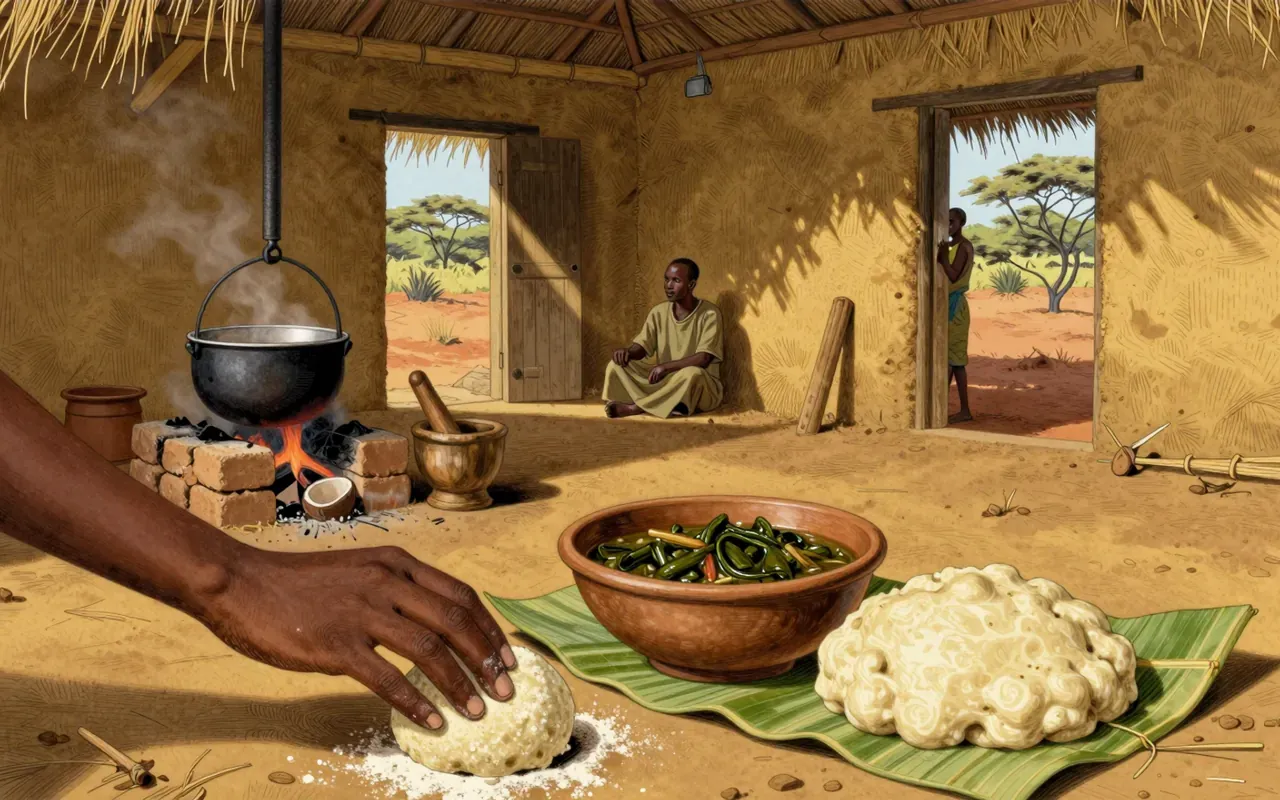
Ugali is a stiff, dough-like staple made from maize (corn or mahindi) flour. It is known by many names—posho, nsima, sadza, bogobe, isitshwala—and is eaten in at least 18 African countries, including Kenya, Uganda, Zimbabwe, South Africa, and among the Ewes of Ghana and Togo.
Ugali is a stiff, dough-like staple made from maize (corn or mahindi) flour.
0:18
How it works, in terms someone would actually use
Maize flour is stirred into boiling water or milk until it forms a stiff, firm dough.
0:24
What it gets right
It is inexpensive, long-lasting in average conditions, and easily accessible to people with limited resources.
0:36
What it does not
It requires a stew or sauce to complete the meal; on its own, it is not a full dish.
0:44
What it changed
The many regional names connect a similar staple with different food cultures across Africa.
0:50
Who it is for, and who it is not
It is for people seeking an affordable, shelf-stable carbohydrate base to pair with stews or vegetables.
1:00
Is it worth your time
Yes—it is worth your time if you need a simple, durable, low-cost staple that pairs well with savory accompaniments.
Worth your time?
Selectively. Start with the brief, then cook the parts we point at.
What works
It is inexpensive, long-lasting in average conditions, and easily accessible to people with limited resources. Its role as a filling base for stews like sukuma wiki makes it practical and nourishing.
What does not
It requires a stew or sauce to complete the meal; on its own, it is not a full dish.
Cook it if
Skip it if
The written brief1 min read
What the dish is and where it came from
Ugali is a stiff, dough-like staple made from maize (corn or mahindi) flour. It is known by many names—posho, nsima, sadza, bogobe, isitshwala—and is eaten in at least 18 African countries, including Kenya, Uganda, Zimbabwe, South Africa, and among the Ewes of Ghana and Togo.
How it works, in terms someone would actually use
Maize flour is stirred into boiling water or milk until it forms a stiff, firm dough.
What it gets right
It is inexpensive, long-lasting in average conditions, and easily accessible to people with limited resources. Its role as a filling base for stews like sukuma wiki makes it practical and nourishing.
What it does not
It requires a stew or sauce to complete the meal; on its own, it is not a full dish.
What it changed
The many regional names connect a similar staple with different food cultures across Africa.
Who it is for, and who it is not
It is for people seeking an affordable, shelf-stable carbohydrate base to pair with stews or vegetables. It is not a standalone protein or vegetable dish.
Is it worth your time
Yes—it is worth your time if you need a simple, durable, low-cost staple that pairs well with savory accompaniments.