1:13in productionCh. 1 · What the dish is and where it came from/ 1:13 · ceiling 15 min
Dishes
Bingsu
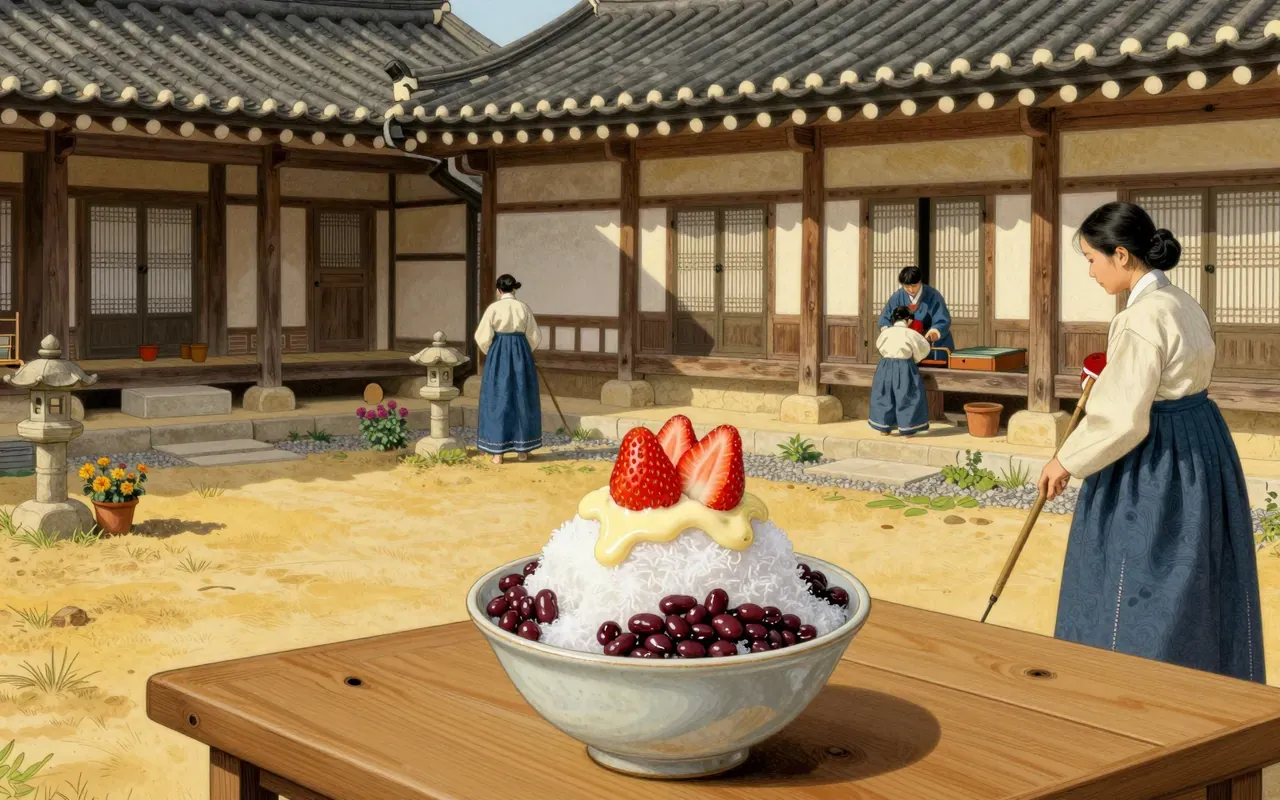
A Korean shaved ice dessert made from frozen milk, topped with sweet ingredients like red beans, fruit, or condensed milk.
Bingsu is a Korean shaved ice dessert, literally meaning 'ice water'. Its most common form is patbingsu, topped with sweet red beans. It originated in Korea and evolved from earlier Joseon-period ice-based desserts served with fruit from ancient ice storage facilities.
Bingsu is a Korean shaved ice dessert, literally meaning 'ice water'.
0:16
How it works, in terms someone would actually use
Modern bingsu uses frozen milk instead of water-based ice and is shaved using electric ice shavers.
0:26
What it gets right
It gets right a light, creamy base paired with varied sweet toppings—red beans, fruit, tteok, condensed milk, or syrup—offering textural contrast and customizable sweetness.
0:36
What it does not
It does not emphasize savory or vegetable-forward profiles; its core identity is sweet and dairy-based, making it less suited for those avoiding dairy or seeking low-sugar options.
0:47
What it changed
After the Korean War, U.S.-introduced ingredients like condensed milk, syrup, chocolate, cereal, ice cream, and whipped cream expanded bingsu’s topping repertoire.
0:55
Who it is for, and who it is not
It is for people who enjoy cold, sweet, texturally varied desserts.
1:06
Is it worth your time
Yes—it delivers a distinctive, refreshing dessert experience rooted in Korean tradition but adapted with accessible, widely enjoyed ingredients.
Worth your time?
Selectively. Start with the brief, then cook the parts we point at.
What works
It gets right a light, creamy base paired with varied sweet toppings—red beans, fruit, tteok, condensed milk, or syrup—offering textural contrast and customizable sweetness.
What does not
It does not emphasize savory or vegetable-forward profiles; its core identity is sweet and dairy-based, making it less suited for those avoiding dairy or seeking low-sugar options.
Cook it if
Skip it if
The written brief1 min read
What the dish is and where it came from
Bingsu is a Korean shaved ice dessert, literally meaning ‘ice water’. Its most common form is patbingsu, topped with sweet red beans. It originated in Korea and evolved from earlier Joseon-period ice-based desserts served with fruit from ancient ice storage facilities.
How it works, in terms someone would actually use
Modern bingsu uses frozen milk instead of water-based ice and is shaved using electric ice shavers. The result is a fine, snow-like texture layered with toppings.
What it gets right
It gets right a light, creamy base paired with varied sweet toppings—red beans, fruit, tteok, condensed milk, or syrup—offering textural contrast and customizable sweetness.
What it does not
It does not emphasize savory or vegetable-forward profiles; its core identity is sweet and dairy-based, making it less suited for those avoiding dairy or seeking low-sugar options.
What it changed
After the Korean War, U.S.-introduced ingredients like condensed milk, syrup, chocolate, cereal, ice cream, and whipped cream expanded bingsu’s topping repertoire.
Who it is for, and who it is not
It is for people who enjoy cold, sweet, texturally varied desserts. It is not for those avoiding dairy, seeking minimal added sugar, or preferring savory or fruit-only preparations.
Is it worth your time
Yes—it delivers a distinctive, refreshing dessert experience rooted in Korean tradition but adapted with accessible, widely enjoyed ingredients.