1:10in productionCh. 1 · What the dish is and where it came from/ 1:10 · ceiling 15 min
Preserving & fermentation · Traditions
Kimchi
A fermented vegetable dish from Korea, traditionally made with cabbage or daikon, salted and aged in earthenware vessels.
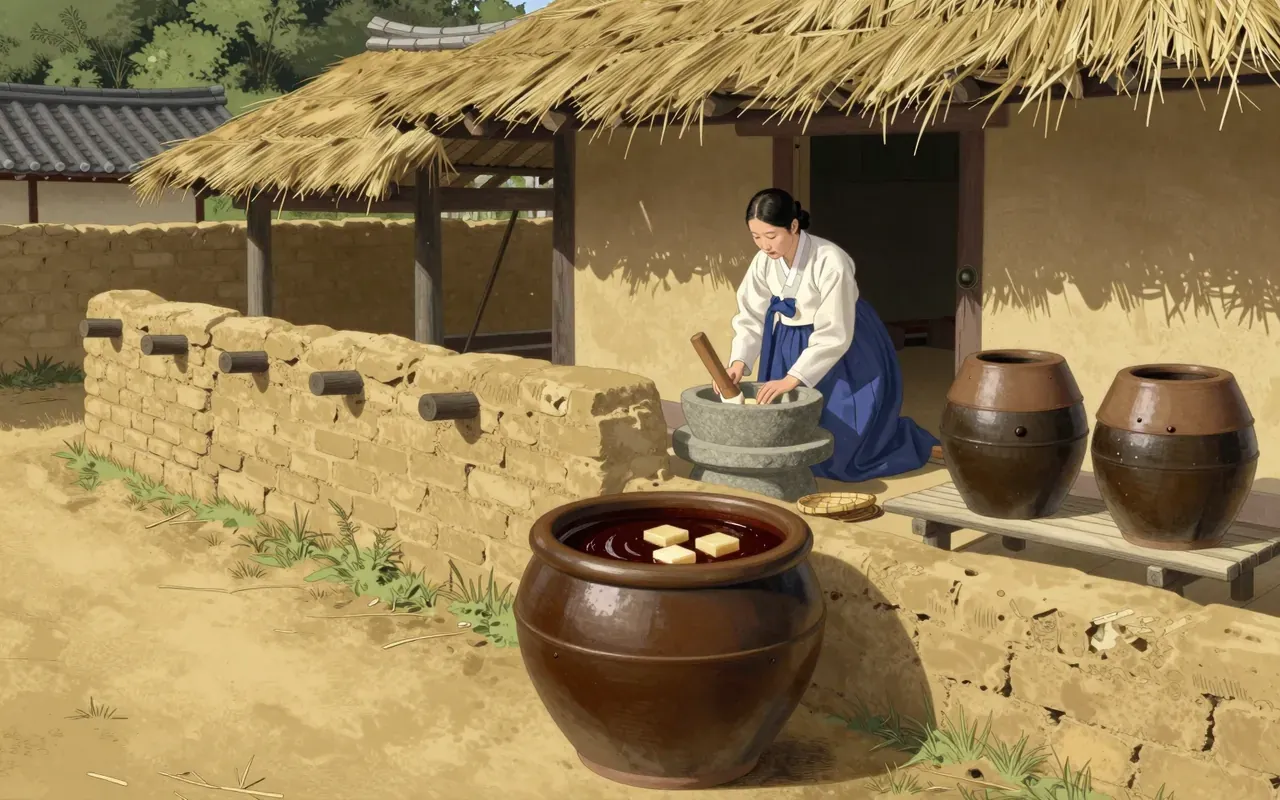
Kimchi is a Korean fermented vegetable dish. Historical records from the Three Kingdoms period mention pickle jars used for fermenting vegetables, showing fermented vegetables were commonly eaten then.
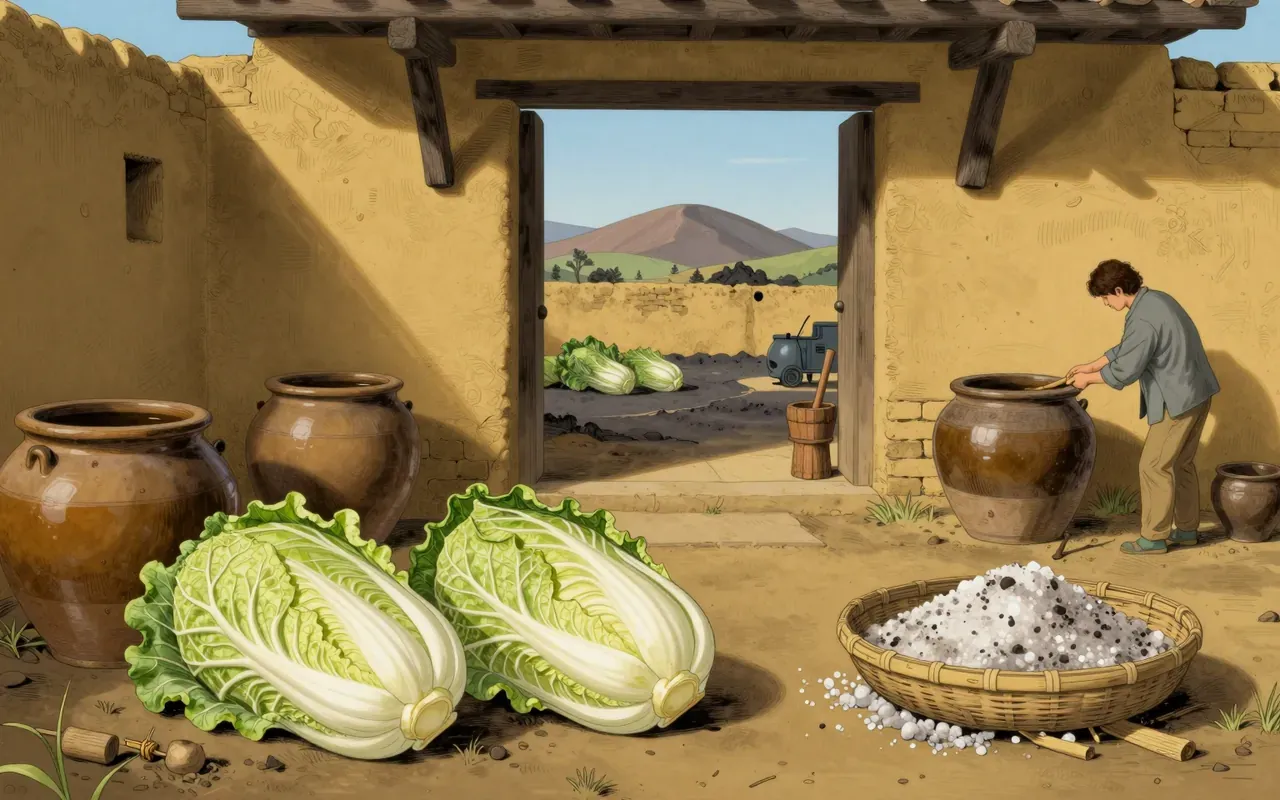
To make kimchi, cabbage or daikon is sliced into small, uniform pieces, then coated with salt to draw out water and raise salt content—helping preserve the vegetables by inhibiting harmful microorganisms.
0:23
What it gets right
It offers variety: hundreds of types exist, made with different vegetables as main ingredients.
0:29
What it does not
It is not defined by chili peppers or napa cabbage in its earliest forms; those arrived later.
0:36
What it changed
Chili peppers entered kimchi only after the early 17th century and became widespread only in the 19th century.
0:51
Who it is for, and who it is not
It is for people who eat fermented vegetables preserved in earthenware vessels and who value communal preparation.
1:02
Is it worth your time
It is worth your time if you seek a traditional fermented vegetable dish with regional variation and historical continuity.
Worth your time?
Selectively. Start with the brief, then cook the parts we point at.
What works
It offers variety: hundreds of types exist, made with different vegetables as main ingredients.
What does not
It is not defined by chili peppers or napa cabbage in its earliest forms; those arrived later.
Cook it if
Skip it if
The written brief1 min read
What the dish is and where it came from
Kimchi is a Korean fermented vegetable dish. Historical records from the Three Kingdoms period mention pickle jars used for fermenting vegetables, showing fermented vegetables were commonly eaten then.
How it works, in terms someone would actually use
To make kimchi, cabbage or daikon is sliced into small, uniform pieces, then coated with salt to draw out water and raise salt content—helping preserve the vegetables by inhibiting harmful microorganisms.
What it gets right
It offers variety: hundreds of types exist, made with different vegetables as main ingredients.
What it does not
It is not defined by chili peppers or napa cabbage in its earliest forms; those arrived later.
What it changed
Chili peppers entered kimchi only after the early 17th century and became widespread only in the 19th century. Napa cabbage appeared in Korea at the end of the 19th century, enabling the whole-cabbage style described in Siuijeonseo.
Who it is for, and who it is not
It is for people who eat fermented vegetables preserved in earthenware vessels and who value communal preparation. It is not defined by modern industrial formats or single-ingredient constraints.
Is it worth your time
It is worth your time if you seek a traditional fermented vegetable dish with regional variation and historical continuity.