1:15in productionCh. 1 · What the dish is and where it came from/ 1:15 · ceiling 15 min
Preserving & fermentation · Ingredients
Doenjang
Doenjang is a Korean fermented soybean paste made with soybeans and brine.
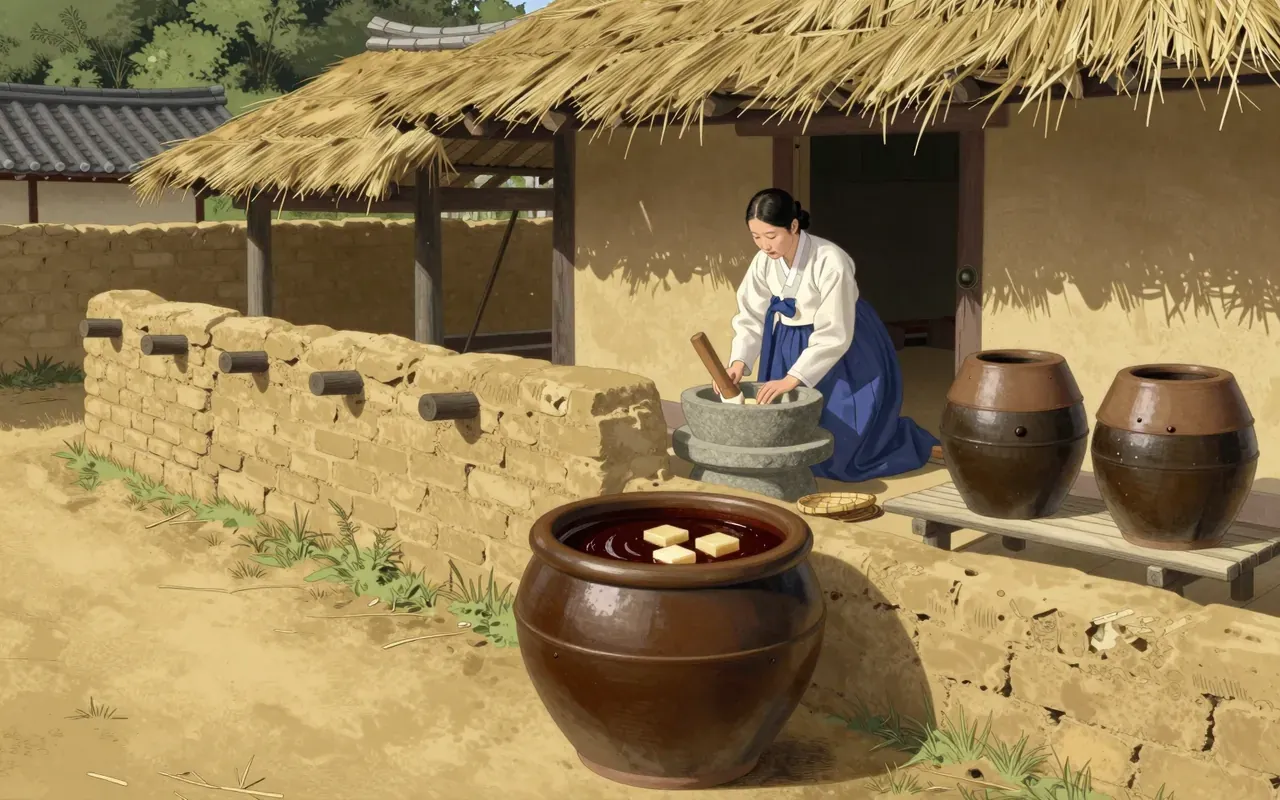
Doenjang is a Korean fermented soybean paste made of soybeans and brine. Its earliest documented association is with Goguryeo people’s skill in brewing fermented soybeans, noted in a third-century Chinese text. Jangdoks (fermentation jars) appear in 4th-century Goguryeo tomb murals. It was prepared for King Sinmun’s 683 wedding, per the Samguk sagi.
Doenjang is a Korean fermented soybean paste made of soybeans and brine.
0:21
How it works, in terms someone would actually use
Doenjang is made by soaking soybeans overnight, boiling them in salt water, pounding or grinding them, then compressing the mixture into meju bricks.
0:41
What it gets right
It delivers deep umami and savory depth through fermentation.
0:50
What it does not
It is not a ready-to-eat condiment straight from the jar; it requires preparation as an ingredient or base.
0:57
What it changed
By 683, it held ceremonial importance, appearing alongside ganjang, meju, and jeotgal at a royal wedding.
1:03
Who it is for, and who it is not
It is for cooks using traditional Korean seasonings.
1:11
Is it worth your time
Yes—if you cook Korean food and want authentic, fermented soybean flavor.
Worth your time?
Selectively. Start with the brief, then cook the parts we point at.
What works
It delivers deep umami and savory depth through fermentation. Its composition—soybean and brine—supports long-term use in Korean cooking as a foundational seasoning.
What does not
It is not a ready-to-eat condiment straight from the jar; it requires preparation as an ingredient or base.
Cook it if
Skip it if
The written brief1 min read
What the dish is and where it came from
Doenjang is a Korean fermented soybean paste made of soybeans and brine. Its earliest documented association is with Goguryeo people’s skill in brewing fermented soybeans, noted in a third-century Chinese text. Jangdoks (fermentation jars) appear in 4th-century Goguryeo tomb murals. It was prepared for King Sinmun’s 683 wedding, per the Samguk sagi.
How it works, in terms someone would actually use
Doenjang is made by soaking soybeans overnight, boiling them in salt water, pounding or grinding them, then compressing the mixture into meju bricks. These bricks dry for a week or more, then ferment while hung under eaves or placed in a warm ondol room, before being combined with brine.
What it gets right
It delivers deep umami and savory depth through fermentation. Its composition—soybean and brine—supports long-term use in Korean cooking as a foundational seasoning.
What it does not
It is not a ready-to-eat condiment straight from the jar; it requires preparation as an ingredient or base.
What it changed
By 683, it held ceremonial importance, appearing alongside ganjang, meju, and jeotgal at a royal wedding.
Who it is for, and who it is not
It is for cooks using traditional Korean seasonings. It is not for those seeking a non-fermented, soy-free, or quick-mix pantry staple.
Is it worth your time
Yes—if you cook Korean food and want authentic, fermented soybean flavor.