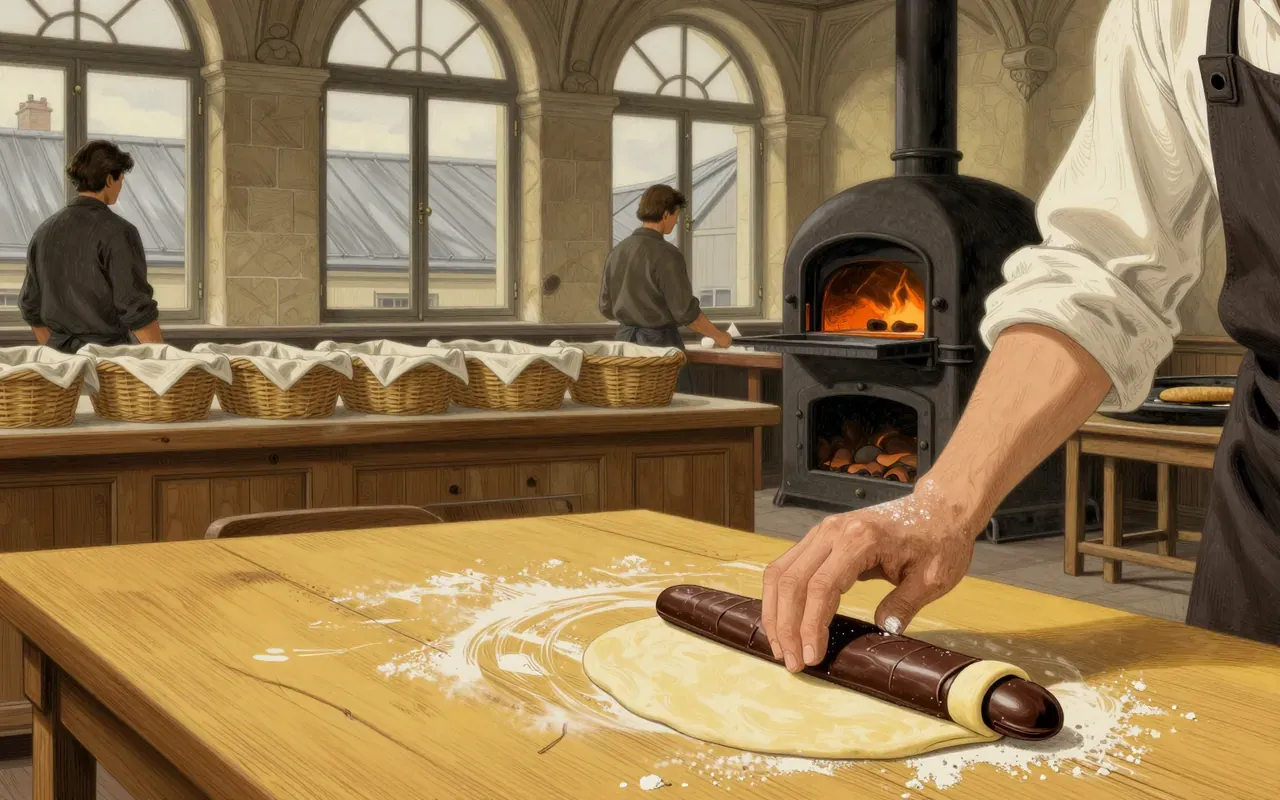
Viennoiserie dough arrived in Paris in the early 19th century via an Austrian bakery at 92, rue de Richelieu.
1:22
Same dough, different shape
Pain au chocolat uses the exact same laminated, yeast-leavened dough as a croissant — no variation in method or composition.
2:15
Croissant came first — by name
The word 'croissant' entered the French dictionary in 1863 — proving the category was formalised before pain au chocolat became distinct.
2:54
Filling, not invention
It is a structural adaptation: the same dough, folded and filled, not reinvented.
Worth your time?
Yes. Cook the whole thing.
4/ 5
What works
uses lamination to separate chocolate from crumb
relies on proven viennoiserie structure
delivers immediate, unambiguous chocolate impact
What does not
invent new dough
introduce new leavening
vary lamination method
originate outside viennoiserie tradition
Cook it if
people who value clear textural contrast
those who prefer minimal ingredient lists
bakers seeking reliable, scalable viennoiserie
Skip it if
those expecting regional variation
people seeking fermentation depth or sourness
anyone looking for technical departure from croissant
The written brief1 min read
What the dish is and where it came from
A laminated, yeast-leavened viennoiserie from early 19th-century France, containing dark chocolate, sharing origin and dough with the croissant after Austrian bakers brought viennoiserie to Paris.
How it works, in terms someone would actually use
It is made by laminating yeast-leavened dough — the same viennoiserie dough used for croissants — then wrapping batons of dark chocolate inside before baking.
What it gets right
It uses the viennoiserie dough’s capacity for lift and flakiness to frame dark chocolate without diluting its intensity — the chocolate stays distinct, not melted into the crumb.
What it does not
It does not introduce new technique, ingredients or leavening. It does not vary the dough, proofing, lamination or baking from the croissant standard.
What it changed
It extended the viennoiserie format from crescent-shaped plain pastries to filled, rectangular ones — a structural and functional shift within the same dough system.
Who it is for, and who it is not
It is for people who value textural clarity and ingredient contrast in breakfast or afternoon pastry. It is not for those seeking innovation in dough, fermentation or regional variation.
Is it worth your time
Yes, if you want a crisp, layered, buttery pastry with a direct, bittersweet chocolate hit. No, if you expect complexity beyond texture and contrast.