1:11in productionCh. 1 · What the dish is and where it came from/ 1:11 · ceiling 15 min
Dishes · Food history
Carbonara
A Roman pasta dish of cured pork, hard cheese, eggs, salt, and black pepper.
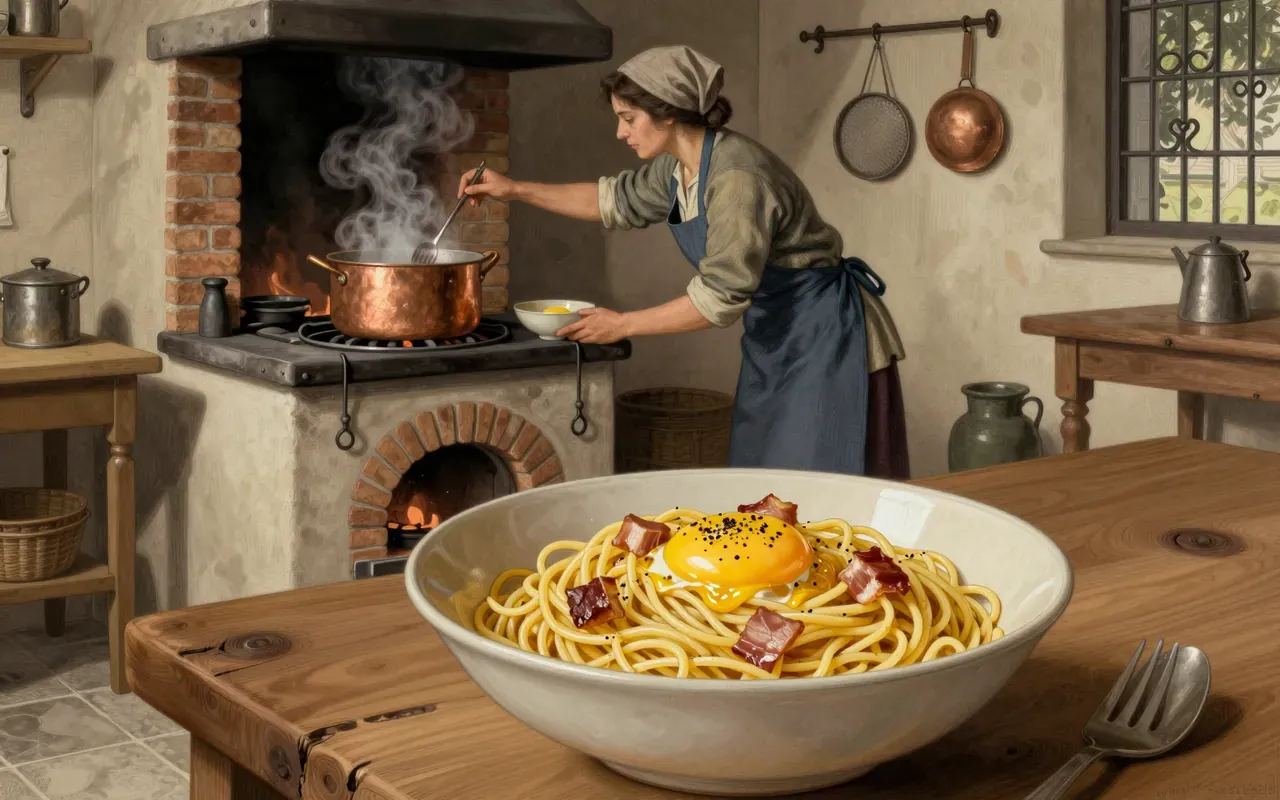
Carbonara is a pasta dish from the Lazio region of Italy. It consists of cured pork, hard cheese, eggs, salt, and black pepper. Its modern form and name emerged in mid-20th-century Rome, after the Allied liberation in 1944. The first attested recipe appeared in a 1952 Chicago cookbook. Interviews and archival research link it to a 'spaghetti breakfast' requested by Allied personnel in Italian cook shops.
Carbonara is a pasta dish from the Lazio region of Italy.
0:26
How it works, in terms someone would actually use
Pasta is cooked in moderately salted boiling water, because the cured meat and hard cheese contribute significant salt.
0:33
What it gets right
It delivers rich flavor and texture through just five core ingredients: cured pork, hard cheese, eggs, salt, and black pepper.
0:41
What it does not
It does not include cream, garlic, onions, or vegetables — making it unsuitable if you seek those elements.
0:48
What it changed
Early Italian publications varied the recipe: a 1954 version in La Cucina Italiana used pancetta, garlic, and Gruyère cheese.
0:56
Who it is for, and who it is not
It is for people who enjoy pasta with cured pork and egg-based richness.
1:05
Is it worth your time
Yes — if you want a simple, ingredient-driven pasta dish rooted in mid-century Roman practice.
Worth your time?
Selectively. Start with the brief, then cook the parts we point at.
What works
It delivers rich flavor and texture through just five core ingredients: cured pork, hard cheese, eggs, salt, and black pepper.
What does not
It does not include cream, garlic, onions, or vegetables — making it unsuitable if you seek those elements.
Cook it if
Skip it if
The written brief1 min read
What the dish is and where it came from
Carbonara is a pasta dish from the Lazio region of Italy. It consists of cured pork, hard cheese, eggs, salt, and black pepper. Its modern form and name emerged in mid-20th-century Rome, after the Allied liberation in 1944. The first attested recipe appeared in a 1952 Chicago cookbook. Interviews and archival research link it to a ‘spaghetti breakfast’ requested by Allied personnel in Italian cook shops.
How it works, in terms someone would actually use
Pasta is cooked in moderately salted boiling water, because the cured meat and hard cheese contribute significant salt.
What it gets right
It delivers rich flavor and texture through just five core ingredients: cured pork, hard cheese, eggs, salt, and black pepper.
What it does not
It does not include cream, garlic, onions, or vegetables — making it unsuitable if you seek those elements.
What it changed
Early Italian publications varied the recipe: a 1954 version in La Cucina Italiana used pancetta, garlic, and Gruyère cheese.
Who it is for, and who it is not
It is for people who enjoy pasta with cured pork and egg-based richness. It is not for those avoiding pork, eggs, or dairy.
Is it worth your time
Yes — if you want a simple, ingredient-driven pasta dish rooted in mid-century Roman practice.