1:04in productionCh. 1 · What the dish is and where it came from/ 1:04 · ceiling 15 min
Dishes
Char siu
Cantonese barbecued pork, marinated and glazed, roasted in gas rotisseries.
Char siu is a Cantonese-style barbecued pork dish originating in Guangdong. It is popular across Hong Kong, Singapore, Malaysia, the Philippines, Indonesia, Thailand, Cambodia, Vietnam, and Japan.
Char siu is a Cantonese-style barbecued pork dish originating in Guangdong.
0:11
How it works, in terms someone would actually use
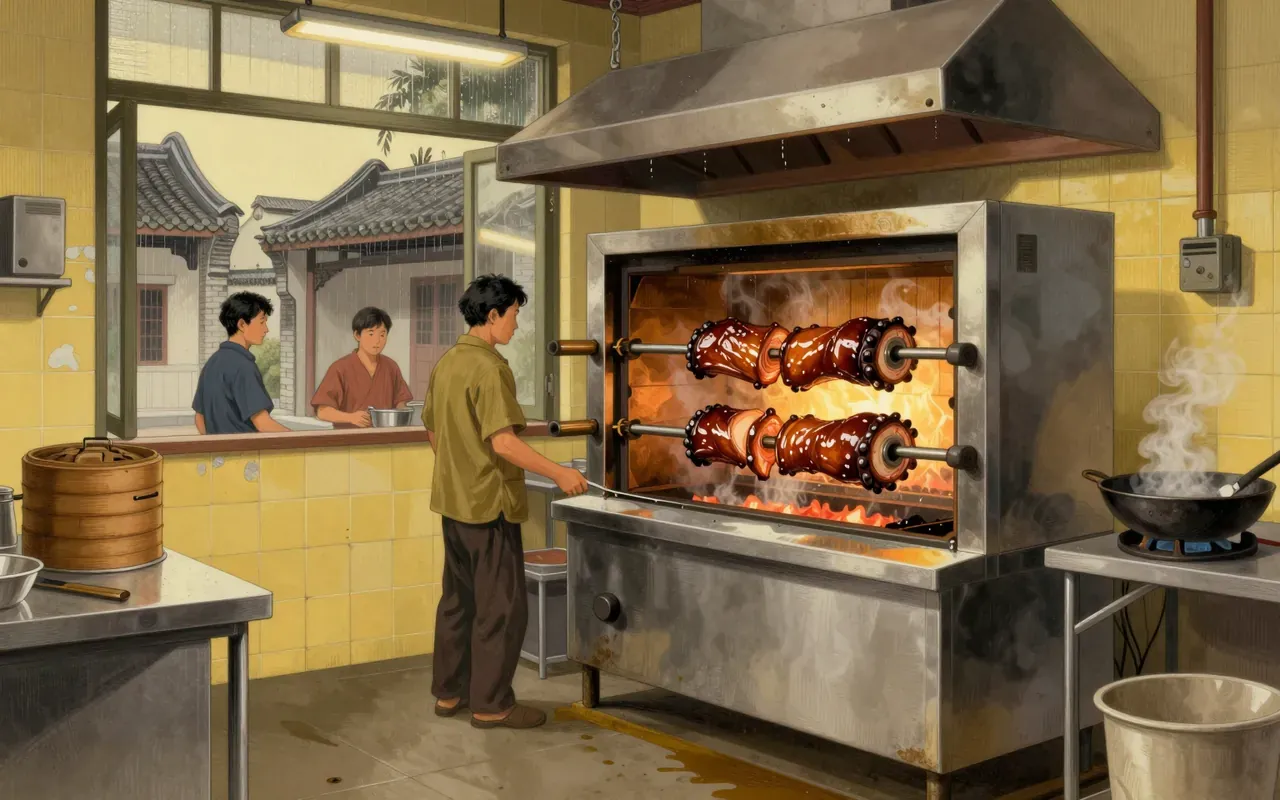
Boneless pork shoulder is marinated with hoisin sauce, soy sauce, Chinese wine, and five-spice powder, then roasted in large gas rotisseries and glazed with maltose or honey.
0:22
What it gets right
Its appeal lies in the interplay of savory, sweet, and aromatic notes from hoisin, soy, wine, and five-spice, with 'sauce flavor' as its defining characteristic.
0:32
What it does not
The red color now commonly comes from food coloring rather than traditional red fermented bean curd or red yeast rice.
0:40
What it changed
In the 1950s, Cantonese roast meat chefs who immigrated to Hong Kong refined char siu techniques.
0:46
Who it is for, and who it is not
It is for people who enjoy marinated, roasted pork—especially with higher fat content like Black Iberian pork.
0:58
Is it worth your time
Yes, if you want a savory-sweet, tender pork dish prepared with specific sauces and glaze.
Worth your time?
Selectively. Start with the brief, then cook the parts we point at.
What works
Its appeal lies in the interplay of savory, sweet, and aromatic notes from hoisin, soy, wine, and five-spice, with 'sauce flavor' as its defining characteristic.
What does not
The red color now commonly comes from food coloring rather than traditional red fermented bean curd or red yeast rice.
Cook it if
Skip it if
The written brief1 min read
What the dish is and where it came from
Char siu is a Cantonese-style barbecued pork dish originating in Guangdong. It is popular across Hong Kong, Singapore, Malaysia, the Philippines, Indonesia, Thailand, Cambodia, Vietnam, and Japan.
How it works, in terms someone would actually use
Boneless pork shoulder is marinated with hoisin sauce, soy sauce, Chinese wine, and five-spice powder, then roasted in large gas rotisseries and glazed with maltose or honey.
What it gets right
Its appeal lies in the interplay of savory, sweet, and aromatic notes from hoisin, soy, wine, and five-spice, with ‘sauce flavor’ as its defining characteristic.
What it does not
The red color now commonly comes from food coloring rather than traditional red fermented bean curd or red yeast rice.
What it changed
In the 1950s, Cantonese roast meat chefs who immigrated to Hong Kong refined char siu techniques.
Who it is for, and who it is not
It is for people who enjoy marinated, roasted pork—especially with higher fat content like Black Iberian pork. It is not for people seeking a vegetable-based or bone-in pork dish.
Is it worth your time
Yes, if you want a savory-sweet, tender pork dish prepared with specific sauces and glaze.