1:31in productionCh. 1 · What the dish is and where it came from/ 1:31 · ceiling 15 min
Preserving & fermentation
Century egg
A Chinese preserved egg dish made by curing duck, chicken, or quail eggs in an alkaline mixture.
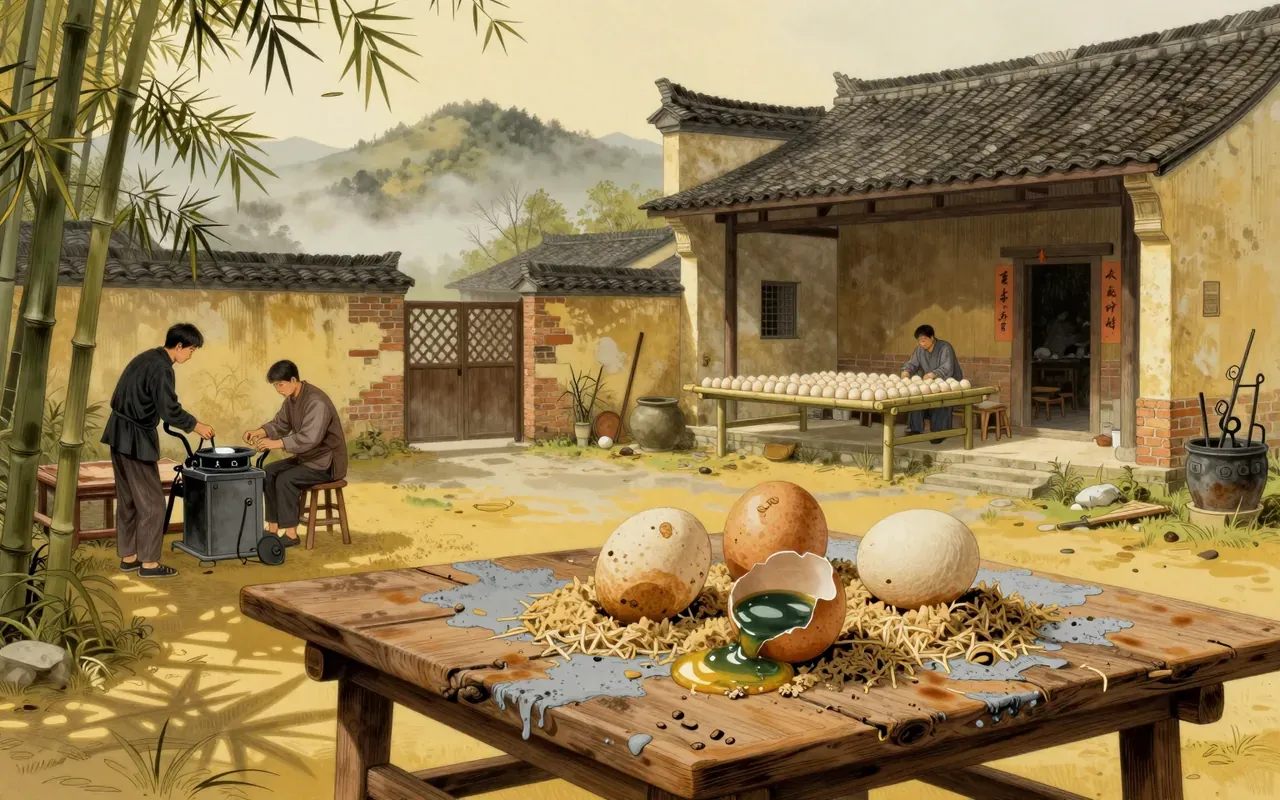
Century egg is a Chinese dish made by preserving duck, chicken, or quail eggs in a mixture of clay, ash, salt, quicklime, and rice hulls. It has been present in Chinese cuisine since at least the 17th century. Folk tales attribute its discovery to accidental preservation—such as duck eggs found in slaked lime used for mortar during Ming Dynasty construction in Hunan. It was called 'Chaoszi' in the Ming Dynasty.
Century egg is a Chinese dish made by preserving duck, chicken, or quail eggs in a mixture of clay, ash, salt, quicklime, and rice hulls.
0:28
How it works, in terms someone would actually use
Eggs are preserved in an alkaline mixture for several weeks to several months.
0:40
What it gets right
It delivers strong flavor from hydrogen sulfide and ammonia, plus salty and umami notes.
0:55
What it does not
Its strong aroma and pronounced flavor make it less approachable for those preferring mild or neutral-tasting foods.
1:02
What it changed
Songhua eggs—century eggs with pine-branch patterns on the white—are recognized as a quality distinction within the same preparation method.
1:10
Who it is for, and who it is not
It is for people who enjoy pungent, savory, texturally complex preserved foods.
1:21
Is it worth your time
Yes, if you seek bold umami and texture contrast in preserved foods.
Worth your time?
Selectively. Start with the brief, then cook the parts we point at.
What works
It delivers strong flavor from hydrogen sulfide and ammonia, plus salty and umami notes. The yolk becomes dark greenish-grey and smooth; the white turns dark brown and jelly-like. Pine-patterned versions (Songhua eggs) are regarded as higher quality.
What does not
Its strong aroma and pronounced flavor make it less approachable for those preferring mild or neutral-tasting foods.
Cook it if
Skip it if
The written brief1 min read
What the dish is and where it came from
Century egg is a Chinese dish made by preserving duck, chicken, or quail eggs in a mixture of clay, ash, salt, quicklime, and rice hulls. It has been present in Chinese cuisine since at least the 17th century. Folk tales attribute its discovery to accidental preservation—such as duck eggs found in slaked lime used for mortar during Ming Dynasty construction in Hunan. It was called ‘Chaoszi’ in the Ming Dynasty.
How it works, in terms someone would actually use
Eggs are preserved in an alkaline mixture for several weeks to several months. The alkaline salt raises the egg’s pH to 9–12, driving the transformation. No cooking or heating is involved.
What it gets right
It delivers strong flavor from hydrogen sulfide and ammonia, plus salty and umami notes. The yolk becomes dark greenish-grey and smooth; the white turns dark brown and jelly-like. Pine-patterned versions (Songhua eggs) are regarded as higher quality.
What it does not
Its strong aroma and pronounced flavor make it less approachable for those preferring mild or neutral-tasting foods.
What it changed
Songhua eggs—century eggs with pine-branch patterns on the white—are recognized as a quality distinction within the same preparation method.
Who it is for, and who it is not
It is for people who enjoy pungent, savory, texturally complex preserved foods. It is not for those avoiding strong-smelling or high-sodium preparations, or who prefer fresh, unaltered eggs.
Is it worth your time
Yes, if you seek bold umami and texture contrast in preserved foods. Its flavor complexity arises directly from alkaline-driven breakdown of proteins and fats.